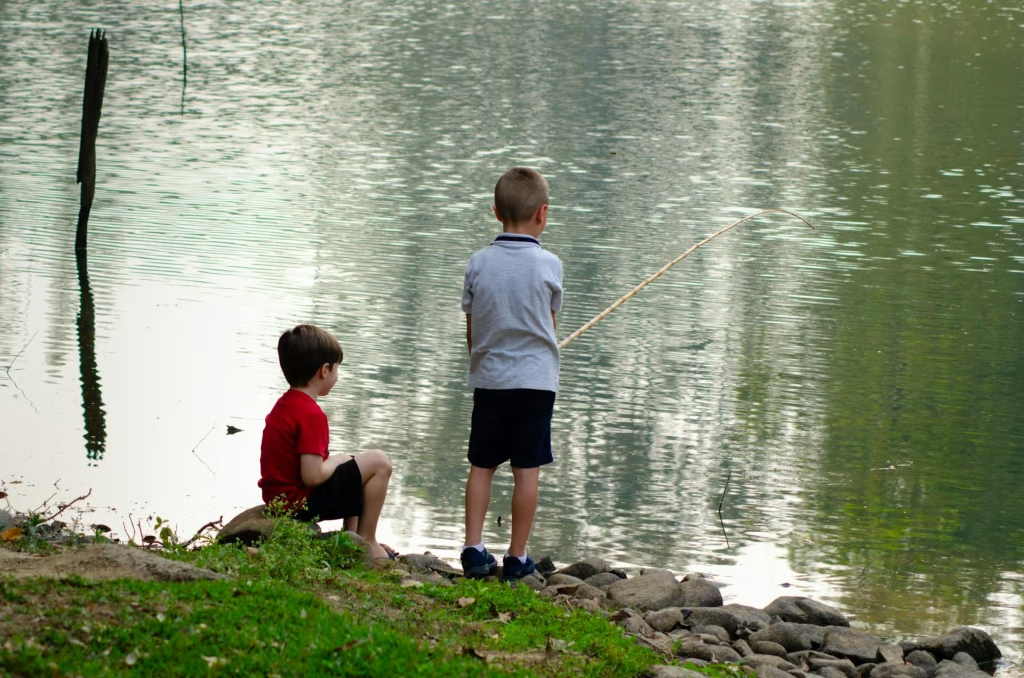
A friendly, step-by-step guide that teaches new anglers how to choose gear, find fish, stay safe, and enjoy freshwater fishing with confidence.
A Complete Beginner’s Guide to Freshwater Fishing
Freshwater fishing is one of the most accessible outdoor activities in the United States. There’s a fishable lake, pond, river, or reservoir within a short drive of nearly every community in the country, the gear required to get started costs less than a dinner out, and the fish — bluegill, bass, catfish, crappie, trout, and dozens of other species — are there, ready to cooperate, available year-round, and perfectly suited for beginners learning the basics. You don’t need years of experience or expensive equipment to catch fish on your first outing. You need a rod, a handful of inexpensive tackle, a license, and a place to fish.
This guide gives you everything that comes after that starting point: how to choose the right gear for a beginner without overcomplicating it, how to build a functional tackle box for under $30, how to identify the freshwater species you’re most likely to encounter, how to rig and present bait effectively, how to find fish at different times of year, and how to stay safe near the water. It also covers fishing licenses, catch-and-release, and the conservation basics that make you a responsible angler from day one.
Whether you’re fishing a stocked pond with your kids for the first time, standing on a riverbank with a new spinning rod, or planning a family summer fishing trip to a Midwest lake, this guide builds the complete foundation you need. The supporting articles on Other90Fishing.com go deeper on every topic here — species-specific guides, seasonal techniques, gear comparisons, and location guides by region — but this article is where to start. Everything connects back to what you’ll learn here.
What Freshwater Fishing Actually Is — And Why It’s Perfect for Beginners
Freshwater fishing means fishing in any non-saltwater body of water: lakes, ponds, rivers, creeks, reservoirs, canals, and streams. The United States has more accessible freshwater fishing than almost any country in the world — over 250,000 rivers and streams, 3 million+ lakes, and thousands of reservoirs, most of which are public access and stocked with catchable fish by state fish and wildlife agencies. In most states, you can get a fishing license online, pick up $20 of tackle at a Walmart or sporting goods store, and be fishing at a public lake within the same afternoon.
What makes freshwater fishing particularly beginner-friendly is the combination of species diversity, accessible habitat, and forgiving learning curve. Bluegill and sunfish — the small, hard-fighting panfish found in nearly every U.S. pond and lake — will bite on a worm and bobber with almost no technique required. Stocked trout in public ponds respond readily to scented dough bait. Channel catfish can be caught after dark with chicken liver and a lawn chair. The skills required to catch these fish are simple enough to learn in a single afternoon and produce fish reliably for new anglers.
Most Common Beginner Freshwater Species
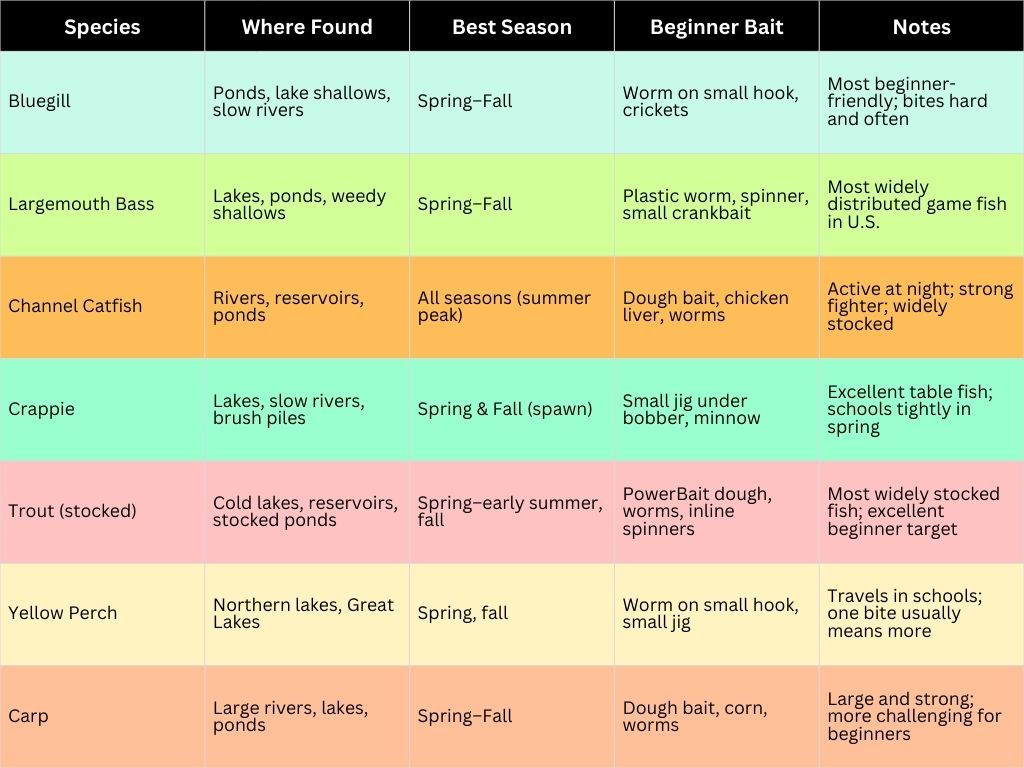
Of these seven species, bluegill and stocked trout are the highest-probability targets for complete beginners, particularly in the spring and early summer when both are active in shallow, accessible water. The Beginner’s Guide to Trout Fishing and other species-specific guides on Other90Fishing.com go deeper on each species; this guide gives you the foundation to approach any of them.
Gear for Beginners — What You Actually Need (and What You Can Skip)
The Rod and Reel: Start Simple and Correct
The most common beginner mistake is either buying a mismatched rod and reel or spending significantly more than necessary before knowing whether fishing is something they want to pursue. The correct starting point, in our opinion, for almost every freshwater beginner is a spincast combo — a matching spincast rod and reel sold together at the same retailer, pre-spooled with line, in the ultralight to medium power range.
A spincast combo is the right choice because spincast reels are significantly easier to learn than spinning or baitcasting reels: push the button, cast, turn the reel handle to engage. The learning curve for a first cast on a spincast reel is minutes, not hours. Spinning reels deal with a lot of line knots and a baitcasting reel requires learning thumb pressure to prevent backlash — a genuine skill that most anglers develop over weeks of practice. For a beginner, a spincast combo will allow you to focus on the joy of fishing.
Beginner Spincast combo
The most important First Purchase – Everything else is secondary
- What to look for: Rod length 5.5-7 ft (versatile for casting from bank or dock across most fishing scenarios). Power: Ultralight or Light (correct for panfish, trout, crappie, and most beginner species). Action: Fast or Moderate-Fast. Pre-spooled with 4-10 lb monofilament.
- Price range: $20-$60 for a reliable beginner combo. You do not need to spend more than $60 on your first setup. An Ugly Stik or Zebco 33 combo catches fish identically to a $200 rod in beginner hands.
- Brands: Zebco 33 combos in all sizes, Bass Pro’s Quick Draw Spincast combo, and Shakespeare’s Ugly Stik GX2 Spincast Youth Combo (for children under 10) are the three most widely available, reliable beginner combos at any major retailer. All are available at Bass Pro Shops, Cabela’s, Walmart, Dick’s Sporting Goods, and Amazon.
- What NOT to buy for a first rod: Any baitcasting combo — these are not beginner-appropriate. Any ‘telescoping’ rod under $15 — these are toy-grade products that won’t handle a real fish reliably.
- Kids vs adult combos: Rods sized for children (4.5-5.5 ft, lighter components) are genuinely necessary for kids under 10. An adult rod is physically difficult for a young child to cast and manage. Match the rod to the child’s size, not their age.
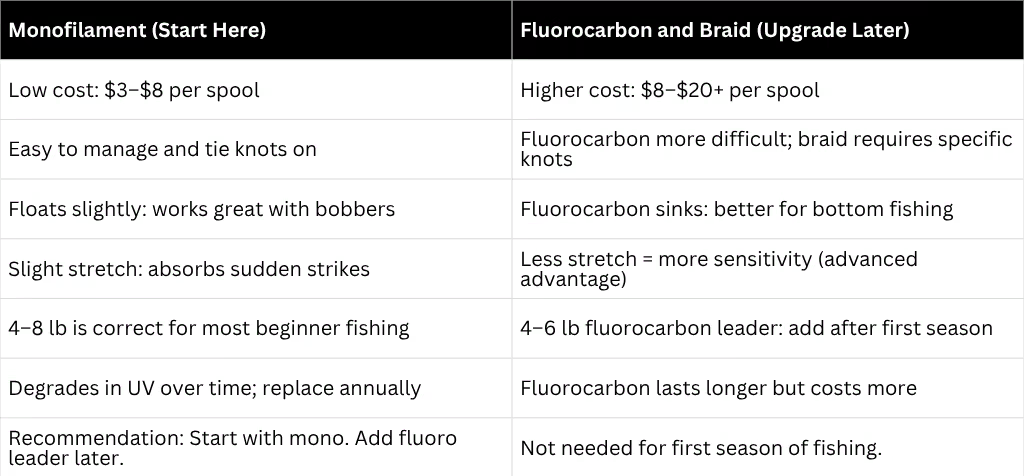
Line: The Most Overlooked Gear Decision
Fishing line is what directly connects you to the fish, and the right line choice makes a real difference in how much you feel bites and how many fish you land. For beginners, the choice is straightforward:
The Starter Tackle Box: Everything You Need for Under $30
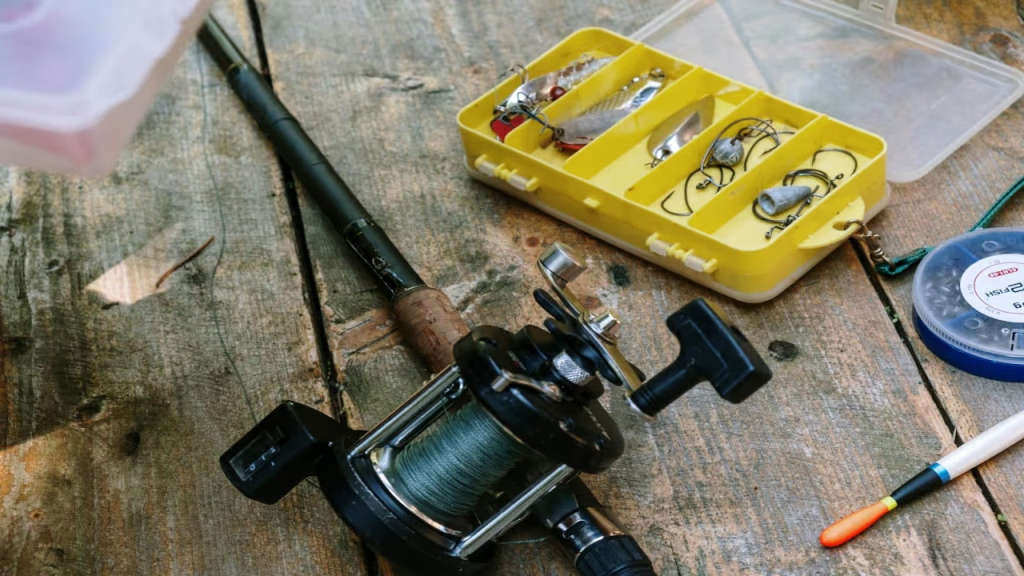
A complete starter tackle kit doesn’t require a massive investment. The items below cover virtually every beginner fishing scenario — stocked pond trout with dough bait, panfish and bass with worms, crappie under a bobber, and active casting with spinners. Many of these are available as bundled starter kits from Eagle Claw, South Bend, or similar brands.
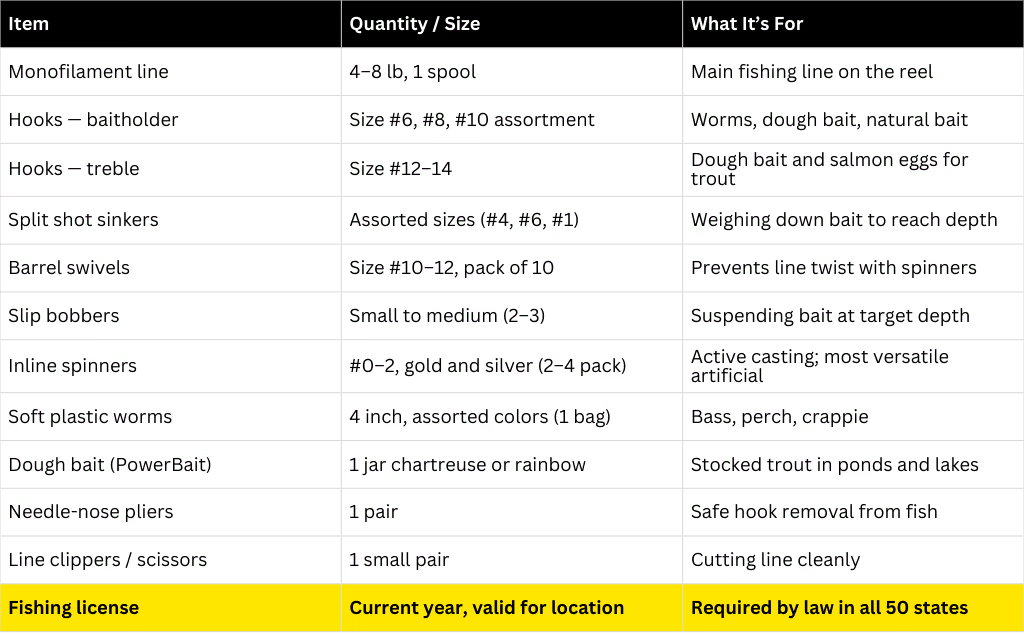
This kit fits in a small plastic tackle box ($5-$8 at any sporting goods store) and weighs under 2 pounds. Everything except the rod, reel, and fishing license can be purchased in one transaction at Walmart, Dick’s Sporting Goods, or Bass Pro Shops.
Where to Go Fishing — Choosing Beginner-Friendly Locations
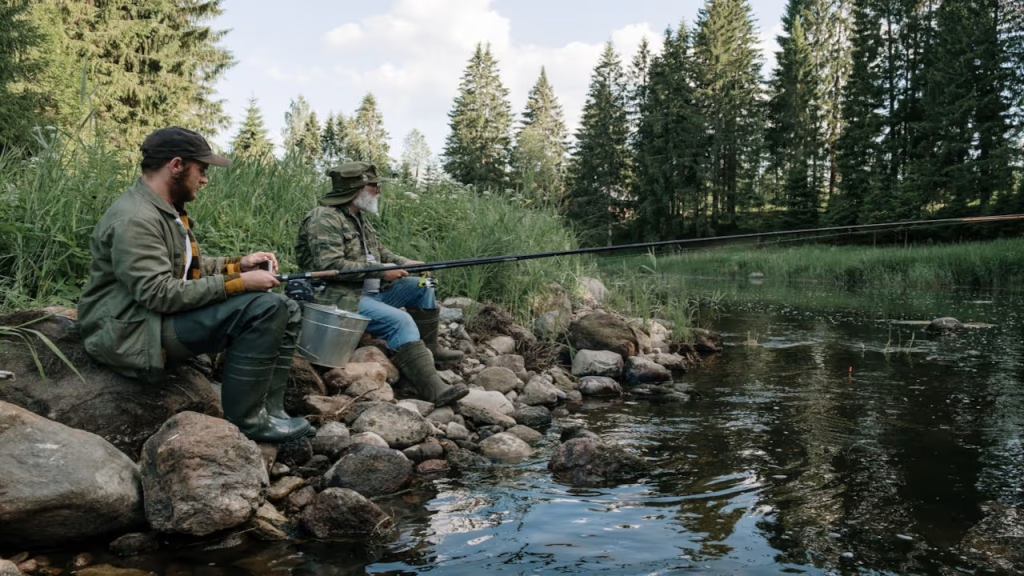
The Best First Fishing Locations Are Closer Than You Think
One of the most common beginner questions is “where do I find a place to fish?” The answer, for most of the country, is closer than expected. Every state’s fish and wildlife agency maintains a list of public fishing access points, stocked water locations, and approved public waters. Most of these are free to access with a valid fishing license.
Finding Fishing Locations Near You — Free Resources
- Your state fish and wildlife agency website: Every state publishes free lists of public fishing lakes, ponds, reservoirs, and stream access points. Search ‘[your state] fishing access’ or ‘[your state] fish and wildlife’ to find the official state resource. Most have interactive maps showing public fishing locations.
- FishAngler and Fishbrain: Free mobile apps that map public fishing locations, report recent catches, and identify accessible water near your location. Both have large user communities reporting current conditions.
- Google Maps satellite view: Look for any body of water near you, then look for public land (parks, wildlife areas, green-colored land on the map) adjacent to that water. This identifies public bank access on unfamiliar water.
- State park and recreation areas: Most state park systems include lakes or reservoirs with fishing access. A state parks website lists these reliably. Army Corps of Engineers recreation areas: Many major U.S. reservoirs are Army Corps projects with free public fishing access. usace.army.mil lists recreation areas with fishing access by region.
Pond vs River vs Lake — Where Beginners Catch the Most Fish
The three most common beginner fishing environments are ponds, lakes, and rivers. Each has different fish behavior, different access requirements, and a different learning experience:
•Stocked ponds and public fishing areas: The highest-probability beginner environment. State agencies stock these ponds with catchable-size fish (usually trout, catfish, or panfish) specifically to provide accessible fishing for new anglers. Fish are present, active, and relatively easy to catch with basic gear and bait. These are the ideal first fishing destination for families with children.
•Lakes and reservoirs: More variable than stocked ponds but offer a wider range of species and a more natural fishing experience. Bank fishing on public lake shores is accessible in almost every state. The challenge for beginners is that fish in larger bodies of water can be harder to locate. Focus on the easiest structure: docks, fallen trees, points where shallow water meets deeper water, and any visible submerged structure.
•Rivers and streams: The most challenging beginner environment because of current variability, access requirements, and fish behavior that changes with water level and flow. That said, rivers offer some of the most rewarding fishing once you learn to read current and identify holding areas. Start with the slower sections — pools below riffles, inside bends, and areas behind current-breaking structure.
How Fish Location Changes Through the Seasons
Fish don’t stay in the same place year-round. Understanding the basic seasonal pattern helps you focus on the right area of a lake or river at any time of year:
•Spring (water temperature rising, 50-65°F): The most productive beginner fishing season. Fish move toward shallow water to spawn. Bluegill and crappie appear in large numbers in shallow coves and near docks. Bass cruise shorelines. Stocked trout are active near the surface. Focus: shorelines, shallow coves, docks, visible structure in 2-6 feet of water.
•Summer (65-80°F+): Fish move to slightly deeper, cooler water during the hottest part of the day. Early morning (first 2 hours after dawn) and evening (last 2 hours before dark) are the most productive windows. Catfish feed actively at night. Focus: shaded areas, deeper edges, early morning and evening hours.
•Fall (water cooling, 55-65°F): A second productive season as cooling water triggers feeding activity. Fish fatten up before winter. Bass and crappie return to shallower water. Focus: similar to spring — transitional shoreline areas, coves, and structure.
•Winter (below 50°F): Slowest season for most beginner-friendly species. Fish slow down metabolically and feed less frequently. Catfish in deep holes remain catchable with fresh bait. Trout fishing in tailwaters below dams can be excellent. In Southern states, winter fishing remains productive much longer than Northern states.
Basic Fishing Techniques — How to Rig, Cast, and Present Your Bait
The Three Beginner-Friendly Rigs That Catch Fish
Bobber & Worm Rig
The Classic First Fishing Setup – Work Everywhere
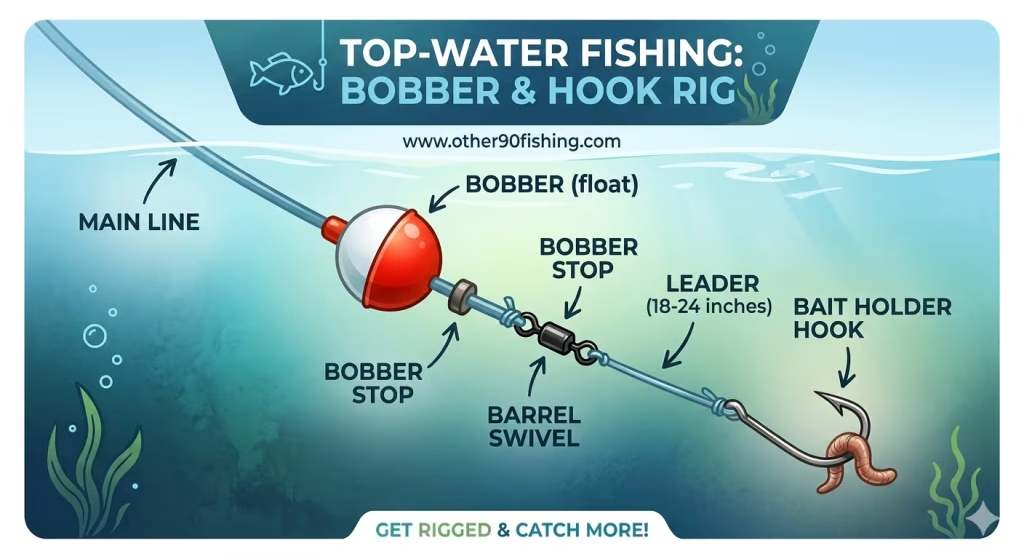
What it is: A small bobber (float) clipped or threaded onto your line 1-3 feet above a small baitholder hook with a worm or nightcrawler. The bobber keeps your bait suspended at the set depth and signals a bite when it dips or moves.
When to use it: Panfish (bluegill, sunfish, perch), crappie, and small bass in still or slow water. Lakes, ponds, and slow river pools. Spring and summer when fish are near the surface.
How to rig it: Clip or thread bobber onto line. Tie a size #8-10 baitholder hook using an improved clinch knot (5 wraps around the line, thread through the loop, pull tight). Add 1-2 small split shot weights 6-8 inches above the hook to keep the bait from floating. Thread a nightcrawler onto the hook.
The improved clinch knot: Thread line through hook eye, wrap the loose end around the main line 5-6 times, thread the loose end back through the loop near the eye, thread through the large loop formed, pull tight and trim. This is the one knot every angler needs. Practice on a hook with the bend cut off before fishing.
Family note: The bobber rig is the most engaging setup for young children because the visual feedback is immediate — the bobber moves and they know something is happening. Set the depth shallow (1-2 feet) for panfish near docks and shorelines.
Bottom Bait Rig (Slip Sinker)
For catfish, carp & bottom feed fish
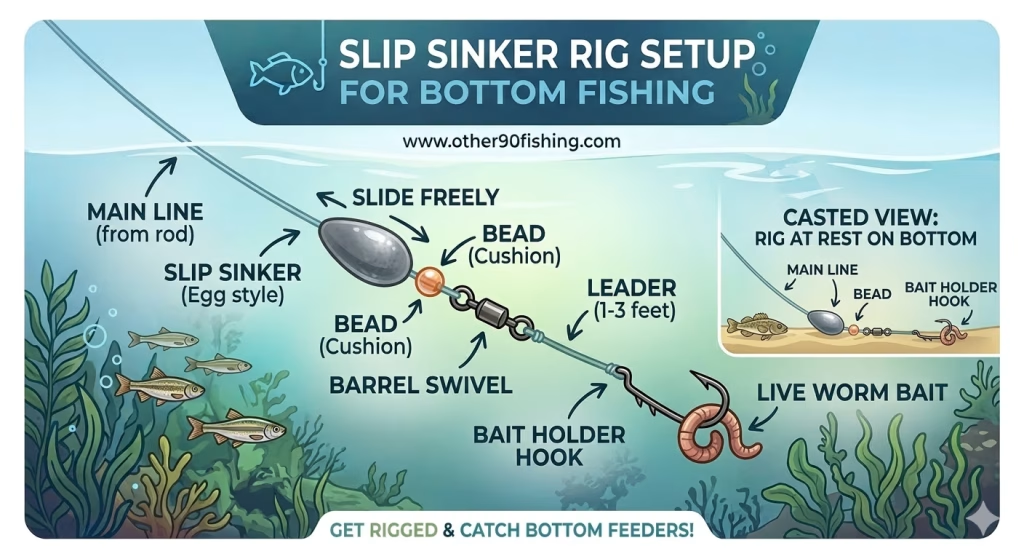
What it is: A sliding egg sinker on the mainline, stopped by a small barrel swivel, with a 12-18 inch leader to a hook baited with chicken liver, dough bait, worms, or cut bait. The sinker rests on the bottom while the bait floats slightly above, dispersing scent.
When to use it: Catfish and carp in rivers, ponds, and lakes. All seasons, but particularly effective in summer and fall. Works from bank or boat with the rod in a holder.
How to rig it: Thread an egg sinker (1-2 oz) onto your mainline. Tie a small barrel swivel to stop the sinker. Tie a 12-18 inch length of 15-20 lb monofilament to the other swivel eye. Tie a size #1-1/0 baitholder or circle hook to the leader. Bait with a tablespoon of dough bait or a golf-ball-size piece of chicken liver.
Circle hooks for beginners: A circle hook is designed to hook a fish in the corner of the mouth as it swims away with the bait — no active hookset required. This is the ideal hook for beginners using a bottom rig because it allows you to set the rod down and wait, and the fish hooks itself. Use circle hooks for catfish whenever possible.
Patience is the technique: Bottom fishing for catfish requires waiting 30-60 minutes per location in prime summer conditions. This is the most family-friendly fishing style for young children who aren’t ready to cast repeatedly — bait the hook, put the rod in a holder, and wait.
Spinners & Lures
Active feeding fish
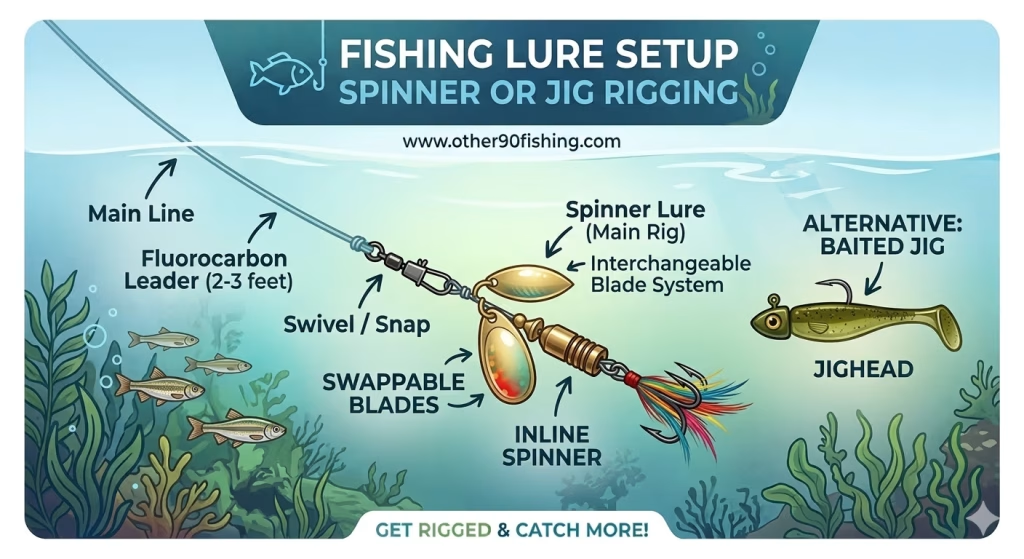
What it is: An inline spinner or small soft plastic attached directly to the mainline via a small barrel swivel, retrieved through the water to attract fish by flash and vibration.
When to use it: Bass, trout, perch, and crappie in clear water when fish are actively feeding. Spring and early summer prime. Works in ponds, lakes, and slower river sections.
How to use a spinner: Tie a small barrel swivel to your mainline using an improved clinch knot. Tie a 12-18 inch leader of 6-8 lb monofilament. Clip or tie the spinner to the leader. Cast past the target area (near a dock, log, or shoreline), let it sink 1-2 seconds, then retrieve at a steady medium speed — fast enough to keep the blade spinning but slow enough that the lure is fishing through the water column.
For trout: Small inline spinners in gold (#0-2 Panther Martin or Mepps Aglia) are among the most effective and beginner-friendly trout lures available. Cast quartering upstream in rivers; retrieve slowly downstream. In lakes, cast parallel to the shoreline and vary depth until you find where fish are holding.
For bass: A 4-inch soft plastic worm rigged on a 1/16-1/8 oz jig head is a simple and highly effective beginner bass presentation. Cast near visible cover (fallen logs, dock pilings, weedy points), let it sink to the bottom, and drag it slowly back with occasional short hops.
How to Cast a Spincast Rod: The Four-Step Method
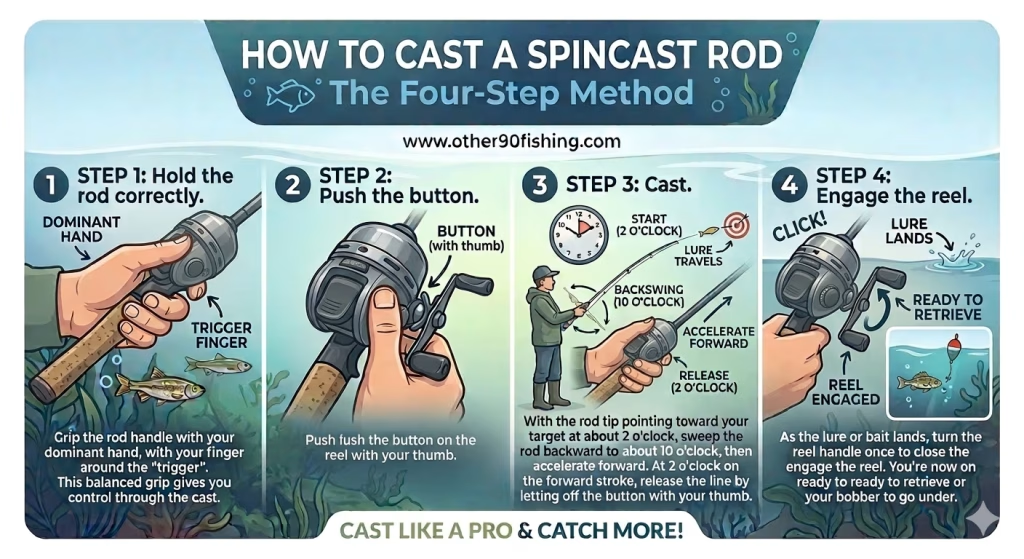
STEP 1: Hold the rod correctly. Grip the rod handle with your dominant hand, with your finger around the “trigger”. This balanced grip gives you control through the cast.
STEP 2: Push the button with the thumb holding the fishing rod.
STEP 3: Cast. With the rod tip pointing toward your target at about 2 o’clock, sweep the rod backward to about 10 o’clock, then accelerate forward. At 2 o’clock on the forward stroke, release the line by letting off the button with your thumb.
STEP 4: As the lure or bait lands, turn the reel handle once to close the engage the reel. You’re now ready to retrieve or your bobber to go under.
Common beginner mistakes
- Releasing too late: Lure goes straight into the ground. Release earlier (higher than 2 o’clock).
- Releasing too early: Lure goes straight up. Release later (lower than 2 o’clock).
- Casting too hard: Power comes from rod flex and timing, not arm strength. A controlled, fluid motion casts farther than a hard throw.
- Forgetting to open the bail: The lure doesn’t go anywhere. Always check that the bail is open before casting.
TIP: Practice casting on a lawn with a practice plug (a small rubber weight without hooks) before fishing. 15 minutes of practice casts dramatically improves casting accuracy before you arrive at the water.
Safety, Licenses, and Conservation — Being a Responsible Angler
Fishing Licenses: Required in All 50 States
A fishing license is required by law to fish in any public water in all 50 U.S. states. Fishing without a license is a fineable offense in every state, and game wardens actively check licenses at popular fishing locations, particularly during opening weekends and stocking events. The license revenue directly funds fish stocking programs, habitat restoration, and public fishing access — so purchasing your license is both a legal requirement and a direct contribution to the fishing you’re about to do.
•Where to buy: Every state sells fishing licenses online through the state fish and wildlife agency website. Most are also available at major sporting goods retailers (Bass Pro Shops, Cabela’s, REI, Dick’s Sporting Goods) and many Walmart stores with sporting goods sections. Many states now offer digital licenses displayed on your phone — no paper required.
•Cost: Typically $15-$60 for an annual resident fishing license. Reduced-cost or free licenses are available for children (usually under 16), senior citizens, active military, and disabled anglers in most states. Check your state’s fee schedule before purchasing.
•What license you need: Start with a standard freshwater fishing license for your state of residence. If you fish in a state other than your residence, purchase a non-resident license for that state. Some states also require a separate trout stamp for trout fishing.
Water Safety Basics – Read this befor your first trip
- Wear a PFD (life jacket) when fishing from a boat. A PFD stored under the seat of a boat does not help if you fall in. Wear it.
- Children near water should wear a properly fitted Type II or III PFD at all times when near open water, regardless of swimming ability.
- Never fish from a boat alone without telling someone where you’re going and when you’ll be back. Leave a float plan.
- Bank fishing near rivers or fast-moving water: Test each step before shifting weight. Wet rocks and mud banks are genuinely slippery. Never wade into unfamiliar current in darkness.
- Night fishing: Always use a headlamp with hands-free lighting when fishing after dark. Walking to and from the water without lighting is the most common cause of night fishing injuries.
- Weather: Lightning on open water is one of the highest-risk outdoor activities. Exit immediately at the first sign of lightning. Do not wait for rain to start.
- Hook safety: Keep barbed hooks in tackle boxes when not in use. Teach children never to cast when anyone is standing behind them. Use pliers for hook removal, not bare fingers.
- Sunscreen and hydration: Summer fishing in the sun requires both. Dehydration and sunburn are the most common non-injury fishing health issues, especially for children.
Catch and Release: How and Why
Catch-and-release fishing allows fish to survive and grow after being caught, maintaining healthy fish populations for future fishing. For most freshwater species caught by beginners, there’s no obligation to keep fish — many beginner anglers choose to release every fish, particularly when fishing with children focused on the experience rather than a meal.
•How to release a fish properly: Wet your hands before handling — dry hands remove the protective slime coat that helps fish resist infection. Keep the fish in the water or minimize air exposure to under 30 seconds. Hold gently but firmly, remove the hook with needle-nose pliers, and lower the fish into the water. Allow it to swim away under its own power.
•When to keep fish: Check your state’s regulations for legal size limits and possession limits before keeping any fish. Most species have minimum size requirements that protect spawning-age fish. Bluegill and sunfish typically have no size limit and a generous possession limit — they’re excellent eating and appropriate for beginners to keep and clean. Trout size limits vary significantly by state and water type.
•Conservation basics: Don’t litter at fishing access points. Pack out what you pack in. Dispose of used fishing line properly — monofilament recycling bins are available at many boat ramps. Used line that ends up in the water entangles wildlife. Be a good steward of the access points you use — public fishing areas are maintained by your license fees and the effort of volunteer organizations.
Beginner Fishing Mistakes
- Fishing the wrong depth. Most beginners fish too deep or too shallow. Start with your bobber set at 2-3 feet in still water; adjust if no bites in 10-15 minutes.
- Moving too often. Fish need time to find your bait. Give a spot 10-15 minutes before moving. Many beginners move after 3 minutes and miss the fish that were approaching.
- Too much bait. A small piece of worm (1-2 inch) on a #8-10 hook catches more fish than a whole nightcrawler on a large hook. The hook needs to be exposed enough to catch.
- Setting the hook too hard. A firm upward rod sweep of 6-12 inches is all that’s needed for most freshwater fish. A violent hookset snaps light line and can pull the hook out of a fish’s mouth.
- Not having a fishing license. Always purchase your license before you fish, not after. Fines for fishing without a license range from $50-$500+ depending on the state.
Putting It All Together — Your First Fishing Trip, Step by Step
Complete First Fishing Trip Checklist
ONE WEEK BEFORE:
✓ Purchase state fishing license online (state fish and wildlife agency website).
✓ Choose a beginner-friendly location: stocked pond, state park lake, or public fishing area.
✓ Practice the improved clinch knot with a cut-off hook end until you can tie it reliably.
✓ Purchase gear: spinning combo ($20-$55), basic tackle kit ($15-$20), monofilament line (pre-spooled or spool), dough bait or nightcrawlers.
THE NIGHT BEFORE:
✓ Set up your rod and reel. Spool with 6 lb monofilament if not pre-spooled.
✓ Pack your tackle box. Check all gear is organized and accessible.
✓ Check the weather forecast for the fishing window.
AT THE WATER:
✓ Start with a bobber and worm rig, bobber set at 2-3 feet.
✓ Fish near visible structure: docks, fallen trees, shoreline brush, or point where shallows meet deeper water.
✓ Give each spot 10-15 minutes before moving.
✓ Adjust bobber depth if no bites: try 1 foot shallower, then 1 foot deeper.
✓ Use pliers for hook removal. Wet your hands before handling fish.
✓ Take photos. Beginners often catch more fish than they expect on a first trip.
SAFETY REMINDERS:
✓ PFD on if fishing from any watercraft.
✓ Children in PFDs if near open water.
✓ Exit at first sign of lightning.
✓ Pack out all trash including used fishing line.
Every Angler Started Exactly Where You Are
Every experienced angler in the country started with a rod they didn’t quite know how to use, a tackle box full of items they didn’t fully understand, and a first trip that was more about learning than catching. The learning curve for basic freshwater fishing is short — shorter than most beginners expect. Most first-time anglers catch fish on their first trip when they choose an accessible location, bring correct gear, and apply the foundational techniques in this guide. The fish are out there. Your first bite is closer than you think.