A simple, beginner-friendly guide that teaches new anglers how to catch bass using the right gear, locations, and techniques.
Bass fishing is the most popular freshwater fishing pursuit in the United States, and for good reason. Largemouth bass are found in virtually every state, in everything from farm ponds to 100,000-acre reservoirs. They’re aggressive, they respond to dozens of different lure types, and a 3-pound bass on a medium-light spinning rod is genuinely exciting. Bass fishing is also the rare activity where the more you learn, the more there is to discover — a depth of technique that keeps experienced anglers engaged for decades but is completely accessible to beginners on day one.
The catch: bass fishing has accumulated a lot of gear, jargon, and complexity that can make it feel intimidating from the outside. Walk into a tackle shop and you’ll find hundreds of lure types, dozens of rod configurations, multiple rig systems, and strong opinions about all of it. This guide skips all of that for now. It covers exactly what a beginner needs to know to go bass fishing and catch fish — the gear that works, the locations that hold bass in different seasons, the lures that are genuinely beginner-friendly, and the techniques that produce results before you’ve developed the muscle memory that comes from hundreds of hours on the water.
Beginner’s Guide to Bass Fishing: Everything You Need to Start
Largemouth vs Smallmouth: Know Your Target Before You Cast
Bass fishing in the U.S. primarily means one of two species: largemouth bass or smallmouth bass. They look similar, they often share the same water, and catching one feels approximately the same on the rod — but their habitat preferences, feeding behavior, and optimal techniques differ enough that knowing which species you’re likely to encounter shapes your approach.
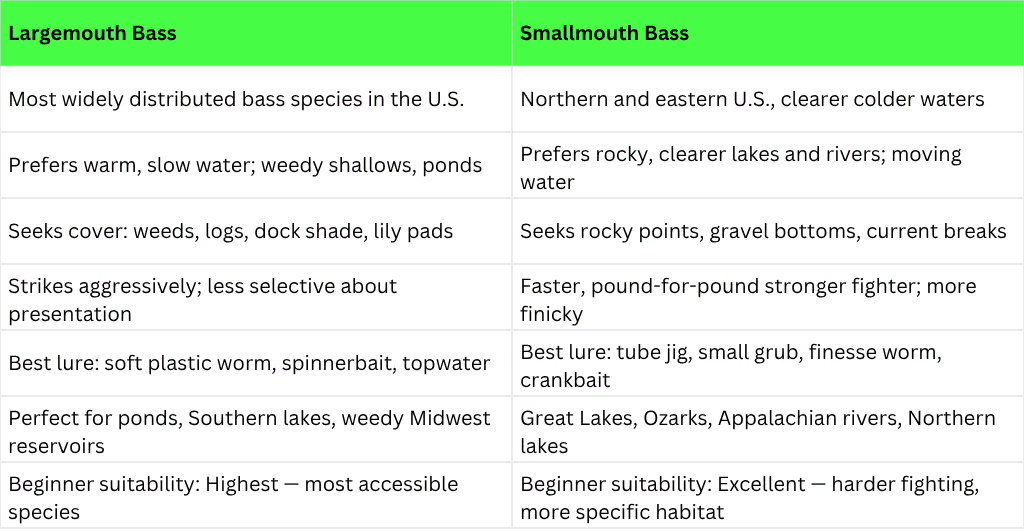
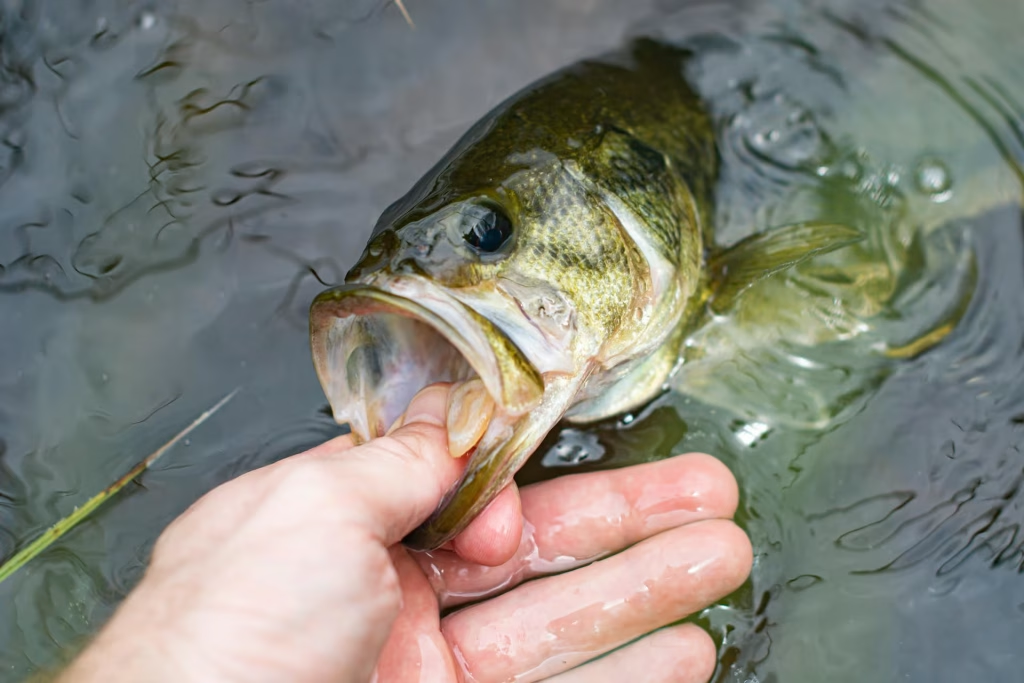
For most beginners in most of the country, largemouth bass is the primary target — they’re more broadly distributed, more tolerant of warm and slightly murky water, and more likely to be in the local pond, lake, or reservoir you’ll fish first. This guide focuses primarily on largemouth with notes on smallmouth where relevant.
Where to Find Bass — Reading Water for Beginners
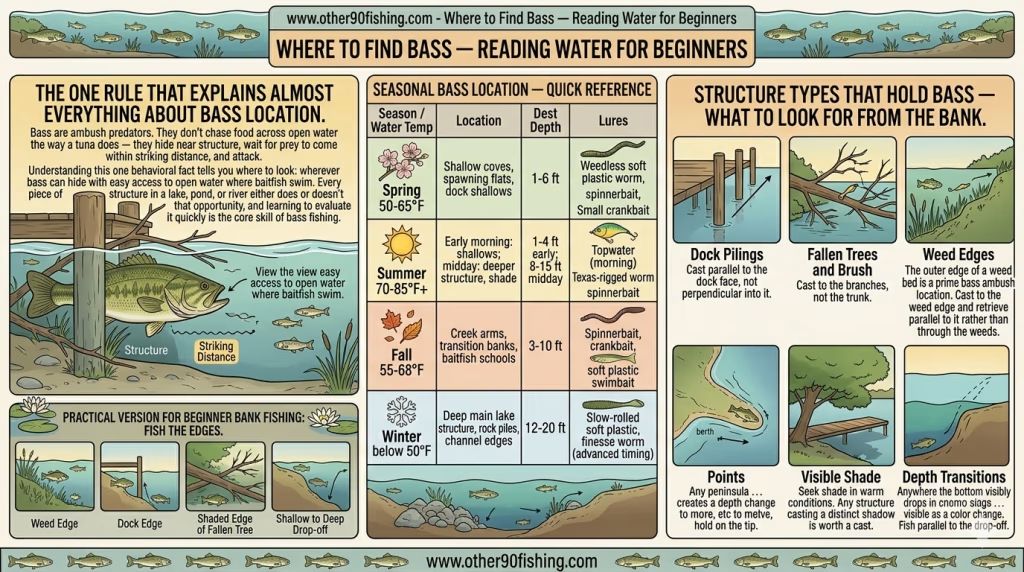
The One Rule That Explains Almost Everything About Bass Location
Bass are ambush predators. They don’t chase food across open water the way a tuna does — they hide near structure, wait for prey to come within striking distance, and attack. Understanding this one behavioral fact tells you where to look: wherever bass can hide with easy access to open water where baitfish swim. Every piece of structure in a lake, pond, or river either does or doesn’t create that opportunity, and learning to evaluate it quickly is the core skill of bass fishing.
The practical version of this rule, for a beginner bank fishing a pond or small lake: fish the edges. The edge of a weed bed. The edge of a dock. The shaded edge of a fallen tree in the water. The edge where shallow water drops off into deeper water. Bass hold on the edge — the transition between hiding cover and open hunting water — consistently across all seasons and conditions.
Seasonal Bass Location — Quick Reference
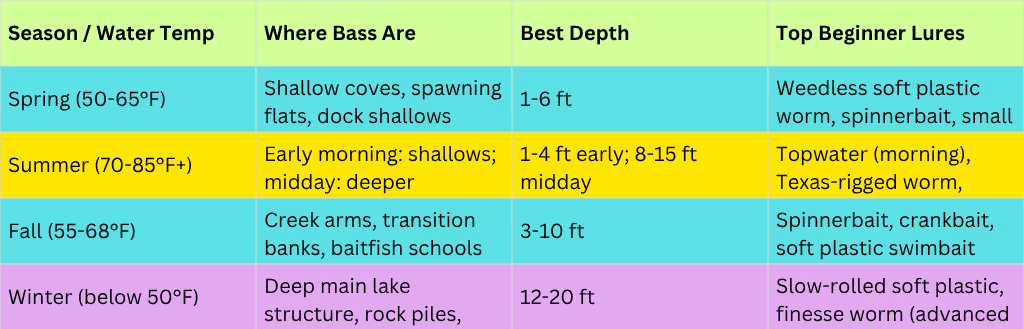
Spring is the best beginner season: During spring, largemouth bass move into the shallowest water of the year to spawn. A 3-5 lb bass that spent winter in 15 feet of water is now sitting in 2-3 feet of water near a dock, fallen tree, or shallow cove. This makes spring the season when bass are most accessible from the bank, most visible in clear water, and most aggressive in their feeding. If you’re learning bass fishing, spring is your best classroom.
Structure Types That Hold Bass — What to Look for From the Bank
- DOCK PILINGS: Bass hold in the shade under docks year-round. Cast parallel to the dock, not perpendicular into it. Work your lure along the dock face, hitting each piling.
- FALLEN TREES AND BRUSH: Any submerged wood creates habitat. Cast to the branches, not the trunk. Let the lure sink alongside the branches and retrieve slowly through them.
- WEED EDGES: The outer edge of a weed bed is a prime bass ambush location. Cast to the weed edge and retrieve parallel to it rather than through the weeds.
- POINTS: Any peninsula of land that extends into the water creates a depth change on both sides. Bass use points to move from deeper to shallower water and often hold on the tip.
- VISIBLE SHADE: Bass seek shade in warm conditions. Any dock, overhanging tree, or structure casting a distinct shadow on the water surface is worth a cast in summer.
- DEPTH TRANSITIONS: Anywhere the bottom visibly drops from shallow to deeper water (visible as a color change in clear water) is a bass travel corridor. Fish parallel to the drop-off.
The Three Beginner Bass Lures That Actually Catch Fish
The honest truth about bass lures is that there are hundreds of options that work in specific conditions and probably a dozen that work reliably for beginners across a wide range of conditions and seasons. We’re going to cover three. These three lure types are the ones that have caught the most bass for the most beginners in the most conditions, and they’re all you need for a full first season of bass fishing.
Texas-Rigged Soft Plastic Worm — The Most Versatile Bass Lure Ever Made | Beginner-Friendly: ★★★★★
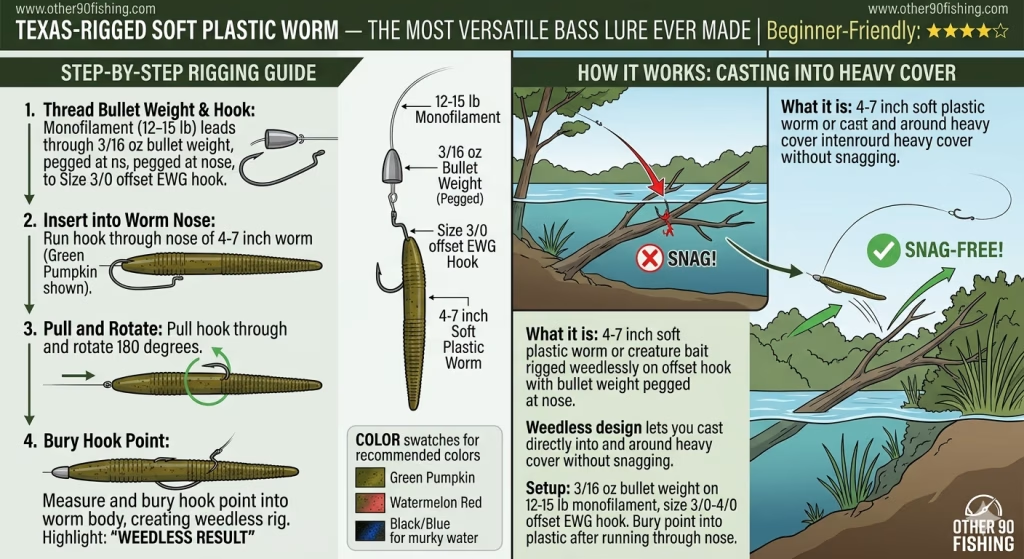
What it is: A 4-7 inch soft plastic worm (or creature bait) rigged weedlessly on an offset hook with a bullet weight pegged at the nose. The weedless design lets you cast it directly into and around heavy cover without it snagging.
Why beginners love it: It catches bass. Full stop. The Texas rig has produced more bass for more anglers over more decades than any other single presentation. It works in ponds, lakes, rivers, and reservoirs. It works in spring, summer, and fall. It works in clear water and murky water.
How to fish it: Cast near structure (dock piling, fallen tree, weed edge). Let it sink to the bottom on a semi-slack line — watch the line for a twitch as it sinks, because bass often hit on the fall. Once it hits bottom, drag it slowly with occasional hops. Pause frequently. The majority of bites come when the lure is sitting still.
Setup: 3/16 oz bullet weight on 12-15 lb monofilament, size 3/0-4/0 offset EWG hook. Bury the hook point into the plastic after running it through the nose. Colors: green pumpkin, watermelon red, and black/blue for murky water.
The mistake beginners make: Retrieving too fast. Drag it slowly. Leave it sitting still for 3-5 seconds between movements. Bass are lazy ambush predators and they want the food to come to them.
Brands: Zoom Trick Worm, Roboworm, Gary Yamamoto Senko, Strike King Rage Tail, Berkley PowerBait Maxscent. All are widely available and reliably productive.
Spinnerbait — The Easiest Active-Retrieve Bass Lure for Beginners | Beginner-Friendly: ★★★★★
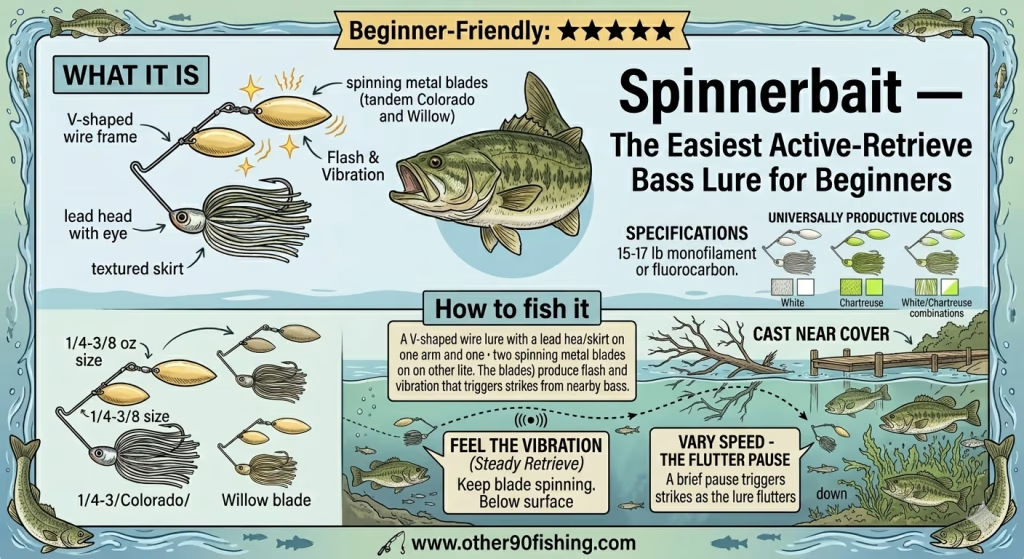
What it is: A V-shaped wire lure with a lead head/skirt on one arm and one or two spinning metal blades on the other. The blade(s) produce flash and vibration that triggers strikes from nearby bass.
Why it works for beginners: It requires no technique beyond casting and reeling at a steady pace. The blade vibration telegraphs through the line so you know the lure is working. Bass strike it aggressively — there’s no subtle bite to detect. You’ll feel it.
How to fish it: Cast near visible cover (dock, fallen tree, weed edge) or along a shoreline. Reel at a pace that keeps the blade spinning (you can feel the vibration) without the lure breaking the surface. Vary the retrieve speed — sometimes a brief pause triggers a strike as the lure flutters down.
When it works best: Spring and fall when bass are active and feeding aggressively. Overcast days when bass are less light-sensitive and move more freely. Murky water where the vibration compensates for reduced visibility.
Setup: 1/4-3/8 oz tandem Colorado/willow blade spinnerbait on 15-17 lb monofilament or fluorocarbon. White, chartreuse, and white/chartreuse combinations are the most universally productive colors.
Brands: Strike King KVD Spinnerbait, Booyah Blade, Terminator T-1 Spinnerbait. All available at Bass Pro Shops, Cabela’s, and major online retailers in the $5-$12 range per bait.
Topwater Popper or Walking Bait — Bass Exploding on the Surface | Beginner-Friendly: ★★★★
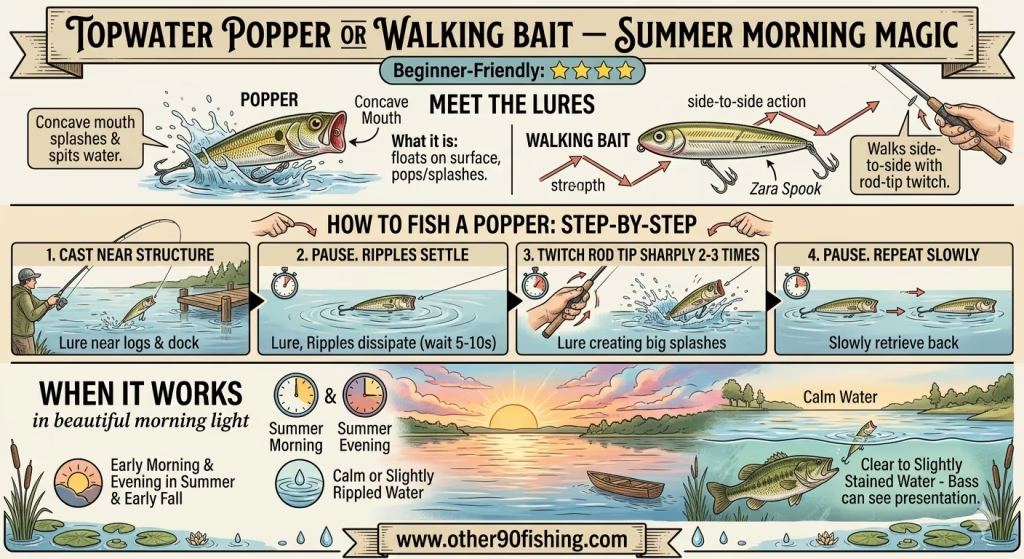
What it is: A hard-bodied lure that floats on the surface and creates a popping or walking action when retrieved. A popper has a concave mouth that splashes and spits water. A walking bait (like a Zara Spook) walks side-to-side with a rod-tip twitch technique.
Why it’s exciting: Bass strikes on topwater are completely visual. You see the wake, the swirl, and the explosion as the fish attacks. It is the most visceral bite in bass fishing and the primary reason most anglers became obsessed with the sport.
How to fish a popper: Cast near structure or any visible surface disturbance. Let the ripples settle (5-10 seconds). Twitch the rod tip sharply 2-3 times to make the popper splash and spit. Pause. Repeat slowly back to the boat or bank.
When it works: Early morning and evening in summer and early fall when bass are feeding near the surface. Calm or slightly rippled water (not choppy). Clear to slightly stained water where bass can see the surface presentation.
Beginner note: Don’t set the hook when you see the swirl. Set when you feel the weight. Bass often miss topwater lures on the first strike and return — many beginners set too early on the visual and pull the lure away from the fish.
Brands: Rebel Pop-R, Strike King Sexy Dawg, Heddon Zara Spook, Lucky Craft Sammy. Poppers ($5-$10) are more beginner-friendly than walking baits, which require the rod-twitch retrieve technique.
Bass Fishing Gear for Beginners — What You Need and What You Can Skip
The Rod and Reel: Spinning Is Still the Right Starting Point
The bass fishing world is dominated by baitcasting gear — walk through the bass section of any tackle shop and you’ll find more baitcasting combos than spinning. Most tournament bass anglers fish baitcasters almost exclusively. The reason is precision: a baitcaster, when mastered, allows for more accurate casts to specific targets and handles heavier lures more efficiently.
But the emphasis is on “when mastered.” A baitcaster requires learning to feather thumb pressure on the spool during a cast to prevent the spool from outrunning the lure and creating a tangled mess. This takes deliberate practice over multiple weeks. A beginner on a baitcaster spends significantly more time untangling backlashes and significantly less time fishing. The spinning reel remains the right starting point for new anglers.
Beginner Bass Rod and Reel Recommendation
ROD: 6.5–7 ft, Medium or Medium-Heavy power, Fast action spinning rod
Why: Long enough for casting distance, medium power handles lures from 1/8 oz up through 3/4 oz, fast action telegraphs bites and loads quickly for hooksets.
REEL: 2500–3000 size spinning reel with front drag
Why: Matched to 6.5–7 ft medium spinning rod, enough line capacity for 150+ yd of 10-12 lb monofilament.
LINE: 10–12 lb monofilament mainline for most beginner bass fishing
Or: 15–20 lb braid with 10–12 lb fluorocarbon leader (upgrade after first season)
BRANDS: Shakespeare Ugly Stik GX2 7 ft Medium-Heavy, Zebco Roam or Abu Garcia Max X spinning reel, Abu Garcia Max X or Pflueger Trion combo
WHEN TO ADD A BAITCASTER: After your first full season of bass fishing, if you want to fish heavier lures (3/4 oz+), make more precise casts to specific targets, or explore bass fishing seriously. Not before.
The Bass Fishing Gear You Don’t Need Yet
Part of getting started right is knowing what to skip. Bass fishing marketing is aggressive and effective at convincing anglers to buy more than they need. Here’s what a beginner genuinely doesn’t need in their first season:
A baitcasting combo: Covered above. Spinning first, baitcasting second. No exceptions for Year 1.
More than 5 lure types: The three lure cards above cover everything you need. Resist the wall of options in the tackle shop until you’ve developed a feel for when each of the three works.
Any lure over $15: Bass don’t read price tags. A $4 spinnerbait catches fish as reliably as a $18 one. The $18 version may have slightly better blade quality or hook sharpness, but it’s not a meaningful difference at the beginner stage.
Electronics (fish finder) for bank fishing: Fish finders are boat-mounted tools. A beginner bank fishing a pond doesn’t need one. Learn to read water visually first.
More than 10-12 lb line for most beginner scenarios: Heavier line reduces casting distance and feel. 12 lb monofilament handles largemouth bass in the 8-10 lbs in most cover situations.
Bass Fishing Mistakes Beginners Make (And How to Fix Them
- Fishing too fast. Bass are ambush predators that want food to come to them. A Texas-rigged worm dragged across the bottom at walking pace isn’t what bass respond to. Drag slowly, pause 3-5 seconds, hop gently. If you think you’re going slow enough, go slower.
- Setting the hook on topwater too soon. You see the explosion and your arm moves before your brain does. The result: the lure is pulled away from the fish before it has the hook. Wait for the rod to load with the weight of the fish before sweeping. This takes deliberate practice.
- Not watching the line on soft plastic presentations. Most bass strikes on Texas-rigged worms happen on the fall, before the lure hits bottom. The only way to detect these bites is to watch the line as it sinks. If the line twitches, moves sideways, or stops sinking before it should: set the hook.
- Fishing the middle of the pond. Bass are structure-oriented. Open water in the middle of a pond is not where bass live. Cast to the edges, the structure, the depth transitions. The middle is where beginners spend time and don’t catch fish.
- Using line that’s too heavy for the presentation. 20 lb monofilament on a Texas-rigged finesse worm in clear water tells the bass something is wrong. 10-12 lb fluorocarbon or monofilament is nearly invisible to bass and allows the lure to move naturally.
- Giving up on a location too quickly, or staying too long. Two extremes to avoid: casting once and moving, and spending 45 minutes at an unproductive spot. Give each piece of structure 3-5 casts with different presentations before moving. Move every 10-15 minutes if nothing is happening.
Start Simple, Learn Constantly
Bass fishing is one of those activities where you can catch fish on your very first trip and still be genuinely learning something new 20 years later. The beginner’s version — a medium spinning rod, a Texas-rigged worm, and a pond with docks and fallen trees — is genuinely fun and genuinely productive. The advanced version involves seasonal patterns, hydrographic maps, lure modification, and nuance that takes years to develop. Both are the same sport, and the path from one to the other is just time on the water.
This guide is the cornerstone of the Bass Fishing category on Other90Fishing.com. The supporting articles below go deeper on every topic introduced here: early-spring staging patterns, water temperature and bass behavior, the best lures for each season, setting up for bank fishing, and regional guides to bass waters across the country. Start with what you’ve learned here, get on the water, and let the fish teach you the rest. They’re remarkably good at it.
Medium rod. Texas rig. Slow retrieve. Structure. That’s bass fishing.