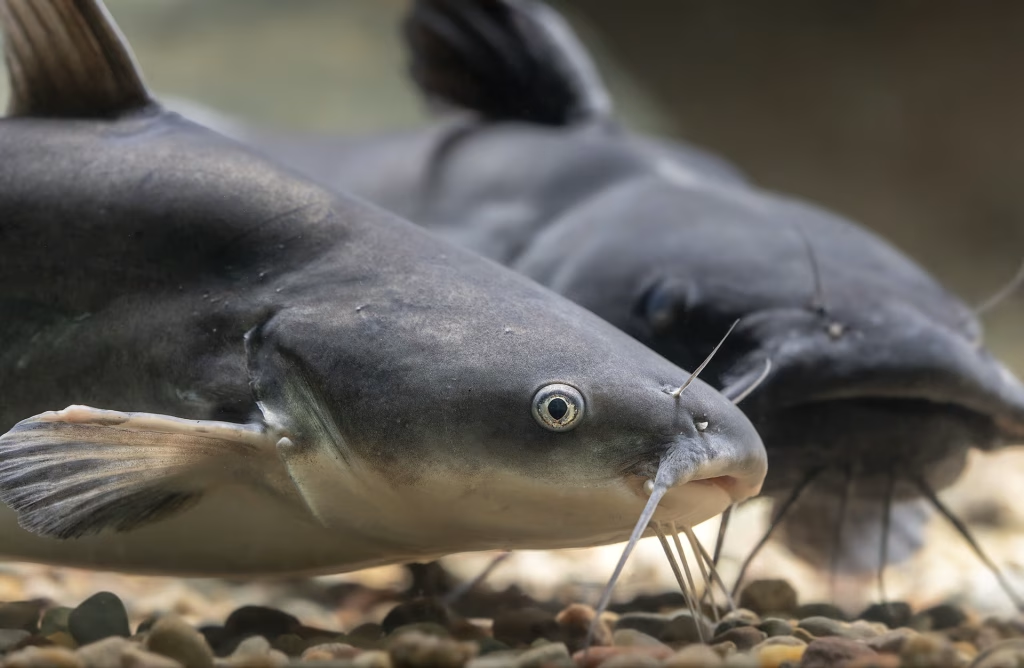
A simple, beginner-friendly guide that teaches new anglers how to choose the right catfish gear, pick the best baits, find productive spots, and catch channel, blue, and flathead catfish with confidence.
Catfishing is one of the most rewarding entry points into freshwater fishing in the United States. It doesn’t require expensive gear, specialized casting technique, or years of experience to catch real fish on your first outing. What it does require is basic knowledge: which species you’re likely to encounter, what they eat, where they live in different seasons, how to rig a simple setup, and a little patience at the water’s edge. This guide covers all of it.
Catfish are found in nearly every freshwater system in the country — ponds, rivers, reservoirs, creeks, and lakes from the Carolinas to California, from the Great Plains to the Gulf Coast. They’re the third most popular sportfish species in the United States, behind only bass and panfish. They fight hard, grow to impressive sizes, and respond well to simple bait-and-wait techniques that are genuinely beginner-friendly. A family catfishing outing on a summer evening is one of the most accessible outdoor experiences in freshwater fishing — and catching a 5-pound channel catfish on a worm and a slip sinker rig is a fish story that doesn’t get old.
This is the cornerstone guide for the Catfish Fishing category on Other90Fishing.com. Everything in the catfish section — the location guides, the seasonal articles, the bait guides, the gear breakdowns — connects back to the foundation you’ll build here. By the end, you’ll know the three catfish species you’re most likely to encounter, what gear to buy and why, which baits work for beginners and which are overrated, how to set up the two rigs that catch catfish everywhere, where to find fish by season, and the safety basics that make catfishing with kids a great experience rather than a stressful one.
Meet the Three Catfish Species You’ll Actually Encounter
Walk into a conversation about catfishing and you’ll quickly encounter three names: channel catfish, blue catfish, and flathead catfish. These are the three primary sportfish species in the catfish family across the U.S., and they have genuinely different behavior, habitat preferences, and bait preferences. Knowing which one you’re after — or which one is most likely to be in your local water — shapes every decision about location, bait, and rig.
Channel Catfish — The Most Common Beginner Catfish — Found Everywhere
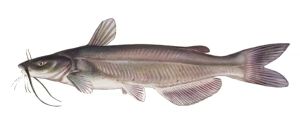
Distribution: The most widely distributed catfish species in the U.S. Found in virtually every state, stocked heavily in public ponds and lakes by state wildlife agencies, present in rivers from the Southeast to the Pacific Northwest. If you’re fishing a local stocked pond, you’re almost certainly targeting channel catfish.
Average size: 1-5 lb in most beginner-accessible waters. Can reach 10-20 lb in rivers and reservoirs. State records commonly exceed 30-40 lb.
What they eat: Channel cats are opportunistic omnivores — they’ll eat almost anything with a strong scent. This is what makes them so beginner-friendly. Worms, chicken liver, dough bait, dip bait, cut shad, dead minnows, hot dogs, shrimp, and more. If it smells interesting to a catfish, a channel cat will eat it.
Identifying features: Forked tail, spotted sides (especially on younger fish), 8 barbels (whiskers) around the mouth, deeply forked tail fin. Blue-gray to olive-brown coloration.
Best season: All seasons, but most active in summer (70-80°F water) and spring. Active year-round in Southern states. Slowest in very cold water below 45°F.
Best for beginners? Absolutely. Channel catfish are the highest-probability catfish target for new anglers, and they fight enthusiastically for their size — a 3-lb channel cat on a light spinning setup is genuinely exciting.
Blue Catfish — The Trophy Species — River Giants and Reservoir Monsters
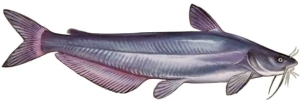
Distribution: The eastern U.S., particularly the Southeast and the Mississippi River basin. Not found as widely as channel cats, but present in major river systems and reservoirs in the South, the TVA lakes system (Tennessee, Kentucky, Alabama), and large reservoirs from the Carolinas to Texas.
Average size: 5-15 lb in most accessible waters. Trophy fish routinely exceed 30-50 lb. The world record is over 143 lb. In premier Southern fisheries like Santee Cooper and Kentucky Lake, fish over 50 lb are caught regularly.
What they eat: Primarily fish — fresh-cut shad and skipjack herring are the premier baits for blue cats in most regions. Less interested in dough bait and prepared baits than channel cats, particularly in larger sizes.
Identifying features: Blue-gray coloration without spots. Forked tail like channel cats, but body is slate blue rather than brown-olive. Straighter anal fin (rounded in channel, straight-edged in blue). Can be hard to distinguish from channel cats when both are small — look at the anal fin edge.
Best season: Year-round in Southern waters. Peak action on large river systems in spring (pre-spawn) and fall (pre-winter feeding). Winter fishing in tailraces below Southern dams is exceptional for big blues.
Best for beginners? As a target species, blue cats are slightly more challenging than channel cats — they’re less likely to respond to prepared baits and more likely to require fresh-cut fish bait. But they’re present in many of the same waters as channel cats, and a first blue cat over 10 pounds is an experience worth pursuing.
Flathead Catfish — The Ambush Predator — Live Bait Only, Worth the Challenge
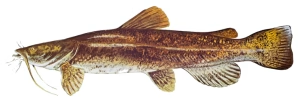
Distribution: Central and eastern U.S., primarily river systems. Mississippi River basin, rivers of the Southeast and lower Midwest. Less widely distributed than channel or blue cats — they’re river and reservoir fish rather than pond fish.
Average size: 5-20 lb in most fishing situations. Trophy fish reach 40-70+ lb. World record exceeds 120 lb.
What they eat: Flatheads are almost exclusively live-bait hunters. They prefer large live bluegill, creek chubs, or bullheads. They very rarely take dead or prepared baits. This behavioral difference is the most important thing to know about flatheads — if you’re using chicken liver or dough bait, you’re not flathead fishing.
Identifying features: Flat, wide head (which gives them their name). Mottled brown and yellow coloration. Square or slightly notched tail rather than deeply forked. Smaller eyes positioned on the sides of the flat head.
Best season: Summer and fall. Night fishing is the premier approach — flatheads are highly nocturnal, particularly in warm-weather months.
Best for beginners? Not the first target choice. The live-bait requirement and nocturnal behavior make flathead fishing more specialized. Catch a hundred channel cats first, then graduate to flatheads.
The Gear You Actually Need (And Nothing You Don’t)
The catfish gear section of this guide could be an encyclopedia of options, techniques, and tackle varieties. We’re not going to do that to you. Here’s what a beginner catfish angler actually needs, why each item matters, and what to buy in each category.
Rod and Reel: Medium-Heavy Is the Target
The ultralight spinning rod that works beautifully for trout and panfish is the wrong tool for catfishing. Catfish are heavy, strong, and prone to running directly toward the nearest snag when hooked. You need a rod with backbone — enough stiffness to control a fish rather than just hold on and hope.
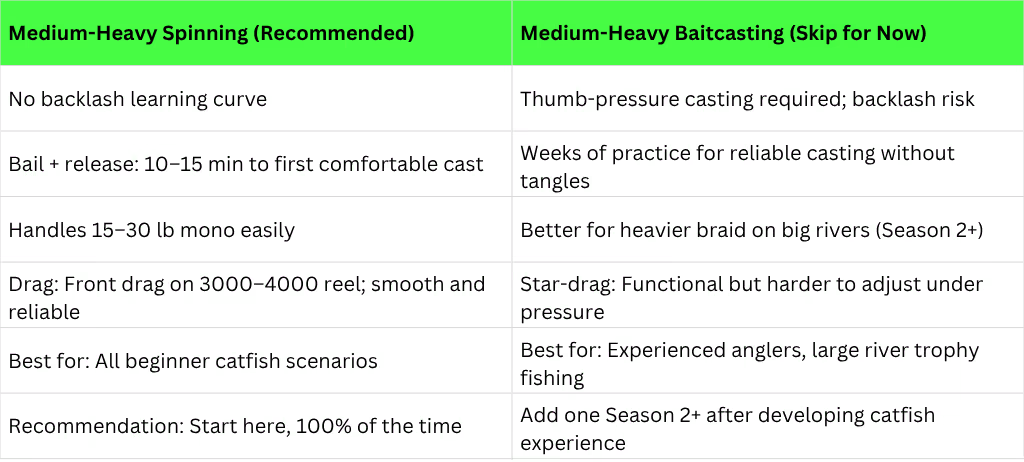
The correct starting point is a medium-heavy spinning combo in the 7-foot range, paired with a 3000-4000 size spinning reel with a front drag system. This handles channel catfish in ponds through blue cats in rivers, casts the 1-3 oz sinkers catfishing requires, and gives you enough line capacity to handle a longer run from a larger fish. The Shakespeare Ugly Stik Camo Spinning Combo in the 7 ft medium-heavy configuration ($35-$55) is the most widely available, reliably functional beginner catfish combo on the market and the specific recommendation for most first-time catfish anglers.
Line: The Decision That Actually Affects How Many Fish You Land
Beginner catfish line choice is simpler than it appears. Start with 20-25 lb monofilament mainline. It handles channel cats through 20-lb blues, is easy to tie beginner-friendly knots on, has enough stretch to absorb sudden strikes without snapping, and doesn’t require any special knots beyond the improved clinch knot. Re-spool annually — mono degrades under UV exposure. Add braided line as a mainline upgrade in Season 2 if you want to step up sensitivity and casting distance.
Hooks: Circle Hooks Are Not Optional for Beginners
Circle hooks are the most important specific gear recommendation in this guide. Here’s why: a circle hook automatically sets in the corner of a catfish’s mouth as the fish swims away with the bait, without any hard hookset required. With a traditional J-hook, you need to feel the bite, react quickly, and sweep the rod to drive the hook — miss the timing and the fish drops the bait. With a circle hook, you simply reel down to resistance and lift firmly. The hook does the work.
For channel catfish in most beginner scenarios, 2/0-3/0 circle hooks are the correct size. For blue catfish in rivers and reservoirs, 3/0-5/0. For flathead catfish with live bait, 4/0-6/0. Brands: Gamakatsu Octopus Circle, Owner SSW Circle, Mustad UltraPoint Demon Circle, Eagle Claw Circle Sea. Any of these in the correct size range will work
Catfish Baits: What Works and What’s Overhyped
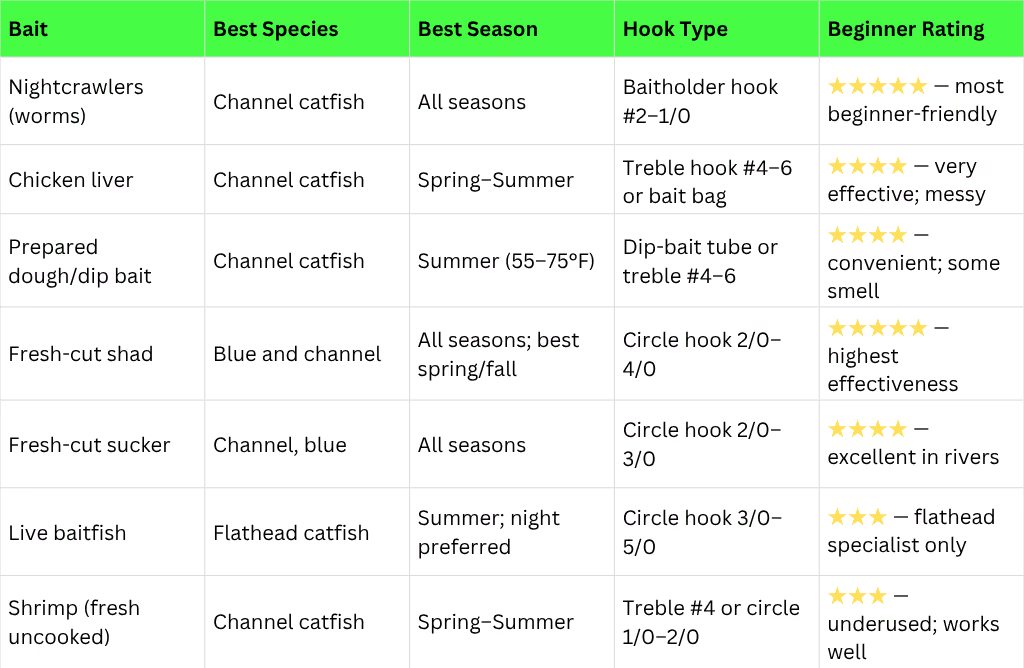
Beginner Bait Quick Reference
The Bait Nobody Tells You About
Fresh bait always outperforms old bait: The most consistent catfish bait tip isn’t about what type of bait to use — it’s about freshness. Fresh chicken liver out-fishes three-day-old frozen liver. Fresh-caught shad out-fishes shad that spent two days in a cooler. Fresh nightcrawlers from a bait shop this morning out-fish the pack that’s been in your refrigerator for a week. Catfish find food by scent, and scent output drops dramatically as bait ages. Replace bait every 30-45 minutes regardless of whether it still looks intact.
Start with worms, then experiment: Nightcrawlers are the most universally effective beginner catfish bait across all seasons and all water types. They’re available at every bait shop and most gas stations near fishable water. They work on channel catfish everywhere. Thread 2-3 large nightcrawlers onto a 2/0 circle hook, leaving tail ends to wave in the water, and you have a functional catfish rig anywhere in the country.
The Two Rigs That Catch Catfish Everywhere
The Slip Sinker Rig (Learn This First)
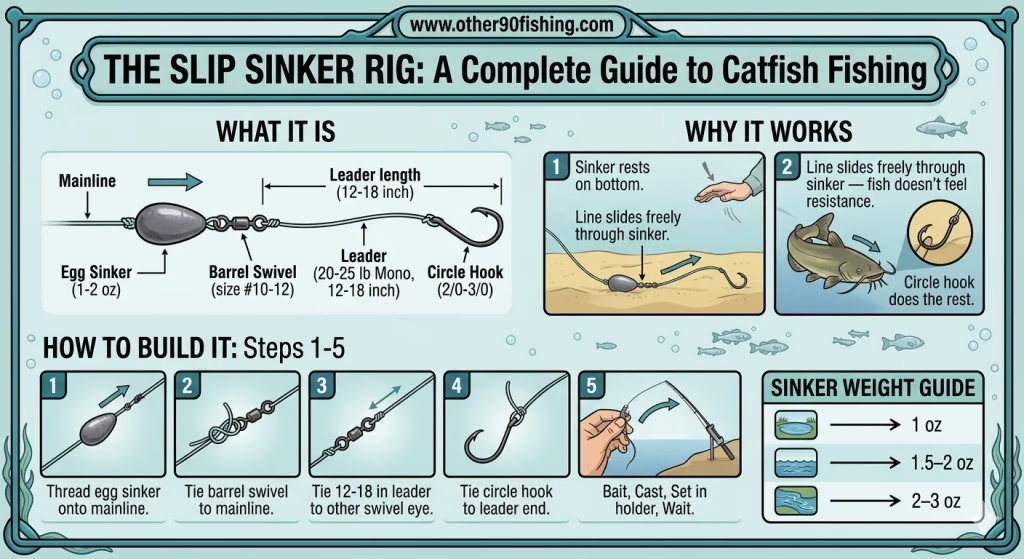
WHAT IT IS: An egg sinker threaded onto your mainline, stopped by a barrel swivel, with a 12–18 inch leader to a circle hook.
WHY IT WORKS: The sinker rests on the bottom. When a catfish picks up the bait and moves, the line slides freely through the sinker — the fish doesn’t feel resistance until the hook sets. Circle hook does the rest.
HOW TO BUILD IT:
Step 1: Thread a 1–2 oz egg sinker onto your mainline.
Step 2: Tie a barrel swivel (size #10–12) to stop the sinker.
Step 3: Tie 12–18 inches of 20–25 lb mono leader to the other swivel eye.
Step 4: Tie a 2/0–3/0 circle hook to the leader end.
Step 5: Bait the hook. Cast to your spot. Set rod in holder. Wait.
SINKER WEIGHT: 1 oz for still ponds. 1.5–2 oz for lake wind chop. 2–3 oz for river current.
PRO TIP: Pre-tie 6–8 leaders at home and store in a ziplock bag. On the bank, clip to your swivel in 30 seconds.
The Three-Way Rig (For Rivers With Current)
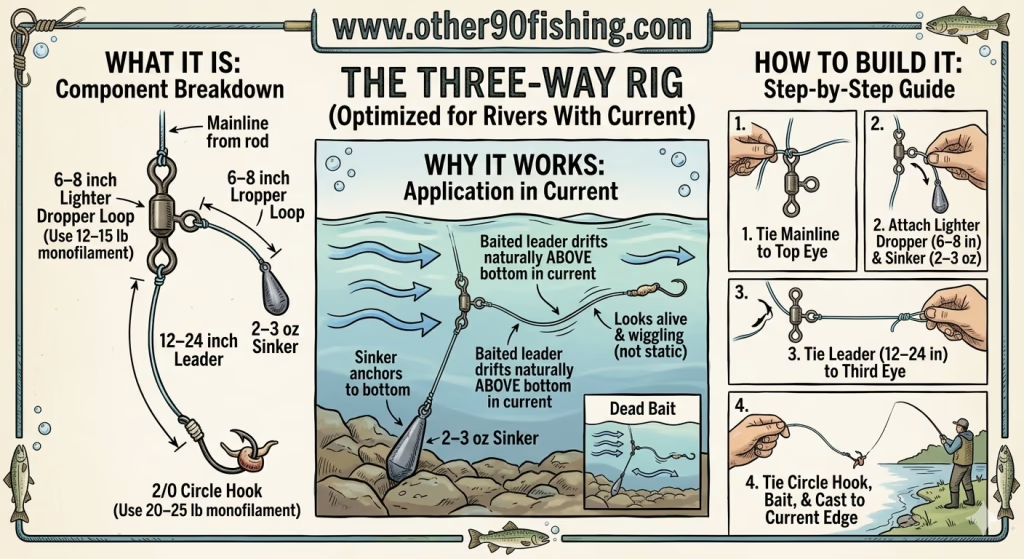
WHAT IT IS: A three-way swivel with the mainline on one eye, a 6–8 inch dropper with a sinker on the second eye, and a 12–24 inch leader with a circle hook on the third eye.
WHY IT WORKS: The sinker hangs below and anchors to the bottom. The current works the baited leader naturally above the bottom — making the bait look alive and drifting rather than dead and static. Best for rivers with noticeable current.
HOW TO BUILD IT:
Step 1: Tie mainline to the first eye of a three-way swivel.
Step 2: Tie 6–8 inches of lighter monofilament (12–15 lb) to the second eye with your sinker (2–3 oz).
Step 3: Tie 12–24 inches of 20–25 lb leader to the third eye.
Step 4: Tie circle hook to the leader. Bait. Cast to current edge. Wait.
WHICH RIG WHEN: Pond, lake, reservoir = Slip Sinker Rig. River with noticeable current = Three-Way Rig.
The lighter dropper line is intentional: if the sinker snags on a rock bottom, it breaks the dropper first and you lose only the sinker rather than the whole rig.
Where to Find Catfish — The Locations That Actually Produce
Catfish location changes with seasons, water temperature, and species. Here’s the beginner-practical version:
Ponds and small lakes: The easiest starting location. Catfish in ponds are typically stocked channel cats that hold near the deepest water in the pond, transition areas where a shallow flat drops into deeper water, and any visible structure (fallen trees, dock pilings, inlet pipes). From the bank, cast to the deepest water you can reach or to any visible structure.
Rivers: Look for outside bends (where current scours a deep hole against the bank), below structures (bridge pilings, wing dams), tributary mouths (where a smaller creek enters the river), and deep holes visible from bank access points. Current edge is the key — catfish hold in slower water adjacent to current, where food drifts to them.
Reservoirs and large lakes: The old river channel submerged when the reservoir was filled is the primary winter and cold-water catfish location. In spring and summer, catfish spread to shallower areas. Bank fishing targets transition areas where shallow flats meet deeper water, dock structures, and wind-blown banks.
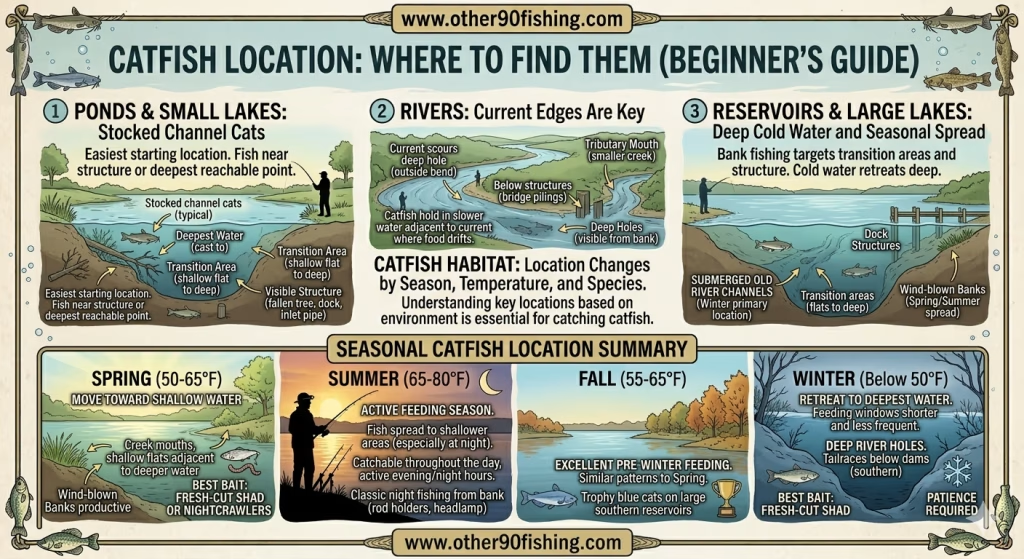
Seasonal Catfish Location Summary
- Spring (50–65°F): Catfish move toward shallow water as temperatures rise. Creek mouths, shallow flats adjacent to deeper water, and wind-blown banks become productive. Best spring bait: fresh-cut shad or nightcrawlers.
- Summer (65–80°F): Most active feeding season. Fish spread to feed in shallower areas, especially at night. Catfish are catchable throughout the day but most active in the evening and overnight hours. Night fishing from a bank with rod holders and a good headlamp is the classic summer catfish experience.
- Fall (55–65°F): Excellent pre-winter feeding activity. Similar patterns to spring as water cools. Trophy blue cats on large Southern reservoirs are at their best in fall.
- Winter (below 50°F): Fish retreat to deepest available water. Feeding windows shorter and less frequent. Best locations: deep river holes, tailraces below dams in Southern states. Best bait: fresh-cut shad. Patience required.
Safety, Catfish Handling, and Essential Tips for Beginners
Catfish Handling Safety — Read This Before Your First Catfish
Catfish have sharp, rigid spines in their pectoral fins (the side fins) and dorsal fin (the top fin). These spines can puncture skin and cause a painful wound if you grab a catfish incorrectly. This is especially important for children.
HOW TO HOLD A CATFISH SAFELY:
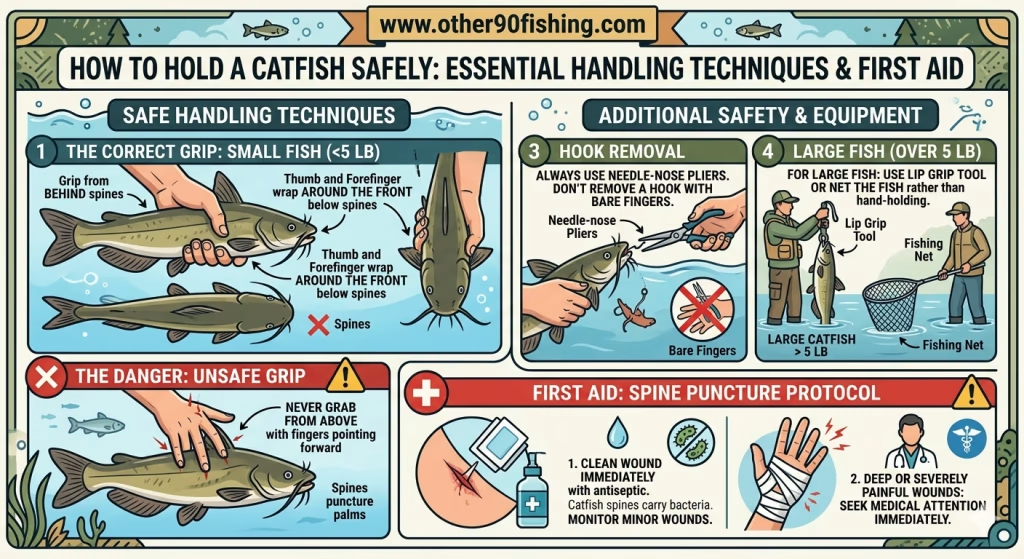
- Grip the fish from behind the pectoral spines, with your thumb and forefinger wrapping around the front of the fish below the spines.
- Never grab from above with fingers pointing forward — this is how spines puncture palms.
- For larger fish (over 5 lb), use a lip grip tool or net the fish rather than hand-holding.
- Always have needle-nose pliers ready for hook removal. Don’t remove a hook with bare fingers.
IF A SPINE PUNCTURES YOUR SKIN: Clean the wound with antiseptic immediately. Catfish spines carry bacteria. A minor puncture should be cleaned and monitored; a deep or severely painful wound warrants medical attention.
FOR PARENTS: Demonstrate safe catfish handling to children before they attempt it. A good rule is that adults handle all catfish until a child explicitly practices the correct grip technique under supervision.
Common Beginner Catfish Mistakes
- Using a J-hook and setting it with a hard sweep. This is the most common reason beginners miss catfish. Switch to circle hooks and reel-down-then-lift. Hookup rates improve immediately.
- Fishing with old or cold bait. Replace bait every 30-45 minutes. Fresh bait has dramatically higher scent output than bait that’s been soaking for 2 hours.
- Fishing the wrong depth. Cold-water catfish are in the deepest available water. Warm-water catfish are in shallower feeding areas. Match your cast to the current season and water temperature.
- Moving too often. Catfish find bait by scent, which takes time to disperse from the bait to where fish are holding. Give each spot 30-45 minutes in warm weather, 60+ minutes in cold water, before changing locations.
- Underestimating sinker weight in current. If your bait is drifting rather than holding near your target, the sinker is too light. Go up one weight increment until the rig holds position.
- Not having a fishing license. All 50 states require a fishing license for catfishing in public waters. Buy yours online at your state fish and wildlife agency before your first trip. Fines start at $50-$500 depending on the state.
Your First Catfishing Trip: A Step-by-Step Game Plan
BEFORE YOU GO:
- Buy a fishing license from your state wildlife agency website.
- Choose a location: stocked public pond, public lake bank access, or accessible river bank. Start with still water.
- Pick up bait: nightcrawlers ($3–5) and chicken liver ($2–3) from a bait shop or grocery store.
- Pre-tie 4–6 slip sinker leaders at home (12–18 inch, 2/0 circle hook). Store in a ziplock.
AT THE WATER:
- Look for the deepest accessible water, visible structure (fallen trees, docks), or creek mouths.
- Rig up: egg sinker on mainline, barrel swivel, pre-tied leader with circle hook, bait.
- Set rod in holder (or hold it). Cast to target. Drag slightly loose so line can run.
- When rod dips or line moves: reel down until you feel resistance, then lift firmly and steadily. Don’t jerk.
ON YOUR FIRST CATFISH:
- Grip from behind the pectoral spines. Pliers ready for hook removal.
- Take a photo. Either release or keep if regulations allow (check your state size and possession limits).
- Cast back to the same spot. Second fish are common from the same location.
PATIENCE IS THE TECHNIQUE: Catfish are not chased — they’re waited for. 30–45 minutes per spot, fresh bait every 30–45 minutes, and consistent presence near good structure produces catfish reliably.
Catfishing Is Simpler Than It Looks — And More Rewarding Than You Expect
Catfishing has an undeserved reputation for being complicated or gear-intensive. It’s neither. The slip sinker rig has been catching catfish for over a century. The nightcrawler has been the universal catfish bait for just as long. A 7-foot medium-heavy spinning combo, a pack of circle hooks, an egg sinker, and a fresh piece of bait puts you in a position to catch real fish on your first outing at virtually any accessible public water in the United States.
This guide is the cornerstone of the Catfish Fishing category on Other90Fishing.com. The supporting articles below go deeper on every topic introduced here — seasonal patterns for spring bank fishing, finding the deep holes that hold catfish in winter, the bait guide for cold-water conditions, the complete gear breakdown with specific product recommendations, and the regional guide to the best Southern catfish destinations. Everything in the catfish section connects back to what you’ve learned here. Get the license. Get the bait. Get on the water.
Patience, fresh bait, and the right water. That’s catfishing.