A friendly, beginner-focused guide to catching panfish—bluegill, crappie, perch, and sunfish—using simple gear, easy techniques, and affordable tackle.
There is no better way to fall in love with fishing than panfish. No, really. If you are a parent who wants to take your kids fishing for the first time, a beginner who has never held a rod, or an adult who fished once as a child and wants to remember what all the fuss was about, panfish are your gateway. Bluegill, crappie, yellow perch, and sunfish are found in virtually every freshwater pond, lake, river, and reservoir in the United States. They bite readily, fight surprisingly hard for their size, and will absolutely cooperate with a worm on a small hook under a bobber — the most beginner-friendly fishing setup that has ever existed.
Panfish are also good for the ecosystem and good for the table. Healthy panfish populations are a sign of a healthy lake, and catch-and-release panfishing has minimal impact on the overall fishery. But if you want to keep a few for the frying pan, bluegill and crappie are widely considered among the best-tasting freshwater fish in North America. The name “panfish” came from exactly that quality — they’re the right size to fit in a cast-iron skillet.
This guide covers everything a beginner needs to start catching panfish: the species you’re most likely to encounter, where they live by season, the simple gear that makes panfishing genuinely easy, the techniques that consistently produce fish, and a few notes on why panfish conservation matters even for a species this abundant. This is the cornerstone guide for the Panfish category on Other90Fishing.com, and it’s where every panfish angler in our community starts.
The Panfish You’ll Catch — A Quick Guide to the Most Common Species
“Panfish” isn’t a scientific classification — it’s a catch-all term for small freshwater fish that are fun to catch, fit in a pan, and are commonly found across North America. Different regions call different fish panfish, but the species below are the ones you’re most likely to encounter at a public lake, pond, or river near you.
Panfish Species Quick Reference
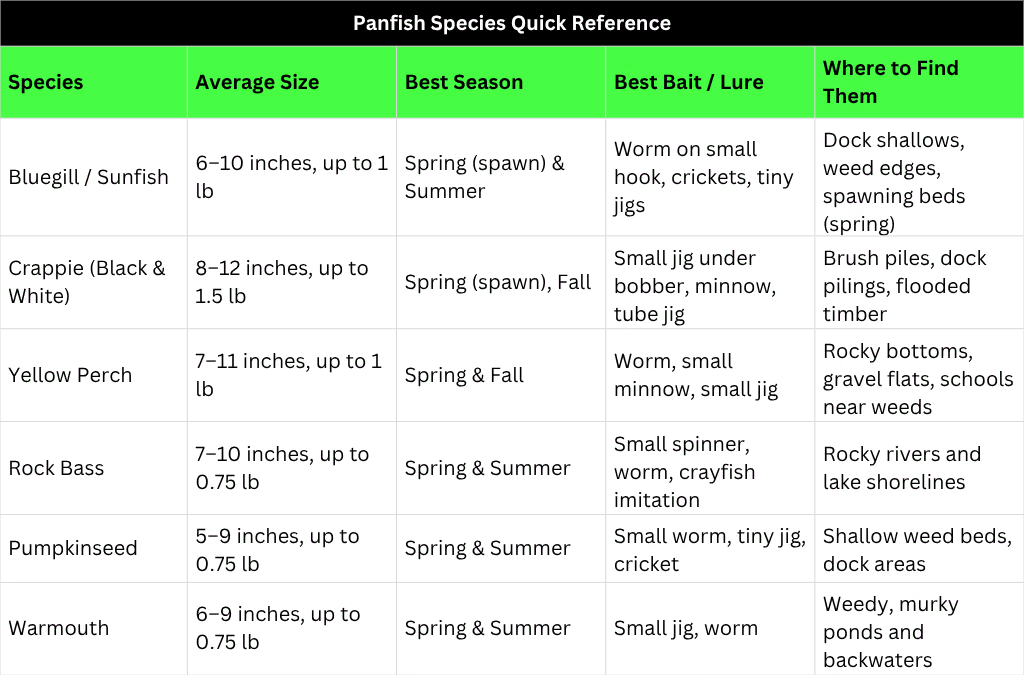
Of all the species in that table, bluegill and crappie are the most universally distributed and the most beginner-friendly. Bluegill are found in virtually every freshwater pond in the country and will bite almost any small bait presented at the right depth. Crappie are highly sought after — both for their fighting ability and their exceptional flavor — and they school tightly in spring and fall, meaning one fish typically means many more nearby. Yellow perch dominate Northern lake fisheries and are a rite of passage in Great Lakes states. The guide below applies to all panfish but especially covers bluegill and crappie, as they’re the first species most beginners will encounter.
Bluegill and Crappie: The Two Panfish Every Beginner Should Know
Bluegill (Lepomis macrochirus) — The Most Beginner-Friendly Freshwater Fish in North America
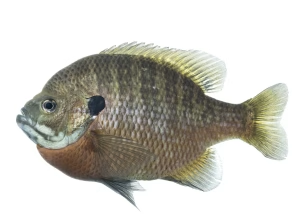
Distribution and abundance: Bluegill are the most widely distributed sunfish species in the U.S. They’re in virtually every public pond, lake, reservoir, and slow river in the country. If there’s a body of freshwater within driving distance of you, there are almost certainly bluegill in it.
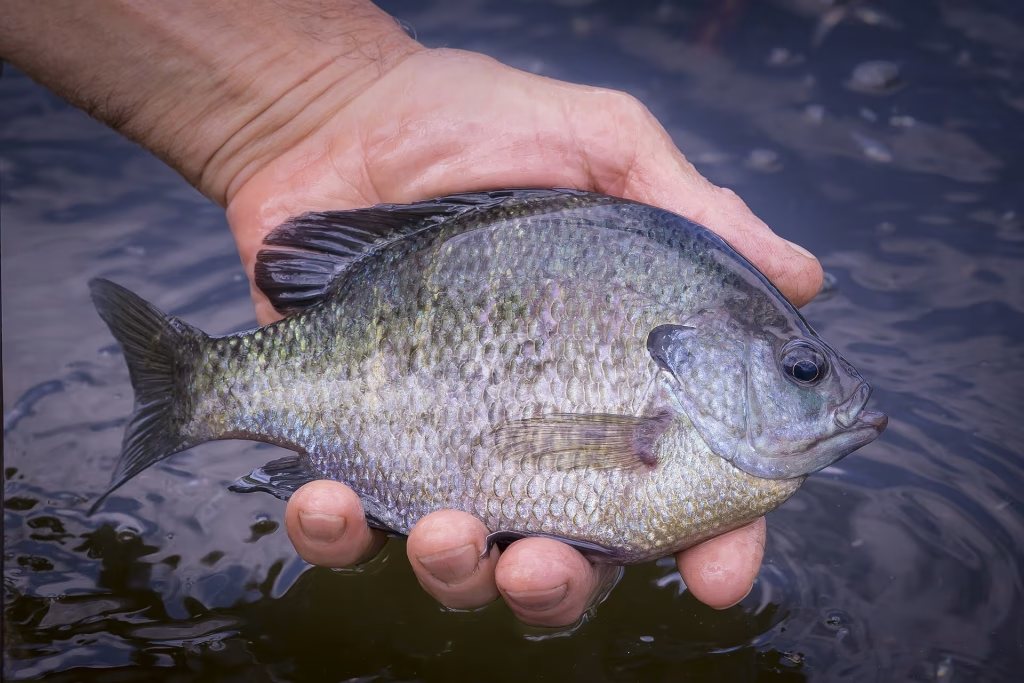
What they look like: A laterally compressed oval-shaped fish with distinctive coloring: olive-green to blue on the back, orange-yellow on the belly, and a characteristic dark blue-black “ear” flap at the back of the gill cover. Vertical bars on the sides. Adults 6-10 inches.
Why they’re perfect for beginners: They bite aggressively, they’re in shallow accessible water, and a small worm on a #8 hook under a bobber is literally all you need. They’re the fish that has introduced more people to fishing than any other species in North America.
Spawning behavior (your best opportunity): In late spring and early summer (water temperature 65-75°F), male bluegill fan circular nests in shallow water 1-3 feet deep, often in loose colonies near docks, weed edges, or sandy/gravel bottoms. During the spawn, they’re extremely aggressive toward anything near the nest. This is when even the clumsiest beginner cast produces a strike.
Feeding habits: Bluegill are opportunistic feeders that eat insects, invertebrates, small crustaceans, and small fish. They have small mouths and respond best to small baits. A nightcrawler broken into 1-2 inch pieces on a size #8-10 hook is the universal bluegill setup.
Conservation note: Bluegill populations are generally resilient and healthy in well-managed public waters. In smaller private ponds where pressure is higher, large bluegill (over 9 inches) can be worth releasing since they represent years of growth in a contained system. Check local regulations for any size or possession limits on your specific water.
Crappie (Pomoxis nigromaculatus & P. annularis) — The Schooling Panfish With Exceptional Flavor and Hard Fighting Spirit
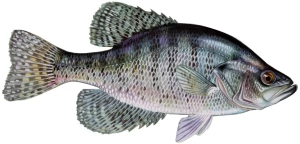
Two species: Black crappie (Pomoxis nigromaculatus) and white crappie (Pomoxis annularis) are found across most of the U.S. Black crappie prefer clearer water and are more common in Northern states. White crappie tolerate more turbidity and are dominant in Southern states. They’re fished identically and often coexist in the same water.
What they look like: A deeper-bodied fish than bluegill with large mouths, fan-shaped dorsal fins, and mottled black-and-silver or olive-and-silver coloration. Adults commonly reach 8-12 inches and 0.5-1.5 lb. They’re larger than bluegill and have softer, flakier, exceptionally good-tasting flesh.
The schooling advantage: Crappie school tightly, especially during spring and fall. When you catch one crappie, there are almost certainly more in the same immediate area. This is why crappie fishing is so rewarding for beginners — one fish is a clue, not an isolated event. Stay put and work the same spot thoroughly after the first bite.
Habitat and structure: Crappie love structure. Brush piles, dock pilings, flooded timber, bridge supports, and any submerged object that creates shade and ambush opportunity will hold crappie. The slip bobber with a small jig is the classic crappie presentation — it allows exact depth control so you can present the jig right at the level where the school is holding.
Spawning behavior: Similar to bluegill, crappie move into shallow water (2-6 ft) in late spring for spawning. Male crappie guard nests aggressively and strike small jigs and minnows with commitment. Spring crappie fishing from the bank near visible spawning structure is outstanding.
Conservation note: Crappie are highly sought-after table fish, and local fisheries deserve thoughtful handling. Keeping fish within legal limits is appropriate, but releasing large females (over 12 inches) during spring spawn protects the reproductive stock. Most state agencies publish size and bag limit guidelines for crappie — always check before you keep any fish.
Where to Find Panfish — Seasonal Patterns Made Simple
Panfish location follows a reliable seasonal calendar. Understanding it takes the guesswork out of where to start fishing:
Panfish Location by Season — The Simple Seasonal Guide
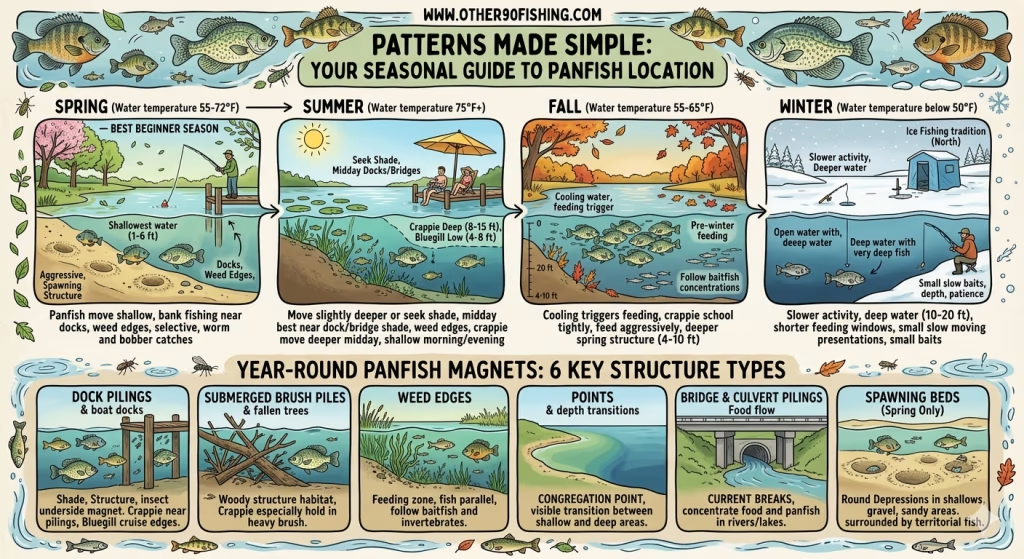
SPRING (Water temperature 55-72°F) — BEST BEGINNER SEASON: Panfish move into the shallowest water of the year to spawn. Bluegill, crappie, and perch are all within casting range from the bank in 1-6 ft of water near dock pilings, weed edges, and any visible structure. The spawn makes them aggressive and less selective. This is when a worm and bobber catches fish almost every cast.
SUMMER (Water temperature 75°F+): After spawning, panfish move slightly deeper or seek shade. Early morning and evening are still productive in shallow water. Midday fishing is best near dock shade, under bridges, or at weed edges. Crappie move deeper (8-15 ft) during the day and return to shallower structure in morning and evening. Bluegill often hold at 4-8 ft near the bottom of weed beds.
FALL (Water temperature 55-65°F): A second productive season as cooling water triggers feeding activity before winter. Crappie school tightly and feed aggressively, making fall one of the best crappie fishing seasons. Look for fish near the same structure as spring but at slightly deeper depths (4-10 ft). Follow the baitfish — panfish school near shad and minnow concentrations in fall.
WINTER (Water temperature below 50°F): Panfish activity slows significantly. They hold in deeper water (10-20 ft) and feed in shorter windows. Ice fishing for bluegill and perch is a beloved tradition in Northern states. Open-water winter fishing requires small, slow-moving presentations at depth. Patience and small baits are the keys to winter panfish.
Structure That Holds Panfish Year-Round
Beyond seasonal patterns, certain types of structure hold panfish consistently whenever they’re in the area. Learning to recognize these from the bank is the single most useful location skill a beginner can develop:
Dock pilings and boat docks: The shade, structure, and insect-rich underside of a dock is a panfish magnet. Crappie hold near pilings in all seasons. Bluegill cruise the edges.
Submerged brush piles and fallen trees: Any woody structure in the water creates habitat and concentration zones. Crappie especially hold in heavy brush.
Weed edges: The outer edge of any aquatic vegetation is a prime feeding zone — baitfish and invertebrates concentrate there and panfish follow. Fish parallel to the weed edge.
Points and depth transitions: Any gradual depth change (visible as bottom color change in clear water) creates a congregation point as panfish move between shallow and deep areas.
Bridge and culvert pilings: Current breaks near pilings concentrate food and panfish in both rivers and lakes near road crossings.
Spawning beds (spring only): Visible round depressions in sandy or gravelly shallows in late spring are bluegill or crappie spawning beds — and they’re surrounded by territorial fish.
Three Techniques That Catch Panfish (And the Gear That Makes Each Work)
The Classic Bobber and Worm
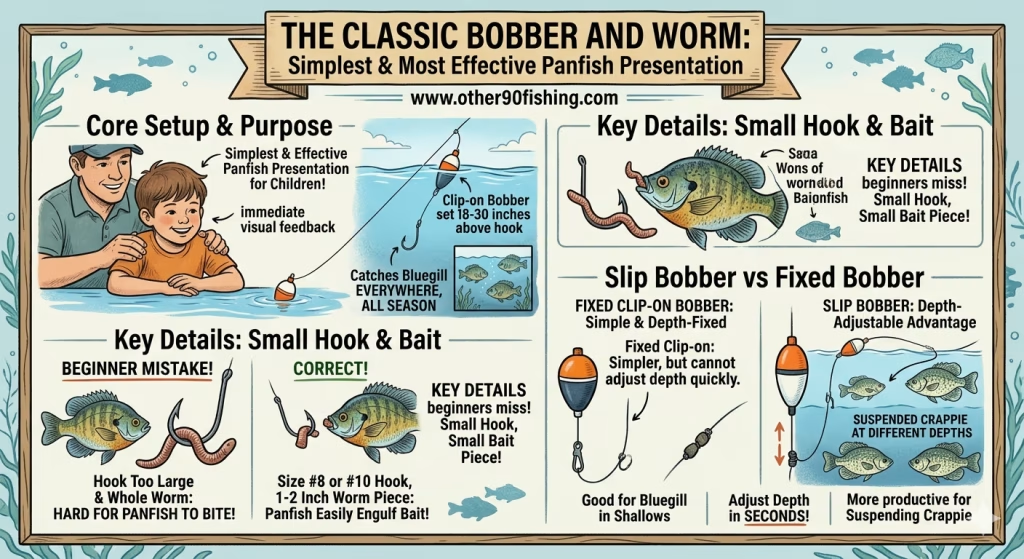
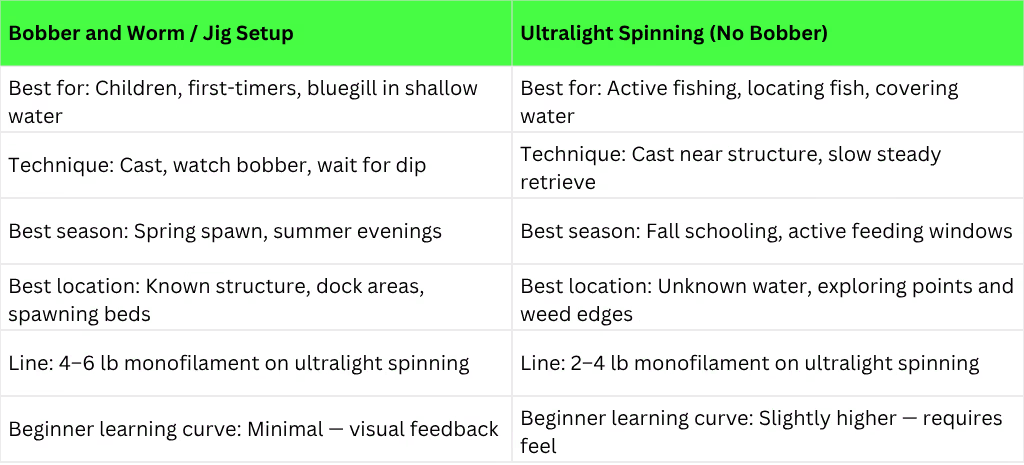
The bobber and worm is the oldest, simplest, and still one of the most effective panfish presentations. A small clip-on or slip bobber set 18-30 inches above a size #8-10 baitholder hook baited with a 1-2 inch piece of nightcrawler catches bluegill everywhere, all season. It’s also the best introduction to fishing for children because the visual feedback is immediate and obvious.
The key details that beginners miss: Small hook, small piece of bait. Most beginners use a hook that’s too large and thread the whole worm on — both make it harder for small-mouthed panfish to get the bait into their mouths. Use a size #8 hook (or #10 for smaller fish), and a 1-2 inch piece of worm, not the whole thing.
Slip bobber vs fixed bobber: A fixed clip-on bobber is simpler but can’t be depth-adjusted quickly. A slip bobber (the line runs through it, stopped by a bobber stopper) adjusts depth in seconds by sliding the stopper up or down. For crappie that suspend at different depths on different days, the slip bobber is genuinely more productive. For bluegill in shallow water, either works.
The Small Jig (Panfish’s Greatest Weakness)
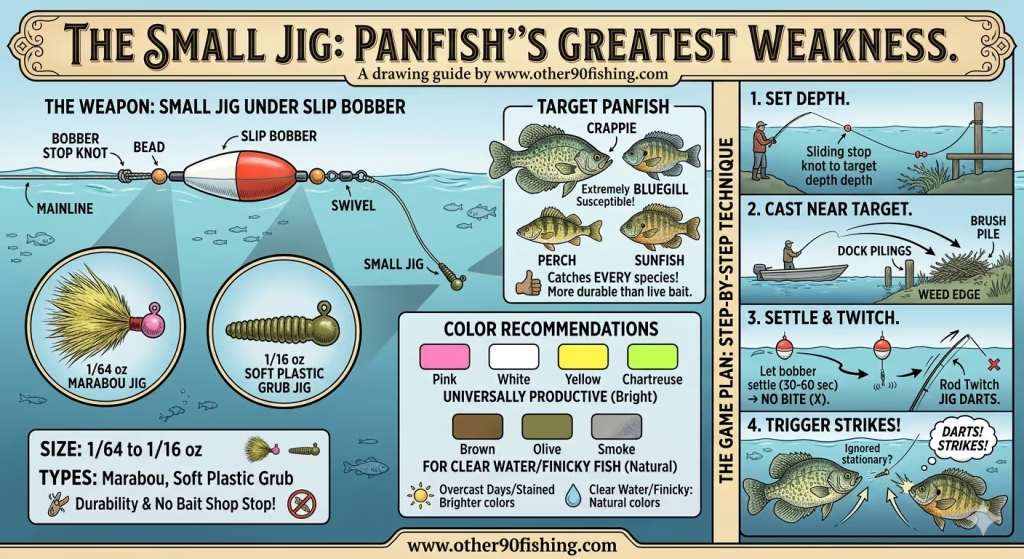
If the bobber and worm is the classic, the small jig under a slip bobber is the weapon. A 1/64 to 1/16 oz marabou jig or soft plastic grub jig suspended under a slip bobber at the right depth catches every panfish species, is more durable than live bait, and requires no bait shop stop. Crappie in particular are extremely susceptible to small jigs.
Colors: Pink, white, yellow, and chartreuse are the most universally productive jig colors for panfish. Natural colors (brown, olive, and smoke) work well in clear water or when fish are finicky. On overcast days or in stained water, brighter colors typically outperform.
How to fish a jig under a bobber: Set the slip bobber at a depth that keeps the jig just above any visible brush or structure. Cast near the target (dock piling, brush pile, weed edge). Let the bobber settle. If no bite in 30-60 seconds, give the rod a gentle twitch to make the jig dart. Pause. Repeat. The darting action triggers strikes from crappie and bluegill that ignored a stationary presentation.
Brands: Charlie Brewer Crappie Slider jigs, Bobby Garland Baby Shad, Berkley Gulp! Alive minnow, Mr. Crappie Slab Daddy. All in the $3-$6 per pack range, widely available at sporting goods retailers.
Ultralight Spinning With a Small Lure
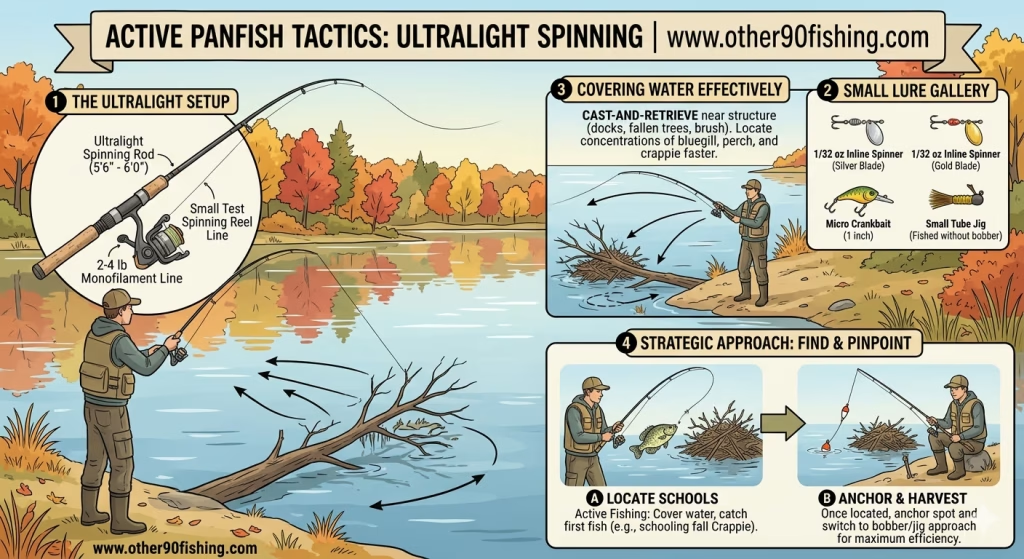
For anglers who want active fishing rather than the wait-and-watch of a bobber, small ultralight lures cast on a 2-4 lb ultralight spinning combo cover water efficiently and produce quality panfish. A 1/32 oz Mepps Aglia spinner in silver or gold is one of the most effective bluegill and perch lures ever made. Tiny inline spinners, small tube jigs without a bobber, and micro crankbaits all produce well when retrieved slowly near structure.
The cast-and-retrieve approach covers more water than a bobber setup and helps locate concentrations of panfish faster — particularly crappie in fall when they’re schooling and moving. Once a fish is caught, anchor on that spot and switch to a bobber/jig approach for maximum efficiency.
The Ultralight Gear That Makes Panfishing More Fun
Panfish are small — typically under a pound — and using heavy bass or catfish gear makes them feel like nothing. An ultralight spinning setup transforms a 9-inch bluegill into an exciting fight, makes light 1/64 oz jigs castable, and gives you the sensitivity to feel the lightest bites. This is the gear that makes panfishing addictive rather than just functional.
Recommended Panfish Gear Setup
ROD: 5–6.5 ft, Ultralight power, Fast action spinning rod
Why: Short enough for accurate casts from the bank, ultralight power loads with small lures and amplifies panfish fights, fast action transmits the subtle tap of a bluegill bite.
REEL: 1000–1500 size spinning reel with smooth drag
Why: Matched to ultralight rod. Light enough not to unbalance the setup. Smooth drag critical for thin 2-4 lb line.
LINE: 4–6 lb monofilament for most beginners
Or: 4 lb fluorocarbon for clearer water (less visible, sinks faster for jigging)
HOOK/JIG SIZE: Size #8–12 baitholder hooks for worm rigs, 1/64–1/16 oz jigs for jigging presentations
FLOAT: Slip bobber (1/2–1 inch diameter) for adjustable depth control
BRANDS: Shakespeare Ugly Stik GX2 5’6″ – 7′ ultralight, St. Croix Premier ultralight, Zebco Roam combo or Abu Garcia Max combo
Panfish Beginner Mistakes (You’re Not the First)
- Using too large a hook and bait. Bluegill have small mouths. A size #4 hook with a whole nightcrawler produces short strikes all day. Use a size #8–10 hook and a 1-2 inch piece of worm. Smaller bait, more bites.
- Setting the bobber too deep. If your bobber is set at 4 feet in 3-foot water, your bait is dragging the bottom and getting snagged. Set the bobber so the bait hangs 6–18 inches above the bottom or at the depth where fish are holding.
- Setting the hook too hard. Panfish have soft mouths and thin lips. A violent hookset tears the hook out rather than securing it. A firm, controlled sweep of 6–10 inches is all that’s needed.
- Moving too quickly when bites stop. If bites slow down at a dock or brush pile, it often means the fish moved slightly deeper or to the other side of the structure — not that they left. Adjust bobber depth by 6 inches, re-cast to a slightly different angle, and try a different jig color before giving up on a productive spot.
- Ignoring the fishing license requirement. All 50 states require a fishing license for adults. Children under a certain age are usually exempt (varies by state). Buy your license online at the state fish and wildlife agency website before your first trip.
Your First Panfish Outing: Step-by-Step
WHAT TO BRING:
- Ultralight spinning rod and reel (or any light spinning setup you have), 4–6 lb monofilament
- Size #8 hooks, split shot sinkers, clip-on or slip bobber
- Container of nightcrawlers from a bait shop ($3–5)
- Small jig assortment if you want to try jigging (1/32–1/16 oz, pink/white/chartreuse)
- Fishing license (buy online at your state wildlife agency website)
- Needle-nose pliers for hook removal
WHERE TO GO:
- Any public pond, state park lake, or public fishing area. In spring and summer, the most accessible water near you almost certainly has bluegill in it.
- Look for: docks, fallen trees in the water, visible weed edges, any structure in shallow water (1–6 ft in spring, 3–10 ft in summer)
WHEN TO GO:
- Morning (first 2–3 hours after dawn) and evening (last 2 hours before dark) are most productive. Midday in summer is slower.
- Spring (May–June in most states) is the single best period for beginners — fish are shallow, aggressive, and actively biting.
FIRST CAST PROTOCOL:
- Set bobber 18–24 inches above a size #8 hook baited with a 1.5-inch worm piece.
- Cast near visible structure (dock edge, weed edge, fallen branch in water).
- Watch the bobber. If it twitches, dips, or moves sideways: lift the rod firmly.
- When a fish is hooked, hold the ultralight rod up and let the drag do the work. Don’t horse it in.
- Wet your hands, remove the hook gently, take a photo if you like, and release or keep within legal limits.
- Cast back to the same spot immediately. Panfish school — where there’s one, there are more.
Small Fish, Big Gateway — Panfish Are Where Anglers Begin
Panfish are the species that have introduced more people to fishing than anything else in North American freshwater. The bluegill that hit a worm and bobber for a seven-year-old at a public pond isn’t small — it’s the beginning of something. Many of the most experienced anglers in the country still have a soft spot for a warm afternoon, a light rod, and a weed-edge full of hungry bluegill. The simplicity is the point.
This guide is the cornerstone of the Panfish category on Other90Fishing.com. The supporting articles below go deeper on each major species and technique: the spring crappie spawn, slip bobber rigging in detail, ultralight gear comparisons, the best panfish jigs, family-friendly fishing setups, and seasonal patterns by region. Fish often. Fish lightly. Release the big ones. And enjoy the fact that panfishing is one of the few places in outdoor recreation where the simplest approach is also the most effective.
Small hook. Small bait. Watch the bobber. That’s all it takes.