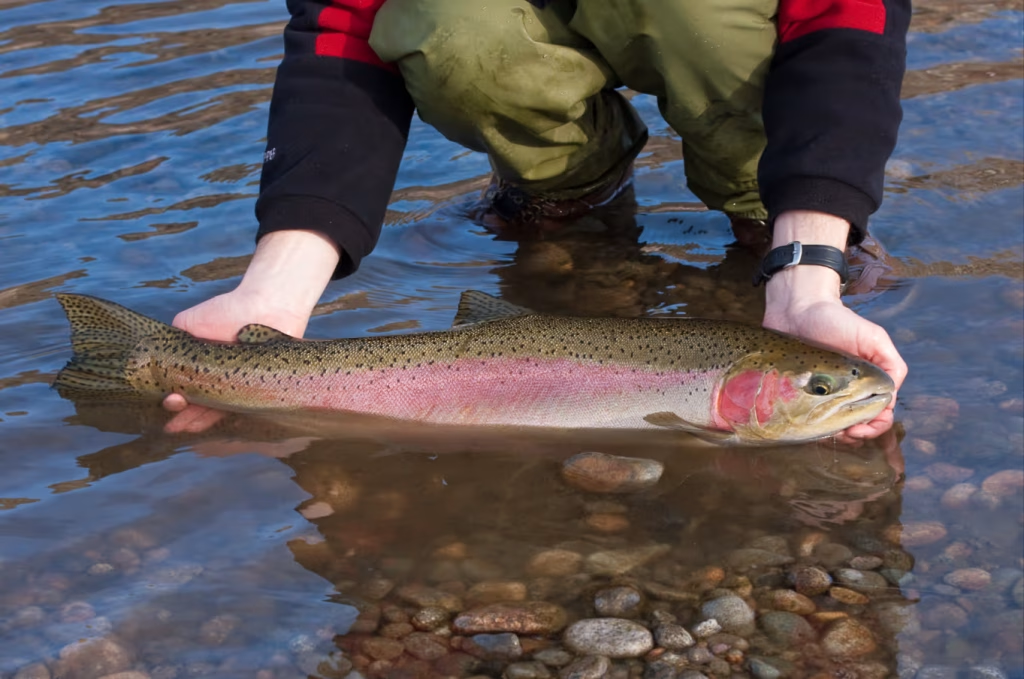
A simple, beginner-friendly guide that teaches new anglers how to catch trout using the right gear, baits, locations, and techniques in rivers, lakes, and streams.
Trout fishing occupies a unique space in American freshwater angling. On one end of the spectrum, it’s the species that millions of people catch every year at stocked ponds using PowerBait and a basic spinning combo — accessible, easy, and available within driving distance of virtually every city in the country. On the other end, it’s the obsession of dedicated fly fishers who spend decades learning to read water, match hatches, and present tiny flies on hair-thin tippets in wild mountain streams. Both of these are trout fishing. Both are valid. And the beautiful part is that the entry point for a complete beginner is genuinely easy.
Rainbow trout are stocked in public waters by state fish and wildlife agencies across all 50 states. These fish are raised in hatcheries, stocked in designated public fishing areas, and actively managed to provide fishing opportunity for beginner anglers and families. A stocked trout pond with a basic ultralight spinning setup and a jar of PowerBait is one of the highest-probability fishing scenarios available to a first-time angler anywhere in the country — many first-timers catch multiple fish on their first visit.
This guide covers the full entry-level trout fishing experience: the three species you’re most likely to encounter, where to find them in different water types and seasons, the baits and rigs that work reliably for beginners, the lures that produce on both stocked and wild fish, and the gear that makes trout fishing appropriately fun rather than frustrating. This is the cornerstone of the Trout Fishing category on Other90Fishing.com, and it connects to every technique and location guide in the category.
The Three Trout You’ll Catch — Rainbow, Brown, and Brook
The trout family includes dozens of species and subspecies, but three account for the vast majority of what beginners encounter in U.S. freshwater:
Rainbow Trout (Oncorhynchus mykiss) — The Most Widely Stocked and Beginner-Accessible Trout in the U.S.
Distribution: The most widely stocked trout in the United States. Present in designated public trout waters in all 50 states. Native to the Pacific Coast and Rocky Mountain drainages, but hatchery programs have established rainbow trout fishing opportunity across the entire country.
What they look like: A silver-bodied trout with a distinctive pink-to-red lateral stripe running the length of the body, black spots on the back and fins, and a streamlined body built for current. Hatchery rainbows are somewhat less vivid in coloration than wild fish.
Why they’re the beginner’s trout: State hatchery programs stock rainbows heavily in public fishing areas because they respond readily to bait, adapt to stocked conditions, and provide excellent beginner fishing opportunity. Stocked rainbows respond extremely well to PowerBait dough bait, salmon eggs, and worms. They’re also widely stocked in accessible public areas with parking, bank access, and restrooms.
Behavior differences (stocked vs wild): Stocked rainbows have been raised on hatchery pellets and respond enthusiastically to any scented bait placed near them, particularly in the days immediately following a stocking event. Wild rainbows are considerably more selective, spookier in clear water, and require more refined presentation.
Best beginner bait: Berkley PowerBait dough bait in chartreuse or rainbow color, threaded onto a size #14-16 treble hook, floating above a split shot, cast and left stationary on the bottom. This is the single most reliable stocked rainbow setup in existence.
Size: Stocked rainbows are typically 9-13 inches and 0.5-1 lb. Wild rainbows in quality water reach 16-24 inches and 2-4+ lbs.
Brown Trout (Salmo trutta) — The Smartest, Most Challenging, and Most Rewarding Trout
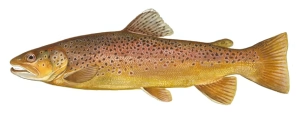
Distribution: Widely distributed across the eastern U.S., Upper Midwest, Rocky Mountain states, and Pacific Coast. Originally European, brown trout were introduced to U.S. waters in the 1880s and have naturalized into many quality cold-water rivers and streams. Less reliant on stocking than rainbows, as many populations reproduce naturally.
What they look like: A golden-brown or olive body with distinctive black spots and red/orange spots along the lateral line. A more robust, heavier-bodied fish than a same-length rainbow. In fall, spawning males develop a pronounced jaw hook (kype) and vivid coloration.
The challenge: Brown trout are widely considered the most selective and difficult to catch of the three common species. They’re highly sensitive to unnatural presentation, pressure, and light. In clear water, a heavy leader or large hook is enough to put them off a bait. They tend to be most active during low-light periods (dawn, dusk, and after dark), especially during summer.
Why they reward patience: The difficulty of brown trout fishing is also its appeal. A brown trout over 15 inches taken from a wild river on a thoughtful presentation is one of the most satisfying catches in freshwater fishing. For beginners, browns in stocked situations are catchable with the same setups that work for rainbows.
Best beginner approach: Fish at dawn and dusk. Use lighter line (4-6 lb fluorocarbon rather than mono). Present bait or lures with less disturbance and more patience than you’d apply to rainbows.
Size: Commonly 10-16 inches in most accessible waters. Quality wild river brown trout reach 20-28 inches and 3-8+ lbs.
Brook Trout (Salvelinus fontinalis) — The Native Eastern Jewel — Small Water, Vivid Color, Big Personality
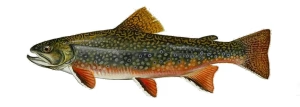
Distribution: Native to cold, clean streams and lakes of the eastern U.S. and Canada. Present across Appalachia, New England, the Great Lakes region, and high-elevation streams in the West. Brook trout are actually a char (not a true trout) and are the most cold-tolerant of the three species, thriving in water as cold as 40°F.
What they look like: The most visually striking freshwater fish in North America. Olive-green body with a distinctive worm-like marbling pattern (vermiculation) on the back, bright red spots with blue halos on the sides, and brilliant orange-red lower fins edged in black and white. Spawning males in fall are extraordinarily vivid.
Habitat requirements: Brook trout require the coldest, cleanest water of any trout species. They’re a reliable indicator of water quality — if there are brook trout, the water is cold, well-oxygenated, and relatively unpolluted. In summer, they seek the coldest sections of streams, near springs and cold tributaries.
Behavior: Brook trout are aggressive and less selective than brown trout. In small streams where they’ve seen limited fishing pressure, they strike eagerly at virtually any correctly sized presentation. Their aggressiveness, combined with the spectacular scenery of native brook trout habitat, makes stream fishing for brookies one of the most enjoyable beginner trout experiences.
Best approach for beginners: Small streams with native brook trout populations. Light rod, 4 lb monofilament, small inline spinner or worm. Move quietly along the bank. Brook trout spook easily in small clear streams.
Size: Typically 5-10 inches in most brook trout streams. Wild fish over 12 inches are memorable. Native heritage strains in quality habitat reach 15-18 inches.
Where to Find Trout — Water Types, Seasons, and the Stocked Pond Advantage
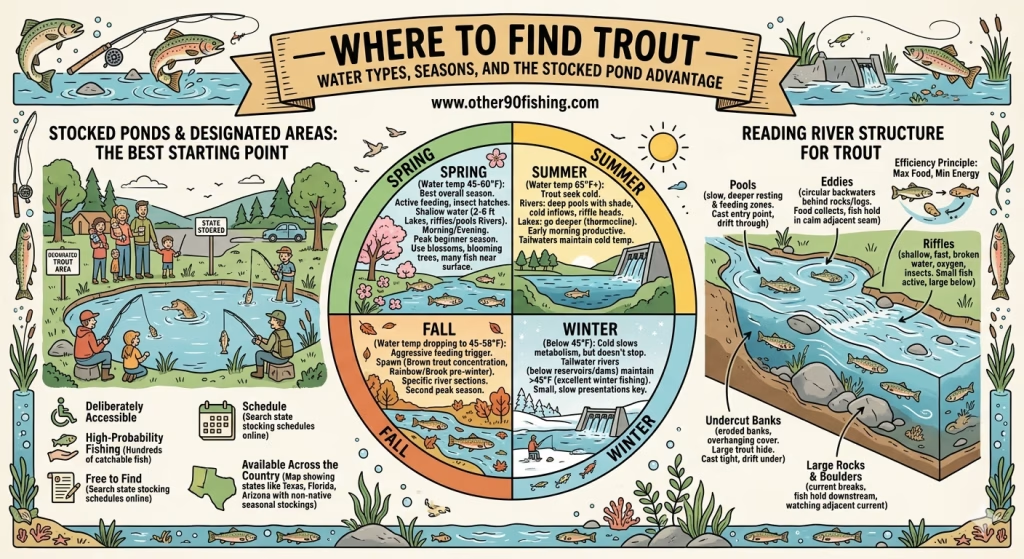
Stocked Ponds and Designated Trout Areas: The Best Starting Point
For beginner trout anglers, there is no better starting point than a state-stocked public fishing area. Every state fish and wildlife agency operates a trout stocking program, placing hatchery-raised rainbows (and often browns and brookies) in designated public waters on a regular schedule throughout the trout season. These locations are:
Deliberately accessible: Stocked trout areas typically have parking, bank access, and easy approaches. They’re designed for public use by anglers of all skill levels.
High-probability fishing: A recently stocked pond contains hundreds or thousands of catchable fish. First-timers at a stocked area the week of a stocking event often catch multiple fish in a single outing.
Free to find: State agencies publish stocking schedules and locations online. Search “[your state] trout stocking schedule” and you’ll find the exact dates and locations.
Available across the country: Including states like Texas, Florida, and Arizona where trout are not native but are stocked seasonally in cooler-weather months.
Seasonal Trout Location Guide
SPRING (Water temperature 45-60°F) — BEST OVERALL TROUT SEASON: Stocked trout are most heavily placed in spring. Wild trout emerge from winter lethargy and feed actively as insect hatches begin. Look for trout in shallower water (2-6 ft in lakes, the riffles and pools of rivers). Morning and evening are most productive. This is the peak beginner season.
SUMMER (Water temperature 65°F+): Trout seek cold water. In rivers, find them in deeper pools with shade, near cold tributary inflows, and in the heads of riffles. In lakes, trout go deeper to find cooler water temperatures (the thermocline). Early morning fishing (first 2 hours of daylight) is consistently productive. Tailwater rivers below dams often maintain cold-water temperatures and fish well all summer.
FALL (Water temperature dropping to 45-58°F) — SECOND PEAK SEASON: Falling temperatures trigger aggressive feeding. Brown trout spawn in fall (late October through December in most regions), which concentrates fish in specific river sections and makes them more active. Rainbow and brook trout also feed aggressively before winter. Second-best season overall for beginners.
WINTER (Below 45°F): Cold slows trout metabolism but doesn’t stop fishing. Tailwater rivers (below reservoirs and dams) often maintain water temperatures above 45°F year-round and support excellent winter trout fishing. Many popular Western tailwaters (White River AR, San Juan NM, South Holston TN, Bighorn MT) fish exceptionally well in winter. Small, slow presentations are key.
Reading River Structure for Trout
Even if you start on stocked ponds, learning to read river structure for trout is the skill that transforms a seasonal beginner into a year-round angler. Trout in moving water position themselves according to a simple efficiency principle: they want maximum food delivery with minimum energy expenditure. That means:
Pools: The slow, deeper sections between rapids or riffles. Trout rest here and feed on items drifting in from upstream current. Cast to where the current enters the pool (the head) and let your presentation drift through.
Eddies: Circular backwaters behind rocks, logs, or current breaks. Food collects in eddies and trout hold in the calmer water adjacent to the current seam.
Riffles: Shallow, fast sections with broken water that oxygenates the stream and produces insect life. Smaller trout feed actively in riffles; larger trout hold below them.
Undercut banks: Eroded banks with overhanging vegetation provide cover for large trout. Cast tight to the bank and let the presentation drift under the overhang.
Large rocks and boulders: Current breaks immediately behind any large rock in a river. Trout hold in the slow water just downstream, watching for food drifting by in the adjacent current.
Baits, Lures, and Rigs That Catch Trout
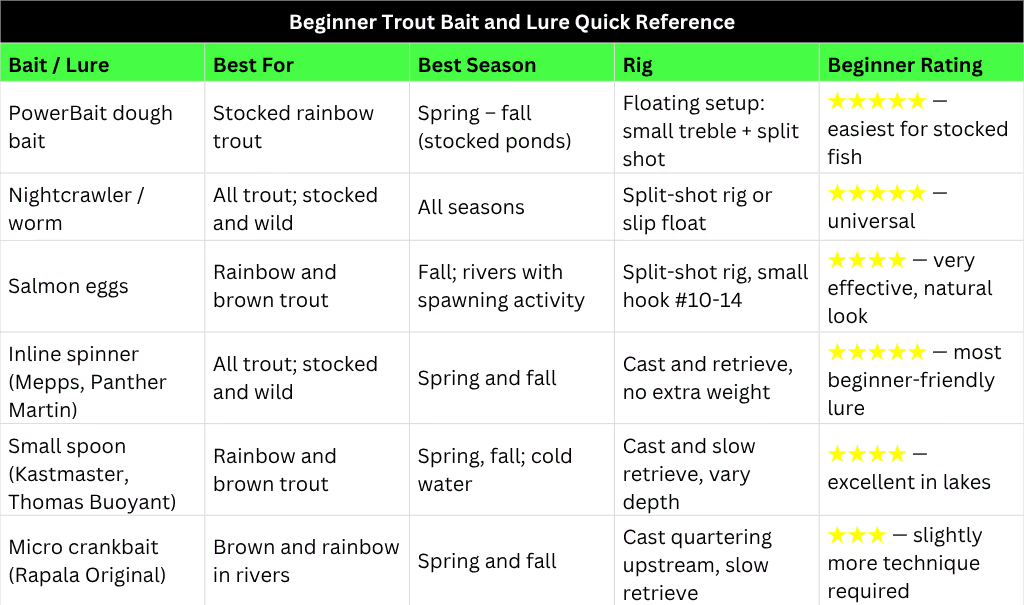
Beginner Trout Bait and Lure Quick Reference
Essential Beginner Trout Rigs
The Floating Dough Bait Rig (Stocked Rainbow Setup)
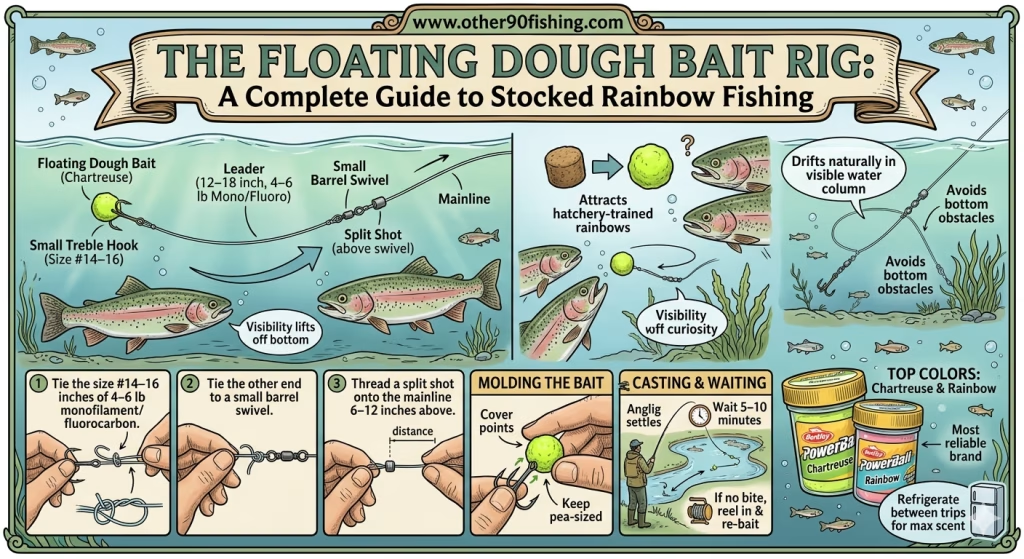
WHAT IT IS: A PowerBait dough bait threaded onto a small treble hook, floating above a split shot on a 12–18 inch leader.
WHY IT WORKS: PowerBait dough bait is scented and colored to attract hatchery rainbows that are accustomed to hatchery pellets. The floating design lifts the bait off the bottom so it’s visible in the water column and drifts naturally.
HOW TO BUILD IT:
- Step 1: Tie a size #14–16 treble hook to a 12–18 inch section of 4–6 lb monofilament or fluorocarbon.
- Step 2: Tie the other end to a small barrel swivel.
- Step 3: Thread a split shot onto the mainline 6–12 inches above the swivel.
- Step 4: Roll a pea-sized ball of PowerBait onto the treble hook. Cover all three hook points but keep the ball small.
- Step 5: Cast to open water in the stocked area. Let it settle. Wait 5–10 minutes. If no bite, reel in and re-bait.
COLORS: Chartreuse and rainbow are the top two colors. Berkley PowerBait is the most reliable brand. Keep the jar refrigerated between trips for maximum scent.
The Split-Shot and Worm or Salmon Egg Rig (Works Everywhere)
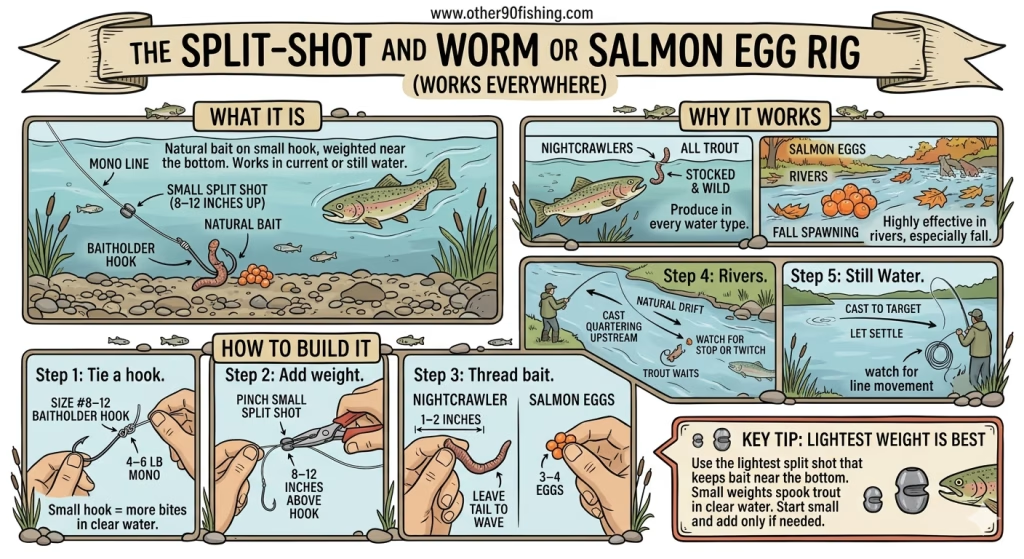
WHAT IT IS: A natural bait (nightcrawler piece or salmon eggs) on a small hook, weighted with a split shot 8–12 inches up the line. Fishes on or near the bottom in current or still water.
WHY IT WORKS: Nightcrawlers produce on stocked and wild trout in every water type. Salmon eggs are highly effective in rivers, particularly in fall when spawning activity is underway.
HOW TO BUILD IT:
- Step 1: Tie a size #8–12 baitholder hook to 4–6 lb monofilament (smaller hook = more bites in clear water).
- Step 2: Pinch a small split shot 8–12 inches above the hook.
- Step 3: Thread 1–2 inches of nightcrawler onto the hook, leaving a tail to wave in the current. Or: thread 3–4 salmon eggs onto the hook.
- Step 4: In rivers: cast quartering upstream and let the rig drift naturally with the current. Watch the line for a stop or twitch indicating a bite.
- Step 5: In still water: cast to the target area, let settle, and watch for line movement.
KEY TIP: Use the lightest split shot that keeps the bait near the bottom. In clear water, heavy weights spook trout. Start with the smallest split shot in your pack and add only if needed.
Fishing Spinners for Trout: The Best All-Purpose Trout Lure
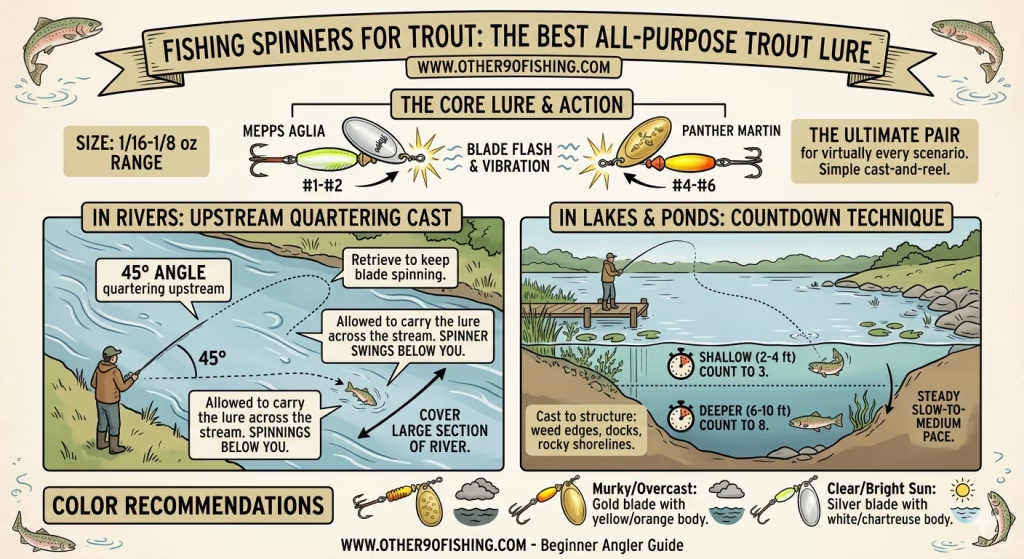
If there is one lure that every beginner trout angler should have in their tackle box, it’s a small inline spinner in the 1/16-1/8 oz range. The Mepps Aglia and Panther Martin in sizes 0-2 have caught more trout for more anglers than any other artificial lure in history. The blade produces flash and vibration that triggers strikes from both stocked and wild trout, the retrieve is simply cast-and-reel, and the action requires no technique beyond varying retrieval speed.
In rivers: Cast the spinner quartering upstream at a 45-degree angle. Retrieve fast enough to keep the blade spinning while allowing the current to carry the lure across the stream. The spinner swings below you on the current, covering a large section of river with each cast.
In lakes and ponds: Cast to likely structure (weed edges, dock areas, rocky shorelines) and retrieve at a steady slow-to-medium pace. Vary depth by counting down after the lure hits the water — count to 3 for shallow (2-4 ft), count to 8 for deeper (6-10 ft).
Colors: Gold blade with a yellow or orange body for murky water and overcast days. Silver blade with a white or chartreuse body for clear water and bright sun. A Panther Martin in gold/yellow (#4 or #6) and a Mepps Aglia in silver (#1 or #2) cover virtually every trout scenario between them.
Trout Fishing Gear for Beginners — Ultralight Is the Right Choice
Trout fishing on light line with a sensitive ultralight rod is genuinely more fun than fishing with heavy gear. A 10-inch rainbow on 4 lb line is exciting. The same fish on 20 lb catfish gear is undetectable. The ultralight setup also lets you cast the 1/16 oz spinners and size #14 hooks that trout require, which heavier gear can’t do effectively.
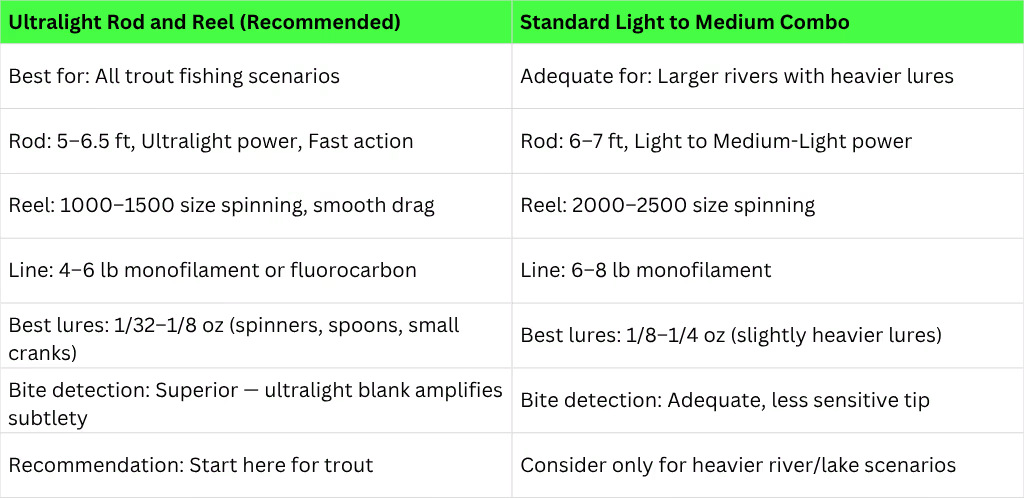
Complete Beginner Trout Gear Checklist
ROD AND REEL:
- Ultralight or light spinning rod, 5–6.5 ft, fast action
- 1000–1500 size spinning reel with smooth front drag
- Brands: Shakespeare Ugly Stik GX2 ultralight, St. Croix Triumph ultralight (upgrade), Abu Garcia Max X or Pflueger Pursuit 1000 reel
LINE:
- 4–6 lb monofilament for most stocked trout scenarios (Berkley Trilene XL, Stren Original)
- 4 lb fluorocarbon for wild or clear-water trout (less visible, sinks faster for drift fishing)
- Never go heavier than 8 lb for trout in most situations
BAIT SETUP:
- Berkley PowerBait dough bait (chartreuse and rainbow colors) + size #14–16 treble hooks
- Nightcrawlers (from local bait shop) + size #8–12 baitholder hooks
- Assorted split shot sinkers (small: BB and #7 sizes)
- Barrel swivels size #12–14 for dough bait rig
LURES:
- Mepps Aglia spinners sizes #0–2 in gold and silver
- Panther Martin spinners sizes 1/16–1/8 oz gold/yellow and silver/white
- Optional: Acme Kastmaster spoon 1/12–1/4 oz (excellent in lakes)
TOOLS:
- Needle-nose pliers for hook removal
- Small landing net (optional but helpful for larger trout)
- State fishing license (required in all 50 states)
Trout Fishing Mistakes Beginners Make
- Using line that’s too heavy. 20 lb monofilament is completely wrong for trout. It’s visible in clear water, can’t cast small lures, and kills the sensitivity that makes trout fishing satisfying. Use 4–6 lb monofilament for stocked trout, 4 lb fluorocarbon for wild or clear-water trout.
- Making too much noise near the water. Trout feel vibration through their lateral line and spook from footsteps on the bank, shadows across clear water, and loud movement. Approach the water quietly, keep shadows off the water, and make your first cast count.
- Using too much dough bait. A pea-sized ball is enough. A golf-ball-sized dough bait blob sits heavily on the bottom, doesn’t float properly, and hides all three treble hook points. Small ball, all hook points exposed, floating above the bottom.
- Missing the subtle trout bite. Trout, especially wild ones, often tap the bait gently rather than committing to a full strike. Watch the line, not just the rod tip. A slight pause in the drift, a sideways line movement, or a twitch is often the entire bite. Respond immediately.
- Fishing at the wrong time. Trout are most active in the coolest parts of the day. Early morning and late afternoon/evening produce far more trout than the 11 AM to 2 PM summer midday. This is especially true in summer when water temperatures peak
Trout Fishing: Simple to Start, Deep Enough to Last a Lifetime
Trout fishing begins at a stocked pond with a jar of PowerBait and ends — if it ends at all — decades later on a wild Western river, reading the water for a rising brown trout. The distance between those two places is measured in the thousands of small moments of learning that happen between them: the first time you feel a trout take a drift presentation in current, the first wild rainbow from a cold mountain stream, the first brown trout you targeted deliberately based on the water you read. All of it starts with that first cast.
This guide is the cornerstone of the Trout Fishing category on Other90Fishing.com. The supporting articles below go deeper on everything introduced here: early spring trout behavior, the best baits for cold-water trout, stocked versus wild trout techniques, the ultralight gear guide, regional trout destinations, and the step into fly fishing that many spinning-rod anglers eventually find irresistible. Start simple. Fish often. The trout will teach you the rest.
Ultralight rod. 4 lb line. Small spinner. That’s the start of something lasting.