The Beginner’s Guide to Catfishing establishes the foundation: what catfish eat, where they live, and how to set up a basic rig. Spring is where that foundation pays its first dividend. As water temperatures climb from the cold-water holding patterns of winter into the 52-65°F range that drives catfish movement, something important happens for bank anglers specifically: the fish come to you.
Spring is the season when catfish abandon the deep-water winter holds that require a boat to reach and begin pushing into the shallower, warmer water accessible from the bank. Creek mouths, shallow flats near deeper channels, riprap banks that absorb afternoon heat, wind-blown shorelines where baitfish concentrate — these are bank-accessible locations that become genuinely productive spring catfish spots as water temperatures rise. A beginner with a medium-heavy rod, a simple slip-sinker rig, and fresh bait is equipped to fish the same productive water that experienced boat anglers are targeting.
This guide covers the specific bank locations that hold catfish during spring warming, how to identify them from the shoreline without electronics, the simple rigs that consistently produce fish from those spots, the best baits for spring catfish from the bank, how warming trends and cold fronts affect the bite, and the gear that makes bank catfishing easier and more productive. Whether you’re fishing a Midwest river, a Southern reservoir, a Great Plains lake, or a local pond, spring bank catfishing is among the most accessible and rewarding freshwater fishing experiences of the year.
Why Spring Is the Best Season for Bank Catfishing
What Warming Water Does to Catfish Behavior
Catfish are ectothermic — their body temperature and metabolism match the surrounding water. In cold winter water (below 50°F), their metabolism drops to the point where they move slowly, feed infrequently, and concentrate in the deepest, most thermally stable water available. For most bank anglers, that winter holding water is unreachable without a boat.
Spring changes this completely. As water temperatures climb from 50°F toward 60°F and beyond, catfish metabolism increases rapidly. They become more active, feeding more frequently and ranging more widely to find food. Critically for bank anglers, this movement takes them into shallower water — the warm-water flats, sun-heated riprap banks, creek mouth areas, and shallow coves that are accessible from the shore. The fish that spent winter at 20-30 feet are now hunting in 4-10 feet of water within casting range.
The spring bank fishing window: The most productive spring bank catfishing typically occurs when water temperatures stabilize in the 55-68°F range. Below 55°F, catfish are active but cautious, feeding in shorter windows. Above 68°F, they remain catchable but begin to shift toward summer patterns. The 55-65°F sweet spot is the prime bank fishing window — fish are actively feeding, moving shallow, and responding to fresh bait placed at the right locations.
Where to Fish — Reading the Bank for Spring Catfish
The ability to identify productive bank spots from the shoreline — without electronics, without a boat, without scouting time — is the core skill that separates anglers who consistently catch spring catfish from those who fish random sections of bank and wonder why nothing is happening. Here’s how to read what you see:
Productive Spring Bank Locations
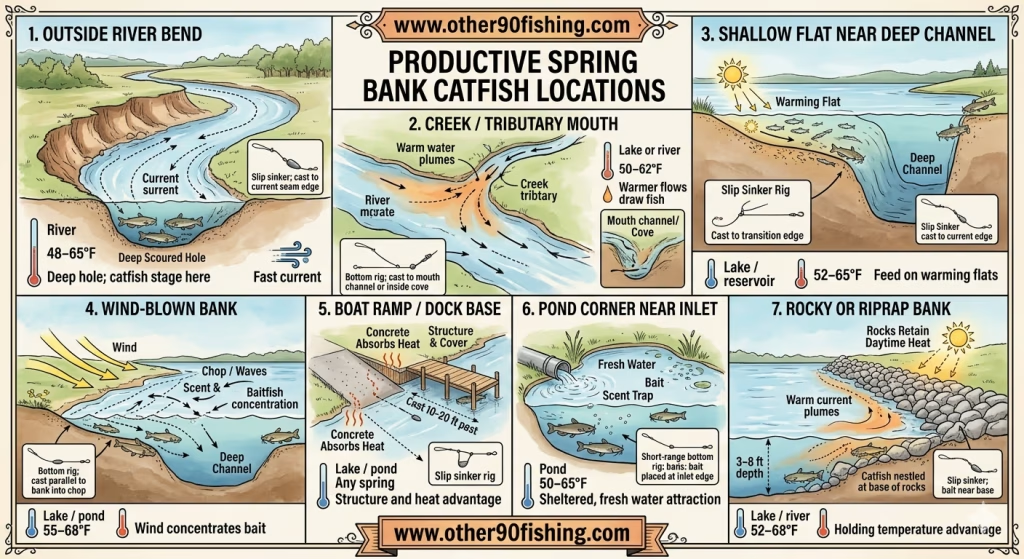
| Bank Location | Water Type | Best Temp Range | What Makes It Work | Rig / Approach |
| Outside river bend | River | 48–65°F | Deep scoured hole adjacent; catfish stage here in spring | Slip sinker; cast to current seam edge |
| Creek / tributary mouth | Lake or river | 50–62°F | Warmer tributary draws catfish from colder main body | Bottom rig; cast to mouth channel or just inside cove |
| Shallow flat near deep channel | Lake / reservoir | 52–65°F | Warming flat holds baitfish; catfish move up to feed | Slip sinker; cast to flat/channel transition edge |
| Wind-blown bank | Lake / pond | 55–68°F | Wind pushes baitfish and scent; catfish follow | Bottom rig; cast parallel to bank into chop |
| Boat ramp / dock base | Lake / pond | Any spring | Concrete absorbs heat; structure provides cover | Slip sinker; cast 10–20 ft past structure |
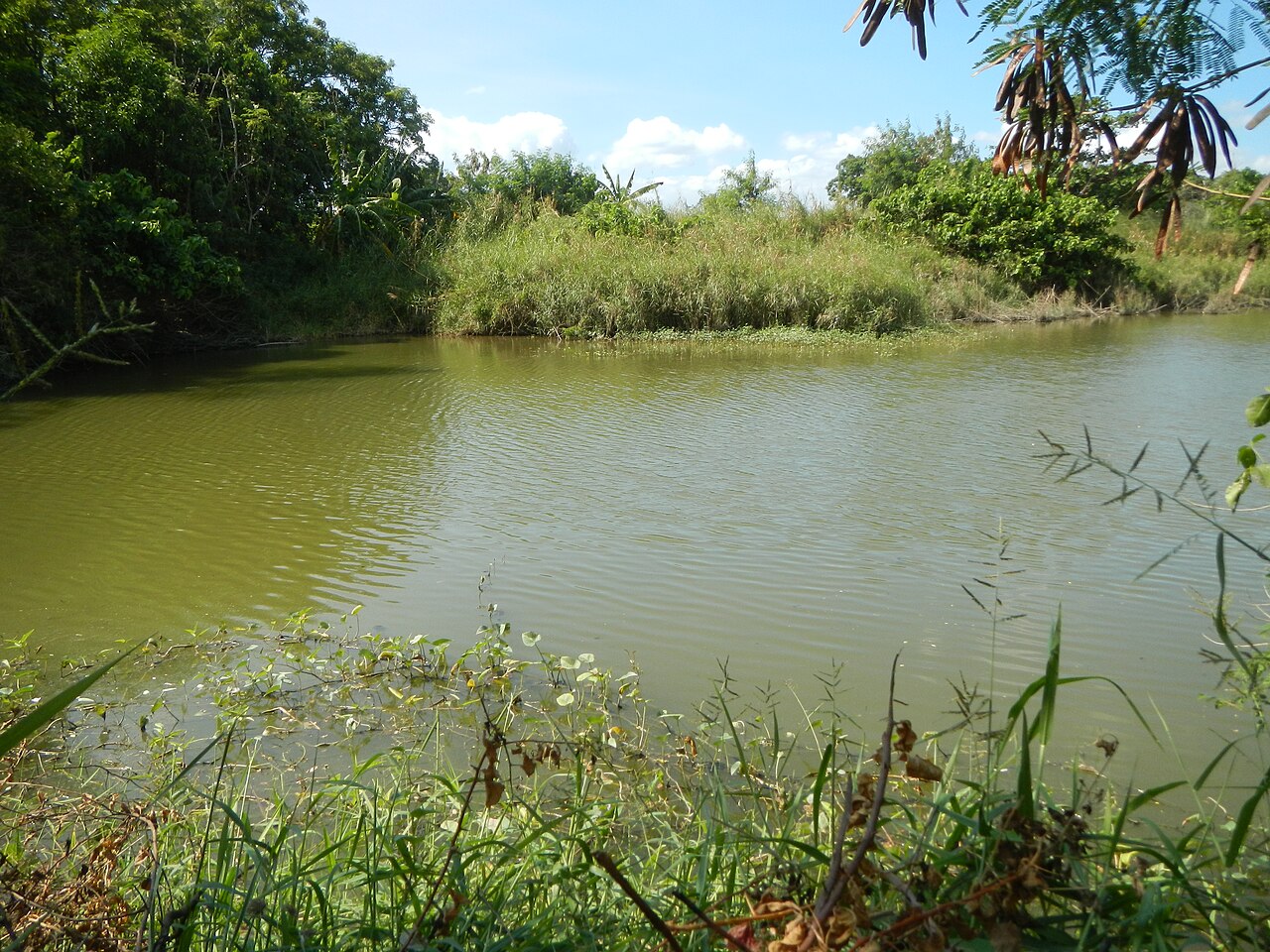
| Pond corner near inlet | Pond | 50–65°F | Inlet brings fresh water and bait; sheltered corner traps scent | Short-range bottom rig; bait placed at inlet edge |
| Rocky or riprap bank | Lake / river | 52–68°F | Rock retains daytime heat; creates holding temp advantage | Slip sinker; bait near base of rocks in 3–8 ft |
The Most Important Thing to Look For: The Depth Transition
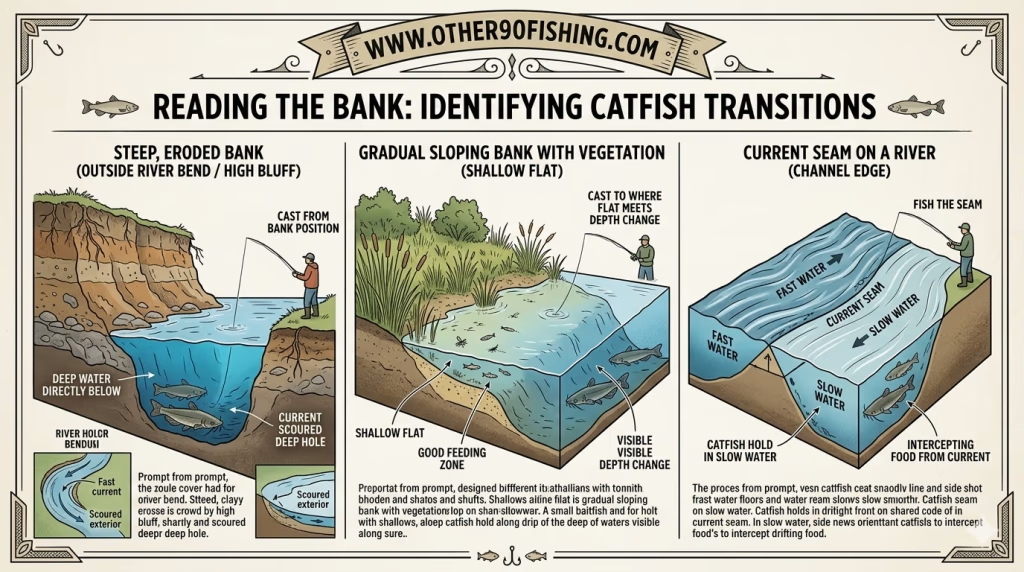
Every productive spring bank catfish location shares one characteristic: access to a depth transition. The fish you’re targeting are moving from deeper winter holding areas toward shallower feeding areas, and they stage at the edge of that transition — the point where depth changes from 8-15 feet to 3-6 feet. This transition edge is the catfish ambush zone, and it’s where you want your bait.
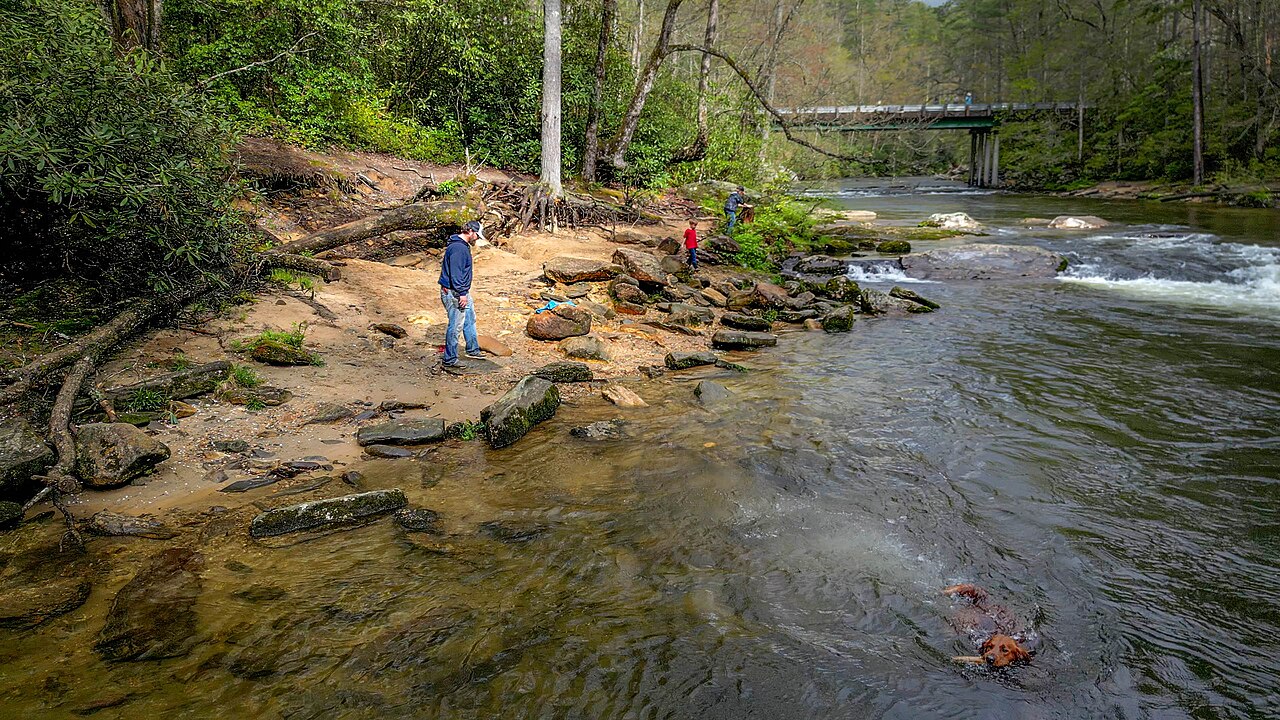
From the bank, you can often identify depth transitions without any electronics by reading the water surface and bank topography. A steep bank that drops directly into the water usually indicates deep adjacent water. A gradually sloping bank with visible shoreline vegetation usually indicates a shallower flat. A current seam on a river (the visible line where fast and slow water meet) marks the edge of the channel adjacent to a shallower shelf. The outside of a river bend with a steep, eroded clay bank has deep water below it.
The Wind-Blown Bank: Spring’s Most Underrated Bank Spot
If you’re fishing a lake or reservoir in spring and the wind is blowing, fish the bank the wind is blowing toward. This isn’t just a preference — it’s a physics-driven pattern. Wind-driven surface current pushes warm surface water, floating insects, and baitfish to the downwind bank and creates a localized temperature zone that’s 1-3°F warmer than the upwind side. It also concentrates scent from any bait you present into the adjacent water rather than dispersing it.
The downwind bank also tends to have more wave action, which generates turbulence that oxygenates shallow water and stirs up bottom-dwelling invertebrates — both of which trigger catfish feeding. When you arrive at a lake or reservoir for spring bank fishing, note wind direction before choosing your access point. The windier side is almost always the more productive spring catfish bank.
Spring Bank Catfish: Quick Location Checklist (No Electronics Required)
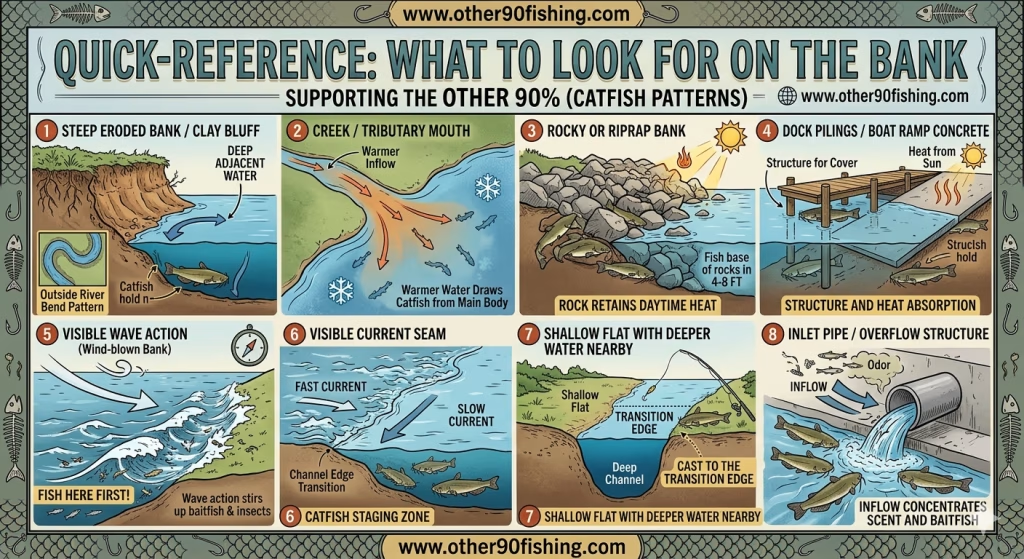
Look for these visual indicators when walking a lake shore or riverbank:
✅ Steep eroded bank or clay bluff → Deep adjacent water; outside river bend pattern
✅ Creek or tributary mouth visible → Warmer tributary water attracting catfish from main body
✅ Rocky or riprap bank → Heat retention; cast to base of rocks in 4-8 ft
✅ Dock pilings or boat ramp concrete → Structure and heat absorption
✅ Visible wave action on one side of lake → Wind-blown bank; fish here first
✅ Visible current seam on river → Channel edge transition; catfish staging zone
✅ Shallow flat with deeper water visible nearby → Cast to the transition edge, not the center of the flat
✅ Inlet or overflow pipe → Inflow brings oxygenated water and concentrates scent
Simple Rigs That Work for Spring Bank Catfish
The Two Rigs Every Bank Catfisher Needs
Slip Sinker Rig (Carolina Rig) — The Most Versatile and Beginner-Friendly Bank Catfish Setup
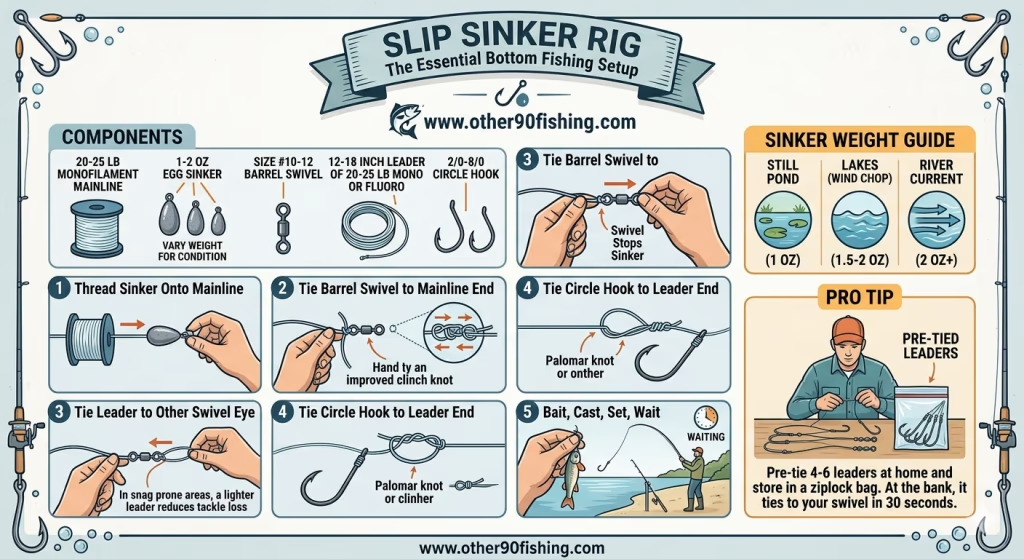
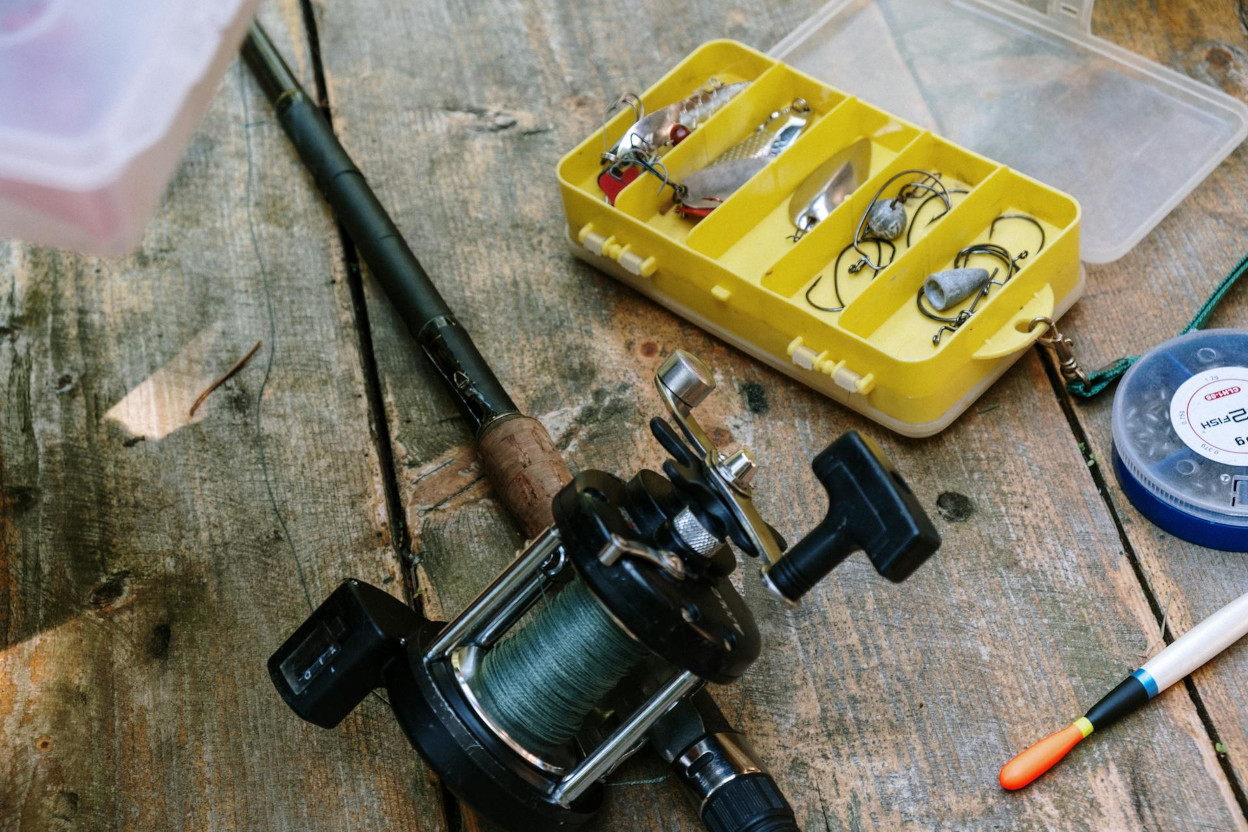
What it is: An egg sinker threaded onto the mainline, held in place by a small barrel swivel, with a 12-18 inch leader and a circle hook. The sinker rests on the bottom while the bait sits slightly above it, dispersing scent in the current or the water column.
Why it works for bank fishing: The slip design allows a catfish to pick up the bait and move without feeling the weight of the sinker — the line runs through the sinker freely. This is critical in spring when catfish approach bait cautiously after the slow winter period. A fixed weight that creates resistance when a fish picks up the bait causes rejections. The slip sinker eliminates that resistance.
How to rig it: Thread a 1-2 oz egg sinker onto your mainline. Tie a small barrel swivel (size #10-12) to stop the sinker. Tie a 12-18 inch section of 20-25 lb monofilament or fluorocarbon to the other swivel eye. Tie a 2/0-3/0 circle hook to the leader end. Bait with your spring bait of choice.
Sinker weight for spring bank fishing: 1 oz holds on soft mud bottoms in calm pond conditions. 1.5-2 oz handles light lake current or wind drift. A 2+ oz sinker keeps position in river current. If your bait is drifting rather than holding near your target, go heavier.
Circle hook advantage: Circle hooks hook catfish in the corner of the mouth as they swim away, requiring no active hookset. For bank fishing where you may have 2-3 rods in holders, circle hooks on all of them means every rod is fishing effectively without you actively monitoring each one
Three-Way Rig — For Rivers and Current — Keeps Bait Off the Bottom in Moving Water
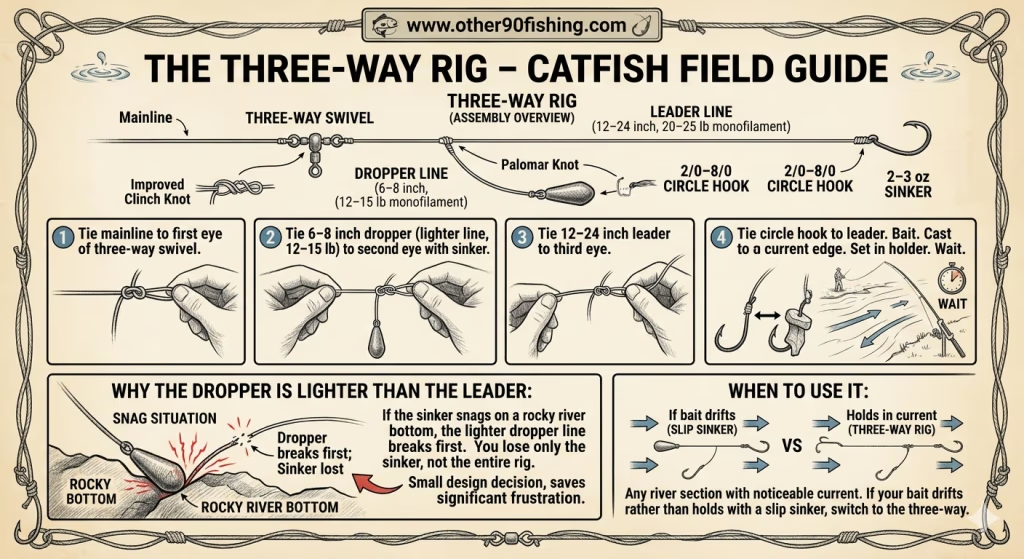
What it is: A three-way swivel with the mainline on one eye, a dropper line with a sinker on the second eye, and a leader with a hook on the third eye. The sinker hangs below and holds bottom while the baited leader extends out in the current, presenting bait above the bottom where catfish are feeding.
Why it works in current: In a river with any meaningful current, a slip sinker rig drags the bait along the bottom rather than holding it in place. The three-way rig keeps the sinker anchored and allows the current to work the baited leader naturally — making the bait appear alive and drifting rather than pinned and static.
How to rig it: Tie mainline to one eye of a three-way swivel. Tie a 6-8 inch dropper of lighter line (12-15 lb) to the second eye with the sinker at the end (lighter dropper line breaks first if sinker snags). Tie 12-24 inch leader of 20-25 lb to the third eye with a 2/0-3/0 circle hook.
When to use it vs slip sinker: Ponds and lakes with no current = slip sinker. Any river situation with noticeable current = three-way rig. The three-way rig is particularly effective on outside bends where current is stronger and you need the bait to hold at the depth transition edge.
Family note: The three-way rig is slightly more complex to assemble than a slip sinker rig. Pre-tie leaders and rigs at home and store in a small ziplock bag for each rod. Assembly at the bank takes 30 seconds when the components are pre-made.
| Slip Sinker Rig | Three-Way Rig |
| Best water: Still ponds, lakes, calm reservoirs | Best water: Rivers and streams with current |
| Setup complexity: Very simple (2 components + hook) | Setup complexity: Slightly more complex (3-way swivel) |
| Bait presentation: Resting on or near bottom | Bait presentation: Lifted by current above bottom |
| Best sinker: Egg sinker 1–2 oz | Best sinker: Bank sinker or bell sinker 2–3 oz |
| Cold front: Most effective — bait stays put | Cold front: Less effective without current working leader |
| Recommended for: First-time catfishers at any location | Recommended for: River catfishers after learning the slip sinker |
Spring Bank Catfish Baits — What Works and When
Spring catfish bait selection follows the same principle as spring catfish location: warming water and increasing activity favor fresh, high-scent baits. Here’s what to bring:
Spring Bank Catfish Bait Guide by Temperature
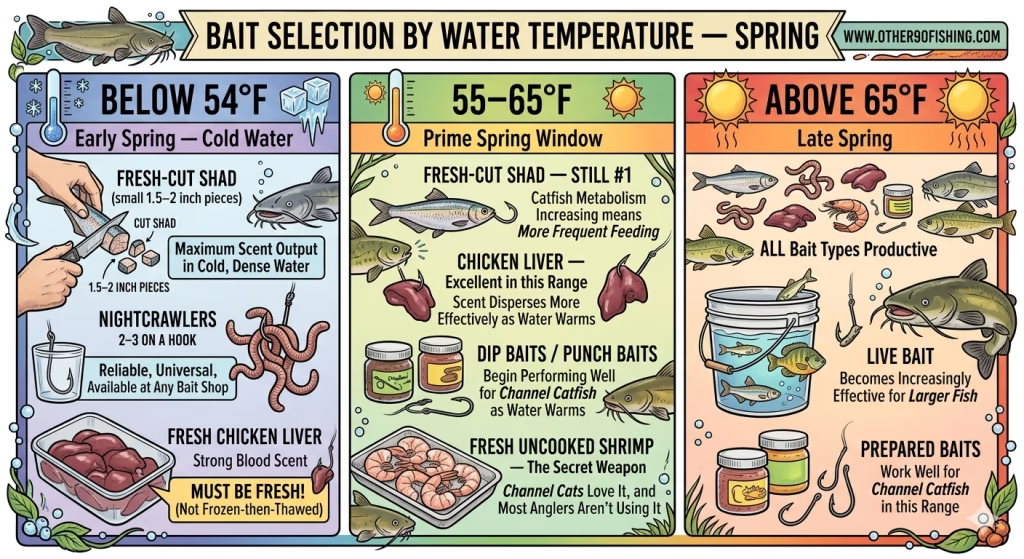
48-54°F (Early Spring / Cold Water):
- Fresh cut shad or sucker (small 1.5-2 inch pieces): Maximum scent output at cold temperatures. The oily flesh of shad disperses scent in cold water better than soft baits.
- Nightcrawlers (2-3 on a hook): Reliable in cold water, widely available, and effective on channel catfish when fresh shad isn’t accessible.
- Chicken liver (fresh, not frozen-then-thawed): Strong scent; rig on treble hook or bait bag to hold on hook.
55-62°F (Prime Spring Warming):
- Fresh cut shad (primary): Still the top choice as water warms. Catfish metabolism increasing means more frequent feeding.
- Chicken liver: Excellent in this range; scent disperses more effectively as water warms.
- Dip baits and punch baits: Begin performing comparably to natural bait as temperatures push into this range. Convenient for family outings.
- Nightcrawlers: Remain effective; good option for families with young children (easy to handle).
62-68°F (Late Pre-Spawn / Peak Spring):
- All bait types productive. Fresh cut bait and chicken liver remain top performers.
- Prepared dip and punch baits work well in this range for channel catfish.
- Live bait (creek chubs, small bluegill) becomes increasingly effective for larger catfish.
- Shrimp (fresh, not cooked): Surprisingly effective for channel catfish and underused by beginners.
Bait freshness rule: Replace bait every 30-45 minutes in spring. Fresh bait always outperforms bait that’s been soaking for an hour. The scent output drops significantly over time.
Bite Windows in Spring: When to Be on the Bank
Spring catfish don’t feed constantly. Like all cold-blooded species coming out of winter, they feed in windows — specific time periods when conditions trigger active feeding. Understanding these windows dramatically improves catch rates from the bank:
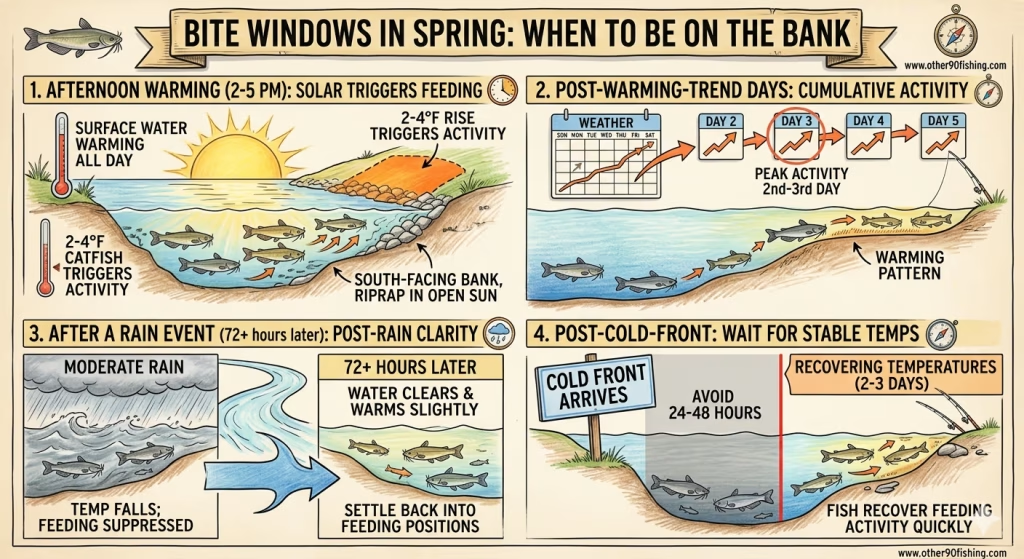
Afternoon warming (2-5 PM): The most reliable spring catfish feeding window from the bank. Solar radiation warms surface water through the day, reaching maximum temperature in the mid-afternoon. This 2-4°F temperature rise over the day triggers feeding activity in catfish that have been inactive through the morning. Bank spots with direct sun exposure (south-facing banks, riprap in open sun) warm fastest and are the best afternoon targets.
Post-warming-trend days: After 3-5 consecutive days of warming temperatures, catfish that have been gradually moving shallower throughout the trend reach their peak activity. The second or third day of a warming trend after a stable or warming pattern is often the best fishing of the spring week.
After a rain event (72+ hours later): Spring rain events often temporarily cloud and cool water, which suppresses feeding. But 48-72 hours after a moderate rain, water clears and warms slightly, catfish that were displaced by the muddy water settle back into feeding positions. This post-rain clarity window is consistently productive on rivers and streams.
Post-cold-front: Avoid the first 24-48 hours after a cold front in spring. Fish pull slightly deeper and feed slowly. Wait for 2-3 days of stable or recovering temperatures, then return to your bank spots — catfish that retreated slightly deeper are still in the same general area and recover feeding activity quickly.
Gear That Makes Spring Bank Catfishing Easier
The Right Rod Setup for Bank Catfishing
Bank catfishing has a specific gear requirement that differs from light-tackle fishing: you need a rod that can cast a 1-3 oz sinker with a baited hook a meaningful distance, absorb the initial run of a catfish strike, and hold up to the sustained pressure of fighting a fish to the bank. The ultralight rod appropriate for trout or panfish isn’t the right tool here.
The correct bank catfish rod is a medium-heavy spinning setup in the 7-8 foot range, rated for 15-30 lb line and 1-4 oz lures. This length gives you the casting leverage to reach spots 30-50 feet from the bank, the backbone to move a catfish away from bottom structure, and the sensitivity in the tip to detect the subtle initial movement of a spring bite before it becomes a full run.
For a first catfish setup, the combination of a 7-foot medium-heavy spinning rod with a 3000-4000 size spinning reel spooled with 20-25 lb monofilament covers virtually every spring bank catfish scenario from ponds to rivers to reservoirs. Brand recommendations: Ugly Stik spinning combo in the 7-foot medium-heavy configuration ($35-$55), or a Shakespeare Ugly Stik GX2 rod paired with a mid-range spinning reel in the 3000 size class ($50-$80 combination).
Rod Holders for Bank Fishing — The Most Overlooked Spring Bank Catfish Gear Item
Why they matter: Spring bank catfishing often involves waiting 20-45 minutes between bites at a given location. Holding a rod for an hour while waiting for a catfish strike is tiring, particularly for young anglers. A bank rod holder solves this completely — plant the holder in the soft spring bank soil, set the rod, and wait comfortably without holding anything.
Types: Bank sticks (single telescoping metal rod that screws or pushes into the ground, $8-$15 each) are the simplest and most widely used. V-shaped rod rests that sit on top of a bank stick are the traditional catfishing setup — the V holds the rod at angle and allows a striking fish to move the rod tip, which telegraphs the bite visually. Tripod rod holders are more stable for hard or rocky bank surfaces.
Running 2-3 rods: Bank rod holders allow you to set multiple rods covering different spots, depths, and bait types simultaneously. A productive spring bank catfishing setup is often 2-3 rods with holders: one rod targeting the creek mouth at 15 feet, one targeting the depth transition edge at 30 feet, one on the wind-blown side at 25 feet. This covers the location without requiring you to choose just one.
For families: Rod holders completely change the spring bank catfishing experience for young children. They don’t have to hold a rod for an extended period, they can move around the bank area without losing their fishing position, and they can clearly see the rod tip when a bite occurs. Two rod holders per child in the group is the recommended family setup.
Spring Bank Catfishing Game Plan — From Arrival to First Fish
Spring Bank Catfishing: Step-by-Step
BEFORE YOU LEAVE HOME:
- Check water temperature for your target location (USGS Water Resources for rivers; call local bait shop for lake conditions). Target 52-68°F for the most active spring catfish.
- Check the weather pattern. Are temperatures warming over the next 3 days? That’s a good week. Was there a cold front in the last 24 hours? Wait 2 more days.
- Source fresh bait. Ideally fresh-caught shad or nightcrawlers from a bait shop. Call ahead — bait shops in catfish country often have shad availability information.
- Pre-tie your rigs at home. Assemble 3-4 slip sinker rigs with pre-cut leaders and circle hooks, stored in a small ziplock. Bank setup takes 5 minutes instead of 30.
AT THE WATER — FIRST 10 MINUTES:
- Don’t fish immediately. Walk 50-100 yards of bank before selecting your spot. Look for the location indicators in the quick-reference table: steep banks, creek mouths, current seams, riprap, wind-blown shore.
- Note the wind direction. Select a spot on the downwind bank if fishing a lake or reservoir.
- Check for depth transitions from the bank. Steep bank = deep adjacent water. Gradual slope = shallower flat. Look for the spot where both exist nearby.
SETTING UP:
- Plant your rod holders 10-15 feet apart to cover different distances and angles.
- Attach your pre-tied slip sinker leader to your mainline via the barrel swivel.
- Bait with a fresh-cut 2-inch shad section or golf-ball-size worm bundle on your circle hook.
- Cast to your target: the depth transition edge, creek mouth channel, or wind-blown bank. Not the center of open water.
- Set the rod in the holder at a 45-degree angle with the bail closed and drag set.
FISHING:
- Give a spot 30-45 minutes. Spring catfish approach bait more slowly than summer fish. If no bite at 45 minutes, recast to a different angle covering a different depth.
- Replace bait every 30-45 minutes with fresh bait regardless of whether it looks used.
- When a rod tip dips or the line moves: with a circle hook, simply reel down until you feel resistance, then lift firmly. Do not jerk or set hard. The circle hook does the work.
- If you catch a fish, don’t move. Cast back to the exact same spot. Spring catfish often school loosely, and a second fish is frequently present within 20 feet of where the first was caught.
Spring Bank Catfish Mistakes to Avoid
Mistake 1: Fishing random bank sections with no visible features. Walking to the nearest accessible bank and casting into open water is the lowest-probability spring catfish approach. Spend 10 minutes walking the bank to find a spot with visible depth transition, structure, or current seam before setting up.
Mistake 2: Replacing bait only when it’s completely gone. Catfish find bait by scent, and scent output drops dramatically after 30-45 minutes on the hook. Replace fresh bait every 30-45 minutes even if there’s bait remaining on the hook.
Mistake 3: Setting the hook hard with circle hooks. Circle hooks hook fish as they turn away with the bait. A violent hookset pulls the hook out of position before it has a chance to catch. Reel down to resistance and lift firmly. That’s all that’s needed.
Mistake 4: Fishing the wrong time. The 24-48 hours after a cold front are the slowest spring catfishing of the week. Fish on the second or third day of a stable warming trend instead.
Mistake 5: Using only one rod from a bank location. Two or three rods covering different angles and distances from the same bank position dramatically increases your probability of intersecting fish that may be holding at any point along the depth transition edge.
Bank Fishing Safety in Spring
Spring bank conditions introduce specific safety considerations:
Soft, wet banks: Spring bank soil is often saturated and soft near the waterline. Test your footing before committing weight near the water’s edge. Slippery clay banks and mud near the waterline are among the most common causes of angler falls into water.
Rising river levels: Spring runoff can raise river levels rapidly. Know the current USGS gauge reading for any river you’re bank fishing. If the river is rising significantly during your outing, be prepared to move to higher ground quickly.
Children near water: Enforce a clear rule that children don’t approach within 5 feet of the bank edge without an adult present. Spring bank edges can have undercut sections that look stable but aren’t.
Poison ivy and vegetation: Spring vegetation along bank edges is beginning to emerge. Know what poison ivy looks like in early spring (three leaflets, often reddish-green in early growth). Bank access paths often run through dense spring vegetation.
Spring Brings the Catfish to You — Make the Most of It
Spring is the season that makes bank catfishing genuinely excellent rather than just possible. The fish leave the deep winter holds that only boat anglers can access and move into the shallow, bank-accessible water that begins warming in March and stays productive through May and into June across most of the country. A beginner with a medium-heavy rod, a slip sinker rig, fresh bait, and an understanding of which bank features hold fish has everything they need to consistently catch spring catfish from the shore.
Warm water. Right bank. Fresh bait. That’s spring catfishing from shore.