Catching the spring window and understanding water temps — why this one season turns bank anglers into consistent catfish catchers.
Every spring, something quietly remarkable happens in lakes, rivers, and reservoirs across the country. The catfish that spent the entire winter stacked in deep, boat-only holes start moving. They get hungry. They get shallow. And for bank anglers, this is the moment the whole season has been waiting for.
The fish don’t need a boat to reach them anymore. They’re coming to you.
Why Spring Changes Everything for Bank Anglers
Catfish are ectothermic — their body temperature and metabolism match the water around them. In cold winter water (below 50°F), their metabolism drops so much that they barely move. They concentrate in the deepest, warmest holes in the system. For bank anglers, those spots are simply unreachable without a boat.
But as water temperatures climb from 50°F toward 60°F in spring, catfish metabolism jumps. They become active, feed more often, and move into shallower water. The sun-warmed riprap banks, the creek mouth shallows, the wind-blown shoreline coves — all of these become accessible from the bank. That 3-lb channel cat that was sitting in 25 feet of water in January is now hunting in 5 feet of water 40 feet from where you’re standing.
The Golden Temperature Window
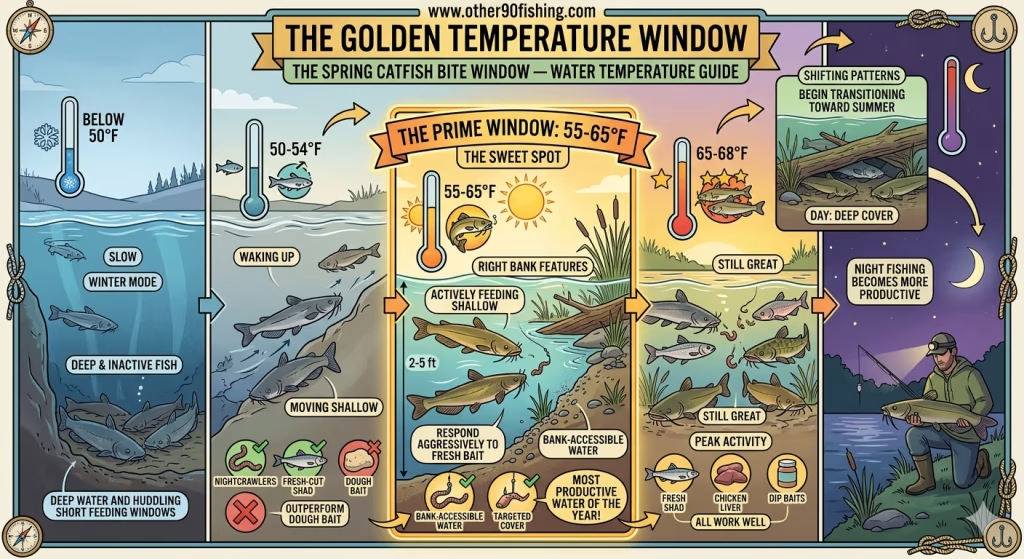
The Spring Catfish Bite Window — Water Temperature Guide
- Below 50°F — Slow: Fish still in winter mode. Deep, inactive, short feeding windows.
- 50–54°F — Waking Up: Catfish beginning to move shallow. Nightcrawlers and fresh-cut shad outperform dough bait.
- 55–65°F — THE PRIME WINDOW: This is it. Fish are actively feeding in shallow water. Respond aggressively to fresh bait on the right bank features.
- 65–68°F — Still Great: Peak activity. Fresh shad, chicken liver, and dip baits all work well.
- Above 68°F — Shifting: Still catchable, but fish begin transitioning toward summer patterns. Night fishing becomes more productive.
The 55–65°F range is the sweet spot where catfish are actively feeding in shallow, bank-accessible water. Below 55°F, they feed but cautiously and in shorter windows. Above 68°F, they start adapting to summer patterns. Hit the 55–65 range on the right bank features and you’re fishing some of the most productive water of the entire year.
When to Go: Time of Day Matters More Than You Think
Morning isn’t king in spring. The early morning water is often the coldest part of the day, which means catfish are still in conservative, slow-feeding mode. The real action builds as the afternoon sun has had hours to warm the shallows.
The best spring catfish bite typically runs from about 1 PM to 5 PM on sunny days. That’s when the shallows hit their daily maximum temperature, triggering the most active feeding windows. Afternoon fishing on a warming spring day is consistently more productive than pre-dawn outings that work well in summer.
Reading the Weather Pattern
The Three-Day Warming Rule
- Day 1 of warming trend: Water beginning to warm. Catfish moving toward shallow areas.
- Day 2: Shallow water approaching the prime temperature window. Bites improving.
- Day 3 (and beyond): This is the magic. Three consecutive warming days concentrates catfish in accessible shallow water with full feeding metabolism. This is when the bite is best.
Cold Front Reset Rule: After a cold front drops water temperatures, wait 48 hours before fishing the bank. That’s how long it typically takes for catfish to recover from a temperature disruption and resume active feeding.
Check the 3-day forecast before your trip. A Wednesday outing after three warm days will almost always outperform a Sunday outing after a cold front rolled through Friday night, even if the Sunday water is technically warmer. The trend matters as much as the temperature.
Bank vs Boat: Spring Is the Great Equalizer
In summer and winter, boat anglers have real advantages in accessing deep structure that bank anglers can’t reach. Spring collapses that advantage. When catfish are moving into 4–10 feet of water along shorelines, creek mouths, and riprap banks, a bank angler with a well-placed rod is in the same water as a boat angler spending 10x more on their setup.
Spring bank catfishing is genuinely high-value, low-barrier fishing. You don’t need a trailer, a launch ramp, or thousands of dollars in boat investment to fish the same productive water. You need a medium-heavy rod, a slip sinker rig, fresh bait, and an understanding of which bank features hold fish.
Ready to find the spots? Part 2 shows you exactly where to stand.
Read: No Boat? No Problem. How to “Read” a Riverbank for Spring Catfish