If you’ve been reading the Beginner’s Guide to Bass Fishing, you’ve already learned that bass don’t live randomly scattered throughout a lake. They use specific types of locations for specific reasons — and during seasonal transitions, they concentrate in predictable spots before they commit to either shallow or deep water. Understanding those spots is one of the most valuable skills a new angler can develop.
These locations are called staging areas. They’re the underwater rest stops that bass use during early spring and fall — the windows when fish are actively on the move across freshwater lakes, ponds, rivers, and reservoirs throughout the United States. Bass don’t migrate from deep winter water to shallow spawning flats in one straight shot. They pause along the way, often for days at a time, feeding and waiting for water temperature and conditions to tell them it’s time to move. Those pauses are where skilled anglers know they can find large concentrations of hungry, catchable bass.
What Staging Areas Are — and Why They Exist
The term ‘staging area’ comes from the observed behavior of bass during seasonal transitions: rather than moving directly from one habitat to another, they stage — pause and hold — in intermediate locations that offer comfort, forage, and protection while they wait for conditions to be right for the next move.
Think of it like a road trip. If you’re driving from Chicago to Nashville, you don’t drive nonstop — you stop for gas and food somewhere around Indianapolis. That stop isn’t your destination, but it’s where you concentrate for a period before continuing. Bass do exactly this. During early spring pre-spawn, they migrate from their deep winter holding areas toward shallow spawning flats, and they stop along the way on predictable features of the lake bottom. During the fall cooling, they migrate from summer deep water back toward the shallows to chase baitfish, and again they stage at predictable transition zones.
What makes staging areas so valuable for beginners is that bass in these locations are predictable, concentrated, and actively feeding. They’re not in the full aggression of the spawn — they’re not locked onto beds or territorial. They’re in eating mode, building energy for the transition ahead. A well-located staging area can hold dozens of bass stacked in a relatively small zone, and a beginner with a simple lure and the right retrieve can have an extraordinary morning.
The Two Great Staging Windows Every Beginner Should Know
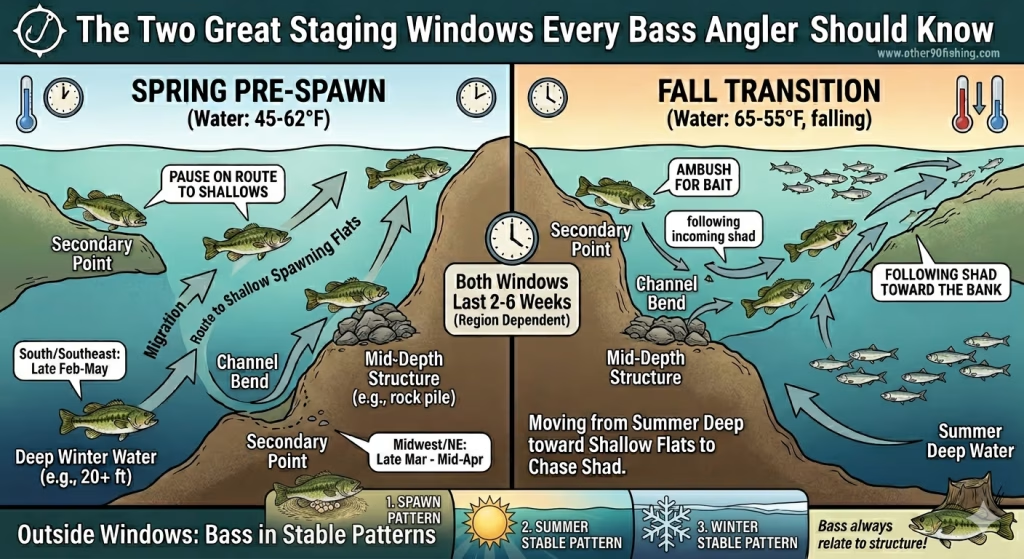
Spring Pre-Spawn (Water: 45-62°F): Bass moving from deep winter water toward shallow spawning flats. Staging on secondary points, channel bends, and mid-depth structure on the route to the shallows.
Fall Transition (Water: 65-55°F, falling): Bass moving from summer deep water toward shallow flats to chase shad. Staging on the same types of structure in reverse, following baitfish toward the bank.
Both windows last 2-6 weeks depending on your region. In the South and Southeast, spring staging begins as early as mid-February. In the Midwest and Northeast, late March to mid-April is typical.
Outside these windows, bass are in more stable patterns (spawn, summer pattern, winter) and the staging concept applies less directly — though bass always relate to structure year-round
One clarification that helps beginners: staging areas are not the same as spawning beds. Spawning beds are in very shallow water (1-4 feet), often visible to the naked eye, and are used during a short window when bass are actually breeding. Staging areas are the locations bass use before and after the spawn — and during the fall — while they’re still in feeding mode. This distinction matters because the fishing techniques are entirely different: bass on beds are finicky and territorial; bass in staging areas are feeding aggressively and respond well to conventional lures and retrieves.
The Four Staging Features Every Beginner Should Learn to Identify
Bass staging areas are defined by the presence of specific underwater features. You don’t need a $1,000 fish finder to find them — you need to understand what to look for and where to look. Here are the four most productive and most beginner-accessible staging features across U.S. freshwater lakes, ponds, reservoirs, and rivers.
Secondary Points — The #1 Staging Location
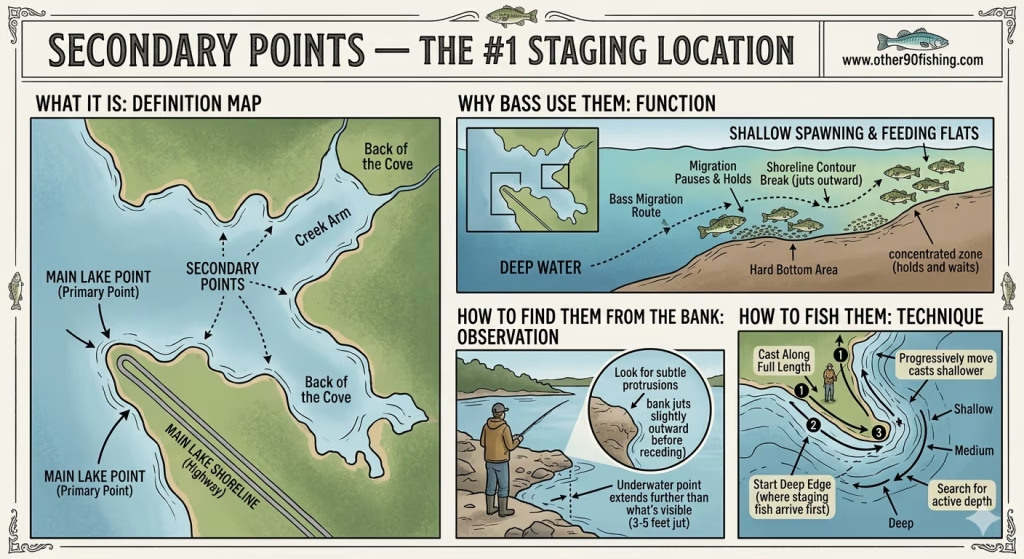
What it is: A secondary point is a smaller point of land that protrudes into a cove or creek arm, positioned between the main lake point and the back of the cove. Think of the main lake shoreline as a highway. The first major point you encounter when entering a cove is the primary point. The smaller points inside that cove, leading deeper into the creek arm, are secondary points.
Why bass use them: Secondary points sit directly on the migration route between deep water and shallow spawning or feeding flats. Bass moving toward the shallows naturally pause here. The point creates a physical break in the shoreline contour, offering a depth change, usually some hard bottom, and a concentrated zone where bass hold and wait.
How to find them from the bank: Walk the shoreline of any cove and look for places where the bank juts slightly outward into the water before receding again. Even subtle protrusions — 3-5 feet of shoreline pushing outward — usually correspond to underwater points that extend further than what’s visible.
How to fish them: Cast along the full length of the point, working from deep to shallow. Start at the deepest edge (where staging fish arrive first) and progressively move casts shallower as you search for the active depth.
Creek Channel Bends — The Highway Intersections
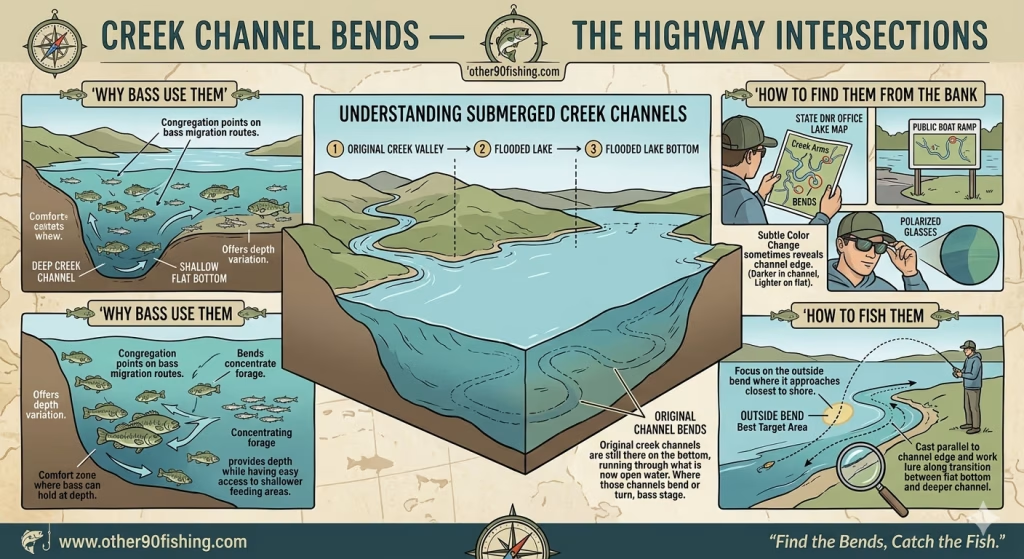
What it is: Most lakes and reservoirs were created by flooding river valleys and creek drainages. The original creek and river channels are still there on the bottom, running through what is now open water. Where those channels bend or turn, bass stage.
Why bass use them: Creek channel bends are natural congregation points on bass migration routes. The bends concentrate forage, offer depth variation (the channel is deeper than the surrounding flat bottom), and provide a comfort zone where bass can hold at depth while having easy access to shallower feeding areas.
How to find them from the bank: Most state DNR offices publish lake maps that show original creek channel locations. Download the map for your lake, identify the creek arms, and locate the bends. Many public boat ramps also post simplified lake maps showing channel locations. From the bank, a subtle color change in the water (darker in the channel, lighter on the flat) sometimes reveals the channel’s edge on calm days with polarized glasses.
How to fish them: From the bank, focus on the outside bend of the channel where it approaches closest to the shore. Cast parallel to the channel edge and work your lure along the transition between the flat bottom and the deeper channel.
Hard-Bottom Flats Near Deep Water — The Pre-Spawn Feeding Zone
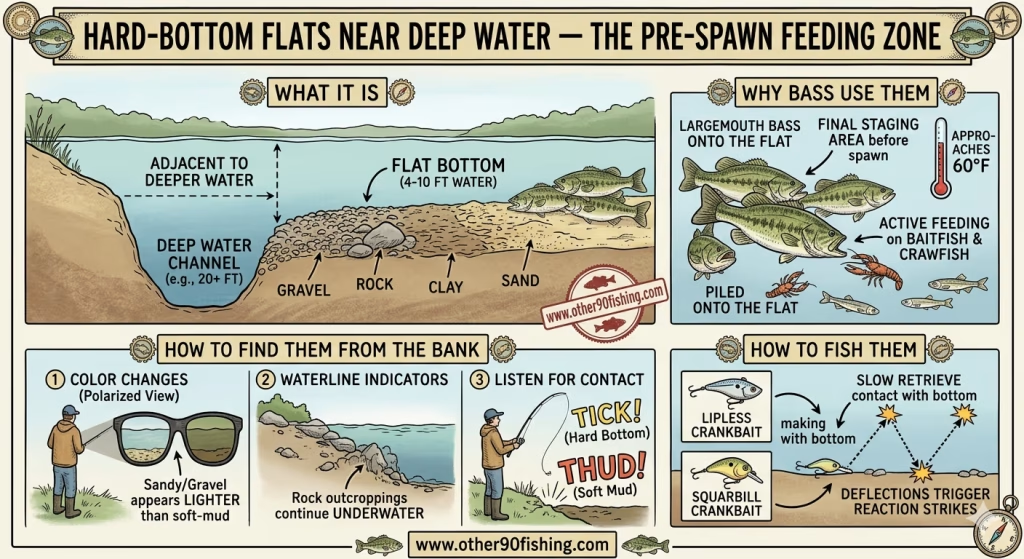
What it is: A relatively flat area of the lake bottom with a hard substrate — gravel, rock, clay, or sand — situated in 4-10 feet of water, positioned adjacent to deeper water. This is the final staging area before bass move into spawn-depth shallows.
Why bass use them: Hard bottom is the preferred spawning substrate for largemouth bass, and the hard-bottom flats adjacent to deep water are the last stop on the pre-spawn migration. Bass pile onto these flats in large numbers as water temperature approaches 60°F, feeding actively on the available baitfish and crawfish.
How to find them from the bank: Look for visible changes in bottom color. Sandy or gravel bottom in shallow water appears lighter than soft-mud bottom when viewed through polarized sunglasses on a calm day. Rock or gravel outcroppings visible at the waterline often continue underwater. Listen for the sound of your lure ticking on hard bottom versus the soft thud of mud.
How to fish them: A lipless crankbait or squarebill crankbait retrieved slowly across the flat, making deliberate contact with the bottom, is highly effective on these staging bass. The deflections trigger reaction strikes.
Submerged Brush and Timber on Migration Routes — The Cover Magnets
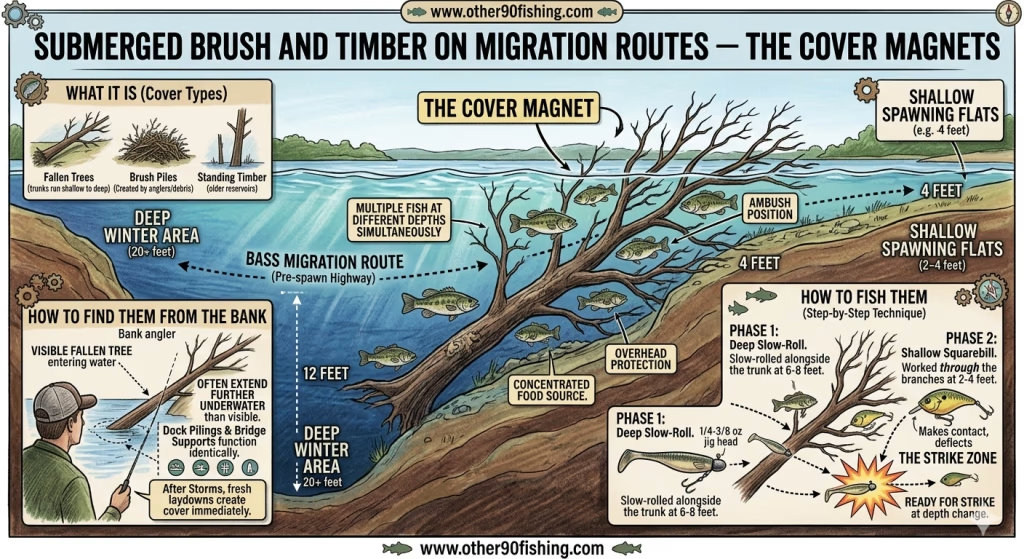
What it is: Any submerged wood, brush pile, or laydown timber positioned on a migration route between deep and shallow water. This includes fallen trees whose trunks run from shallow to deep, brush piles created by anglers or debris, and standing timber in older reservoirs.
Why bass use them: Cover on a migration route is irresistible to staging bass. It provides ambush position, overhead protection, and a concentrated food source — all in one location. A single large submerged tree positioned with its base in 12 feet and its branches in 4 feet can hold multiple fish at different depths simultaneously.
How to find them from the bank: Look for visible fallen trees whose trunks enter the water from the bank. These often extend further underwater than visible. Dock pilings and bridge supports function identically — vertical structure on a depth transition is always worth fishing. After storms, new laydowns create fresh staging cover almost immediately.
How to fish them: Work from deep to shallow. A swimbait slow-rolled alongside the trunk at 6-8 feet, then a squarebill worked through the branches at 2-4 feet, covers the full staging zone. Be ready for the strike at the depth change.
Spring vs. Fall Staging: Same Places, Different Directions
This is one of the most useful things a beginner can understand about staging areas: spring and fall bass use the exact same structural features, but they’re moving in opposite directions.
Spring: Bass are moving from deep to shallow. They arrive at a secondary point from the channel side and stage on the deep edge before moving toward the bank.
Fall: Bass are moving from deep summer water toward the shallows to chase baitfish. They approach the same secondary point from the open-water side and stage before pushing onto the flat.
Practical takeaway: If you find a productive spring staging area, mark it. Come back in fall and fish it from the opposite angle. It will produce again.
The best staging areas — secondary points with hard bottom adjacent to channel bends, with at least some brush or timber — produce fish in both spring and fall every single year.
How to Fish Staging Areas — Techniques That Consistently Produce
Finding staging areas is half the equation. Presenting your lure effectively once you’re there is the other half. The good news: staging bass are in active feeding mode, which means they’re more forgiving than fish in most other seasonal patterns. Here’s how to approach the four staging features above and what lures produce the most consistent results.
The Deep-to-Shallow Approach: Always Fish the Migration Route
Regardless of which staging feature you’re fishing, your casting and retrieval approach should follow the bass’s own migration direction. In spring, start your casts at the deepest accessible part of the feature and work progressively shallower. In fall, start shallow and work deeper. This presentation strategy means your lure is always moving in the direction the bass are traveling — and transitional fish are far more likely to strike a lure moving the same direction they’re facing.
In practical terms, this means making your first cast to the deepest edge of a secondary point (10-15 feet if accessible from the bank), letting your lure sink and retrieving it up the slope, then making your next cast slightly shallower, and so on — building a systematic picture of where the fish are holding along the depth gradient.
The Three Lures That Work Best in Staging Areas
Staging bass are not finicky. They’re positioned to feed and willing to commit to a lure that looks like an easy meal moving naturally through their zone. That said, certain lure types are consistently more effective in staging situations than others:
Lipless Crankbait — The Staging Searcher. A 1/2 oz lipless crankbait is the ideal ‘search bait’ for staging areas because it covers water efficiently and produces vibration that bass can detect from a distance in stained or murky spring and fall water. Slow-roll it along hard-bottom flats, rip it off bottom near channel bends, and let it flutter on falls next to submerged timber. In the 48-58°F range, retrieve at half normal speed. In fall at 62-68°F, you can retrieve faster — the fish are more active. Chrome, red craw, and natural shad patterns are universally effective.
Swimbait — The Natural Forage Imitator. A 3-4 inch paddle-tail swimbait on a 1/4 oz swimbait head is one of the most natural-looking presentations for staging fish that are keyed on shad and juvenile baitfish. It works at the slow speeds required for cold-water staging (spring) and at the slightly faster speeds appropriate for fall. Work it along secondary points by casting parallel to the point and slow-rolling just above the hard bottom. Let it tick the bottom occasionally — the small bump is a strike trigger. In clear water, downsizing to a 1/8 oz head and 3-inch swimbait increases strikes from pressured fish.
Squarebill Crankbait — The Cover Deflector. When staging areas have visible cover — submerged timber, brush, dock pilings, or rocky banks — a squarebill crankbait is arguably the most effective tool in the arsenal. Its wide bill deflects off obstructions rather than snagging, and those deflections are strike triggers. Cast tight to the cover, make contact, and let the deflection do the work. A squarebill in 2-5 feet of water near a laydown tree on a secondary point is a setup that has produced bass for generations of anglers. Red/crawfish and natural shad colors are both productive.
Retrieve Speed: The Most Common Beginner Mistake in Staging Areas
Staging fish — especially spring staging fish in 50-58°F water — require a retrieve that most beginners find uncomfortably slow. The natural instinct is to fish at a pace that feels purposeful and action-filled. But slow-water bass aren’t in a hurry, and a lure that moves too fast feels unnatural and requires too much energy to chase.
The rule of thumb: retrieve at the slowest speed that still maintains the lure’s intended action. For a lipless crankbait, that means just fast enough to feel the vibration in your rod tip. For a swimbait, just fast enough to feel the tail thumping. For a squarebill, slow enough that you can feel each contact with the bottom.
In fall, this changes. Fall staging fish are chasing active shad schools, and their metabolism is running warmer. A faster retrieve — still not summer-fast, but noticeably quicker than spring — matches the energy level of the forage and the fish. When in doubt, vary your speed on consecutive casts until you find what the fish want that day.
One final thought that experienced anglers take for granted but beginners often overlook: when you find bass staging on a specific feature — say, the 8-foot edge of a secondary point on the north end of a cove — assume there are more fish at the same depth on similar features around the same cove. Staging fish concentrate at consistent depth ranges based on temperature. Once you find the right depth, fish that same depth on every secondary point in that area. It’s a systematic approach that consistently produces better results than random casting.
Staging Areas Change How You Think About Bass Fishing
The bottom line on staging areas: they exist because bass are creatures of routine during seasonal transitions. They use the same types of features every spring and every fall, on every lake and reservoir in the country. Secondary points, creek channel bends, hard-bottom flats, and submerged timber on migration routes — find these features, time your trips to the transition windows, and fish them with a slow swimbait or lipless crankbait. That’s genuinely the full formula. Every trip you make to a staging area refines your map of that specific body of water and builds a mental library of productive spots that pays dividends for every season that follows.
Most beginner anglers fish reactively — they show up at the water, find a comfortable spot on the bank, and hope bass swim through. Understanding staging areas changes that entirely. You’re no longer waiting for fish to come to you; you’re going to where the fish already are, during the windows when they’re concentrated and feeding. That shift — from reactive to purposeful — is one of the most significant things a new angler can develop, and staging area knowledge is the clearest path to getting there.
Find one good secondary point on your local water this spring or fall. Fish it properly, at the right depth, with the right retrieve speed. What happens next is the experience that makes bass anglers out of beginners.