Two rigs. That’s it. This is all the terminal tackle knowledge you need to catch spring catfish from the bank.
Go online and you’ll find 47 different catfish rigs, each with a passionate advocate who swears it’s the only one worth fishing. Ignore all of it. For spring bank catfishing, there are exactly two setups that cover every situation you’ll encounter: one for still water, one for rivers with current. Learn these two, fish them confidently, and you’re fully equipped for the entire spring season.
Rig #1: The Slip Sinker Rig (Your Go-To for Ponds, Lakes, and Calm Water)
The slip sinker rig — sometimes called the Carolina rig — is the most reliable and beginner-friendly catfish setup that exists. It’s been catching catfish for generations because it solves the core problem of catfish feeding behavior in spring.
The core problem: In cold spring water, catfish approach bait cautiously. They’ll pick it up and move with it before committing. If they feel the weight of a fixed sinker the moment they grab the bait, they drop it. The slip sinker eliminates that resistance — the fish picks up the bait, moves, and the line slides freely through the sinker. By the time they feel any resistance at all, the circle hook has already done its job.
Slip Sinker Rig — Step-by-Step Assembly
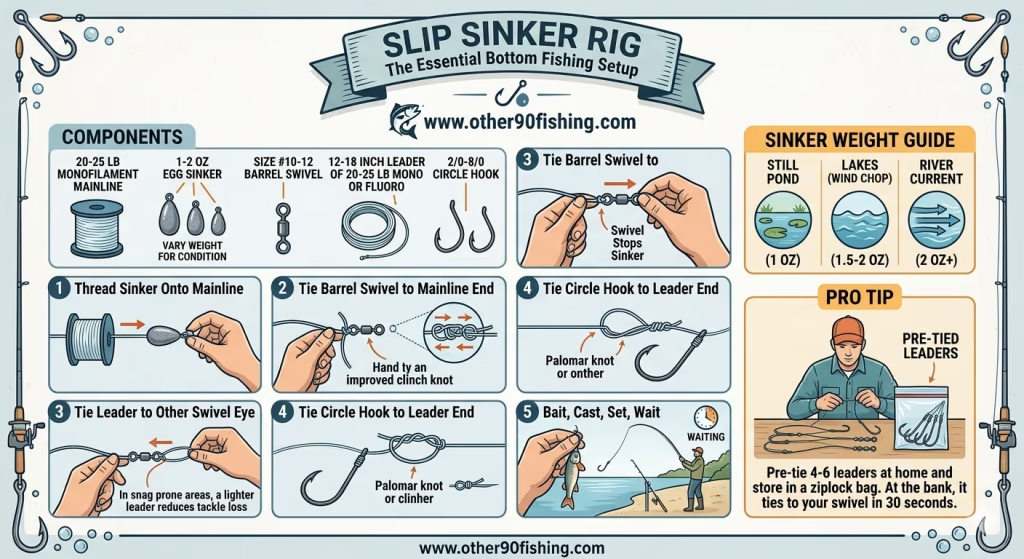
COMPONENTS: 1–2 oz egg sinker, size #10-12 barrel swivel, 12–18 inch leader of 20–25 lb monofilament or fluorocarbon, 2/0–3/0 circle hook
Step 1: Thread the egg sinker onto your mainline (20–25 lb mono).
Step 2: Tie a barrel swivel to the end of your mainline with an improved clinch knot. The swivel stops the sinker.
Step 3: Tie your 12–18 inch leader to the other swivel eye.
Step 4: Tie your circle hook to the end of the leader.
Step 5: Bait. Cast to the depth transition or structure. Set rod in holder. Wait.
SINKER WEIGHT: 1 oz for still ponds. 1.5–2 oz for lakes with wind chop. 2 oz+ for river current sections.
PRO TIP: Pre-tie 4–6 of these leaders at home and store in a ziplock bag. At the bank, it clips to your swivel in 30 seconds. No fumbling, no wasted time.
Rig #2: The Three-Way Rig (For Rivers With Current)
When current is present, the slip sinker rig starts to drag rather than hold. The three-way rig solves this by anchoring the sinker separately from the hook, allowing the current to work the baited leader naturally above the bottom — like a piece of food drifting by a holding catfish.
Three-Way Rig — Step-by-Step Assembly
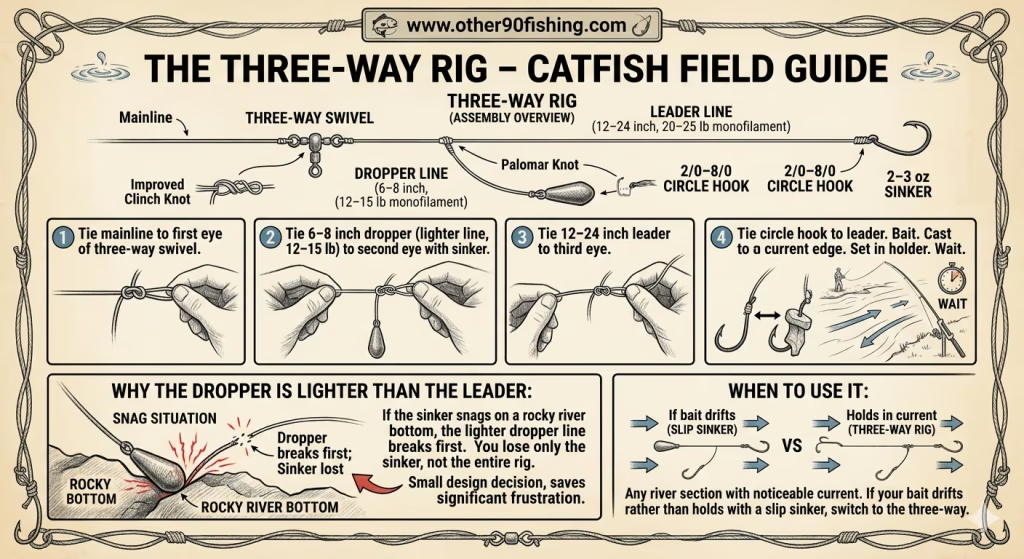
COMPONENTS: Three-way swivel, 6–8 inch dropper of 12–15 lb monofilament with a 2–3 oz sinker, 12–24 inch leader of 20–25 lb monofilament, 2/0–3/0 circle hook
Step 1: Tie your mainline to the first eye of the three-way swivel.
Step 2: Tie a 6–8 inch dropper (lighter line, 12–15 lb) to the second eye with a sinker at the end.
Step 3: Tie your 12–24 inch leader to the third eye.
Step 4: Tie the circle hook to the leader. Bait. Cast to the current edge. Set in holder. Wait.
WHY THE DROPPER IS LIGHTER THAN THE LEADER: If the sinker snags on a rocky river bottom, the lighter dropper line breaks first. You lose only the sinker, not the entire rig. Small design decision, saves significant frustration.
WHEN TO USE IT: Any river section with noticeable current. If your bait drifts rather than holds with a slip sinker, switch to the three-way.
Which Rig When — The Simple Decision
| Slip Sinker Rig | Three-Way Rig |
| Ponds and still lakes | Rivers with noticeable current |
| Slow-current reservoir sections | Fast-water outside river bends |
| Post-cold-front conditions (bait stays put) | Tailrace areas below dams |
| First rig every beginner should learn | Add this after mastering the slip sinker |
| Egg sinker 1–2 oz | Bell/bank sinker 2–3 oz on dropper |
Why Circle Hooks Make Both Rigs Better for Beginners
Both rigs above use circle hooks. This is not optional — it’s the most important hook choice you’ll make. A circle hook is designed to set itself in the corner of the fish’s mouth as the fish swims away with the bait. You don’t need a violent hookset. When the rod tip bends or the line moves: reel down to resistance, then lift firmly. The fish is almost always hooked in the perfect position.
Circle Hook Setup and Hookset Rules
Sizes: 2/0–8/0 for channel catfish. 4/0–8/0 for blue catfish.
Brands: Gamakatsu Octopus Circle, Owner SSW Circle, Eagle Claw Circle Sea, Mustad UltraPoint Demon — all in the $5–9 range per pack of 25–50.
The hookset: Reel down to resistance. Lift firmly and steadily. Do NOT jerk or sweep hard. The hard sweep pulls the hook out of position before it can catch. This is the single most common beginner mistake with circle hooks.
Family note: Circle hooks are specifically great for kids. No watching rods constantly, no timing hooksets. When the rod bends, reel and lift. The hook does all the work.
The rigs are ready. Now let’s talk about what goes on the hook.
Read Part 4: Fresh Is Best: Choosing the Right Bait for Spring Catfish