Bait selection and the must-have gear list — because the best rig in the world doesn’t catch fish with old bait.
You’ve found the right spot. You’ve tied the right rig. Now you’re about to thread on a piece of chicken liver that’s been sitting in your tackle bag since last Tuesday. Don’t do it.
Catfish find food primarily through scent. And scent output drops dramatically as bait ages. Fresh bait produces a continuous, spreading scent trail that catfish can detect and follow. Old bait is producing almost no scent at all — it’s just a lump of protein on a hook, invisible to every catfish within range. In spring especially, when catfish are approaching bait more cautiously than they do in warm summer water, bait freshness is the difference between a productive session and a slow one.
The Spring Catfish Bait Menu by Temperature
Bait Selection by Water Temperature — Spring
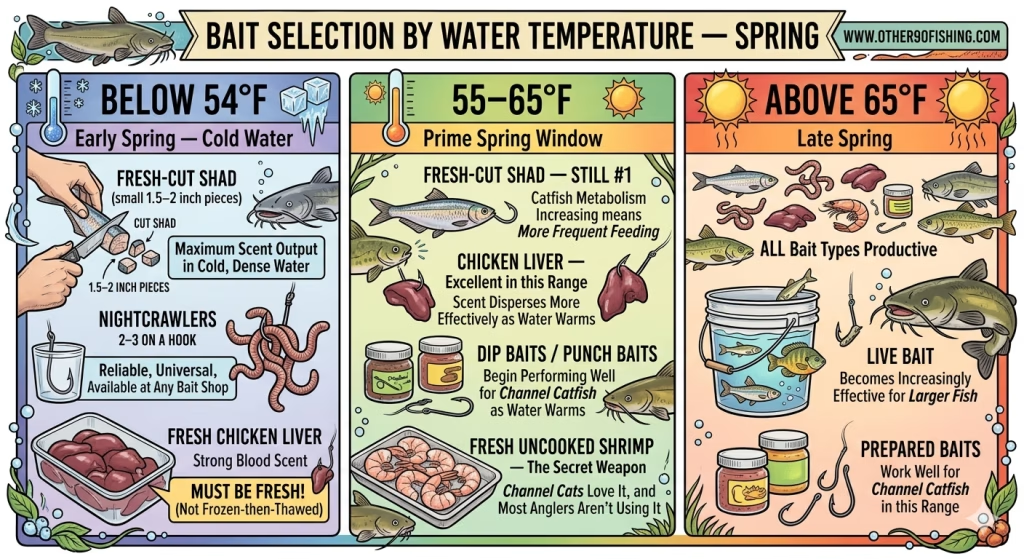
Below 54°F (Early Spring — Cold Water):
- Fresh-cut shad (small 1.5–2 inch pieces): Maximum scent output in cold dense water.
- Nightcrawlers (2–3 on a hook): Reliable, universal, available at any bait shop.
- Fresh chicken liver: Strong blood scent — use fresh, not frozen-then-thawed.
55–65°F (Prime Spring Window):
- Fresh-cut shad: Still #1. Catfish metabolism increasing means more frequent feeding.
- Chicken liver: Excellent in this range. Scent disperses more effectively as water warms.
- Dip baits / punch baits: Begin performing well for channel catfish as water warms.
- Fresh uncooked shrimp: The secret weapon. Channel cats love it, and most anglers aren’t using it.
Above 65°F (Late Spring):
- All bait types productive. Live bait becomes increasingly effective for larger fish.
- Prepared baits work well for channel catfish in this range.
The “Every 30” Rule — The Most Important Bait Tip
Replace your bait every 30–45 minutes. Every single time. Even if it still looks intact. Even if it still looks fresh. Even if you’re not sure it’s been 30 minutes yet.
Bait that’s been on the hook for an hour has already lost a significant portion of its scent output. The oils, blood, and scent compounds that attract catfish are water-soluble and disperse from fresh bait continuously — but they disperse fastest from fresh bait and slowest from old bait that’s already lost most of its available compounds. The 30-minute rule keeps your bait in the high-output scent phase rather than the low-output “wet rock” phase.
The practical routine: Set a phone timer for 30 minutes when you cast fresh bait. When it goes off, reel in, replace, recast. This one habit consistently separates anglers who catch fish from those who don’t.
The Secret Weapon: Fresh Shrimp
Most beginners use worms, dough bait, or chicken liver — all of which work. But fresh, uncooked shrimp from the grocery store seafood counter is one of the most effective channel catfish baits available, and almost no one uses it. Shrimp produce an extremely strong scent trail in water, are easy to handle (no mess compared to chicken liver), stay on the hook reliably, and cost about the same as bait from a shop.
Use fresh uncooked shrimp — not cooked, not frozen-then-thawed, not the cocktail variety. Fresh peeled shrimp on a 2/0 circle hook, threaded once through the body. Replace every 30 minutes. It’s that straightforward.
The Must-Have Gear for Spring Bank Catfishing
The gear list for spring bank catfishing is intentionally short. Here’s what actually matters:
Essential Spring Bank Catfish Gear
ROD: 7–8 ft Medium-Heavy spinning rod.
Why: You need the backbone to cast 1–3 oz sinker rigs 30–50 feet, and enough backbone to control a catfish running for structure. 7 ft medium-heavy is the sweet spot.
Brand: Ugly Stik Camo 7 ft Medium-Heavy ($35–$55) is the most widely available reliable option.
REEL: 3000–4000 size spinning reel with front drag.
Spool with 20–25 lb monofilament mainline.
ROD HOLDERS / BANK STICKS: The single most overlooked piece of gear.
V-rest bank sticks let you set 2–3 rods covering different angles without holding anything. When you’re waiting 30–45 minutes per spot, sitting and watching rod tips is dramatically better than standing and holding for an hour.
Cost: $8–$15 per bank stick. Buy at least two.
CIRCLE HOOKS: 2/0–3/0 for channel catfish, 4/0–5/0 for blues.
TERMINAL TACKLE: Egg sinkers (1–2 oz), barrel swivels (#10–12), 20–25 lb mono leader.
PLIERS: Needle-nose for safe hook removal from catfish (those pectoral spines are sharp).
BAIT KNIFE: For cutting fresh shad into sections. Small folding knife, sharp.
Putting the Whole System Together
Spring Bank Catfish Game Plan — Complete Checklist
BEFORE YOU LEAVE:
✓ Check water temperature (USGS for rivers, local bait shop for lakes). Target 55–65°F.
✓ Check weather: 3-day warming trend = great week. Cold front yesterday = stay home.
✓ Source fresh bait. Call your bait shop for shad availability.
✓ Pre-tie 4–6 slip sinker leaders at home and store in a ziplock.
AT THE WATER:
✓ Walk 50–100 yards of bank before choosing your spot.
✓ Note wind direction. Choose the downwind bank on lakes.
✓ Look for: steep banks, creek mouths, riprap, current seams, dock structures.
FISHING:
✓ Set 2–3 rods in bank sticks covering different distances and angles.
✓ Cast to the depth transition, not the open center of the bank.
✓ Start timer. Replace bait every 30–45 minutes.
✓ On a bite: reel down, lift firmly. Don’t jerk. Circle hook will do the work.
✓ Caught a fish? Don’t move. Cast back to the same exact spot.
Want the complete picture? Read the full spring bank catfish guide.
Spring Bank Fishing for Catfish: Easy Spots, Simple Rigs, and Beginner-Friendly Tactics