
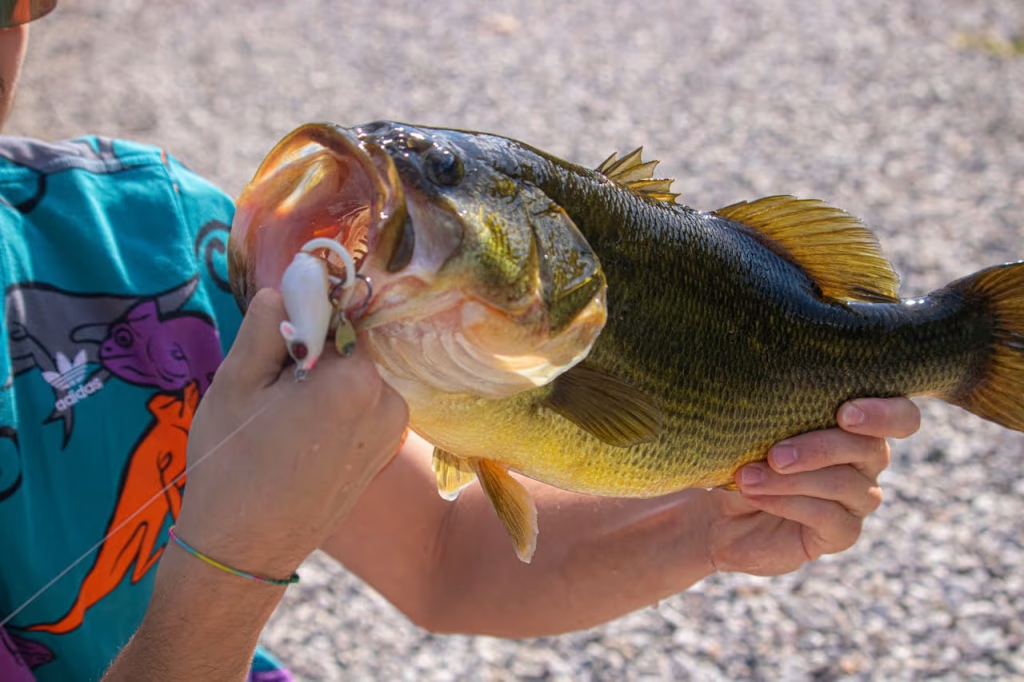
If you’ve been working through our Beginner’s Guide to Bass Fishing, you already know the basics: where bass live, how to set a hook, and what makes a good starting setup. Now it’s time to take one of those foundational pieces — seasonal patterns — and go deep on the one window that beginners consistently underestimate: the spring pre-spawn period.
Spring Bass Fishing: What’s Actually Happening in the Water
In the Midwest, South, and Southeast United States, late winter gives way to a narrow window — typically late February through early April depending on your latitude — when something remarkable happens in the bass world. The fish that have been hunkered in cold, deep water all winter start moving. Slowly at first, then with increasing purpose, largemouth and smallmouth bass begin staging in transition zones between their winter haunts and the shallow water where they’ll eventually spawn. They’re hungry, they’re moving toward accessible areas, and they’re willing to bite in ways they simply aren’t during other times of year.
This guide is going to walk you through exactly what pre-spawn bass behavior looks like, where to find those fish on the waters you’re already fishing, which lures and techniques work best when the water is still cold, and how to gear up without overcomplicating things. Whether you’re fishing a Midwestern reservoir, a Southern pond, or a Southeast tidal creek, the principles here apply — and they’re simple enough for any new angler to put to work on their next outing.
What Pre-Spawn Bass Fishing Really Means
The term ‘pre-spawn’ gets thrown around a lot in bass fishing, but it’s simpler than it sounds. Bass spawn — or reproduce — in shallow water when water temperatures reach the mid-60s Fahrenheit. The pre-spawn period is everything that happens before that: the weeks when water temperatures are climbing from the low-to-mid 40s toward that 60-degree threshold.
During this transition, bass respond to a predictable set of biological triggers. Warming water temperatures are the primary driver. As days get longer and sunlight begins to warm the water even a few degrees, bass metabolism speeds up and their instinct to feed and move shallower kicks in. They’re not in spawning mode yet — they’re in feeding mode, building energy reserves for the spawning effort ahead. That’s the key insight for beginners: pre-spawn bass are hungry and actively looking for an easy meal.
Water temperature is your most important data point during this period. Here’s a simple breakdown of what bass are doing at different temperature ranges:
Pre-Spawn Temperature Guide
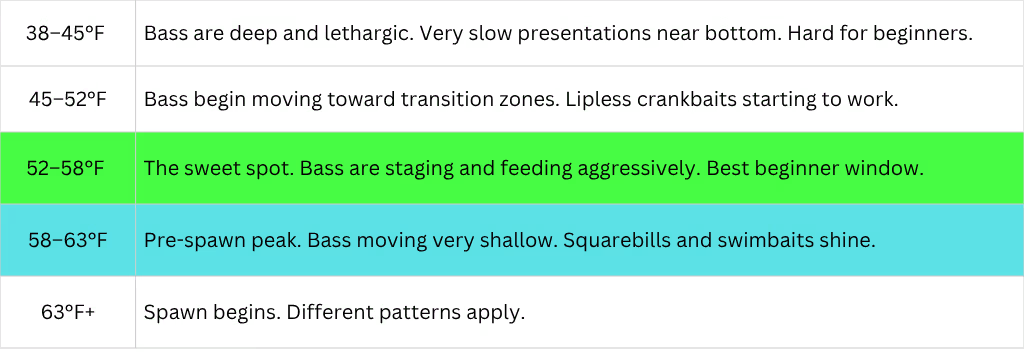
You can check water temperature with a simple thermometer attached to your fishing line or by using a cheap handheld digital model — either way, knowing the temperature takes the guesswork out of deciding where to start and what to throw.
In the South and Southeast — think Georgia, Alabama, Mississippi, the Carolinas — this temperature window arrives as early as mid-February. In the Midwest, you’re typically looking at late March through April. In either region, the patterns are identical. Only the calendar dates change.
Where Bass Stage Before the Spawn — and Where YOU Should Look First
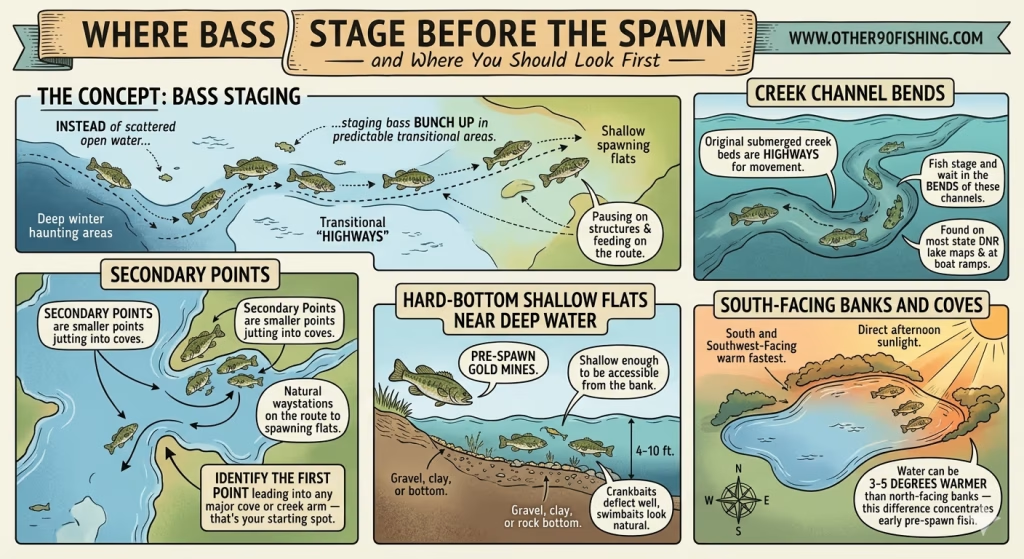
‘Staging’ is the behavior that makes pre-spawn bass so catchable. Instead of being scattered across open water or buried in deep winter haunts, staging bass bunch up in predictable transitional areas — the routes they’re using to move from deep winter water toward the shallows where they’ll spawn.
Think of it like a highway on-ramp. Bass don’t go from 30 feet of water to 3 feet overnight. They move incrementally — pausing on ledges, secondary points, creek channel bends, and submerged structure — and feeding the whole way. If you can find those highway on-ramps, you’ll find fish.
For beginners fishing public lakes, ponds, and reservoirs across the Midwest and South, here are the specific features to look for:
Secondary Points
Secondary points are the smaller points of land that jut into a cove or creek arm, sitting between the main lake point and the back of the cove. Pre-spawn bass stage here in large numbers because secondary points are a natural waystation on the route toward spawning flats. If you’re fishing a reservoir or larger lake, walk the bank and identify the first point that leads into any major cove or creek arm — that’s your starting spot.
Creek Channel Bends
Most lakes and reservoirs have submerged creek channels running through them — the original creek beds that existed before the lake was filled. These channels are highways for bass movement, and the bends in those channels are where fish stage and wait. You don’t need a depth finder to find them — most state DNR lake maps show original creek channel locations, and many are obvious from boat launch maps available for free at the ramp.
Hard-Bottom Shallow Flats Near Deep Water
When bass are within a week or two of spawning, they start moving onto hard-bottom flats — gravel, clay, or rock bottoms in 4-10 feet of water adjacent to deeper water. These are the pre-spawn gold mines. The fish are shallow enough to be accessible from the bank, they’re actively feeding, and hard bottom means your crankbaits deflect well and your swimbaits look natural.
South-Facing Banks and Coves
South and southwest-facing banks and coves warm fastest in the spring because they receive the most direct afternoon sunlight. Bass know this. On cold late-winter or early-spring days, check the south-facing side of any pond or cove first — the water there can be 3-5 degrees warmer than the north-facing bank, and that difference is enough to concentrate early pre-spawn fish.
Techniques That Work When the Water Is Still Cold
Here’s where a lot of beginners go wrong in early spring: they fish the same way they do in summer. They throw fast-moving lures, they burn spinners, they expect bass to chase. But cold water bass are deliberate. Their metabolism hasn’t fully kicked on. They want a bait that moves slower, stays in the strike zone longer, and doesn’t require them to expend a lot of energy to eat.
The good news: the techniques that work best in the pre-spawn period are some of the most beginner-friendly in all of bass fishing. No complicated jigging strokes, no split-second timing. Just a controlled retrieve and a little patience.
The Slow-Rolled Lipless Crankbait
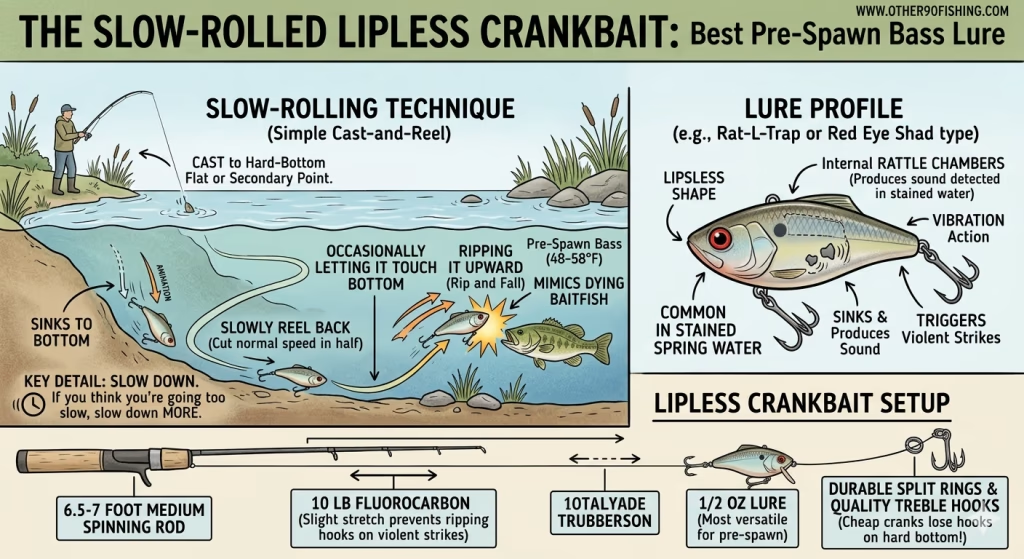
A lipless crankbait — like the classic Rat-L-Trap or Strike King Red Eye Shad — is arguably the single best lure for pre-spawn bass when water temperatures are in the 48-58 degree range. These lures sink, vibrate, and produce sound that bass can detect in stained spring water (which is common after winter rains). The technique is simple: cast to a hard-bottom flat or secondary point, let the lure sink to the bottom, then slowly reel it back — occasionally letting it touch the bottom and ripping it upward. This ‘rip and fall’ retrieve mimics a dying baitfish and triggers some of the most violent strikes you’ll ever feel in bass fishing.
Key detail: Slow down your retrieve. In 50-degree water, your instinct will be to fish too fast. Cut your normal retrieve speed in half. If you think you’re going too slow, slow down more.
Lipless Crankbait Setup
For lipless cranks (1/2 oz is the most versatile for pre-spawn), rig on a 6.5-7 foot medium spinning rod with 10 lb fluorocarbon. The slight stretch in fluoro (less than mono, more than braid) actually works in your favor here — it prevents you from ripping hooks on the violent strikes these lures produce. Look for lures with durable split rings and quality treble hooks — cheap lipless cranks lose their hooks on hard bottom contacts.
The Squarebill Crankbait in Shallow Cover
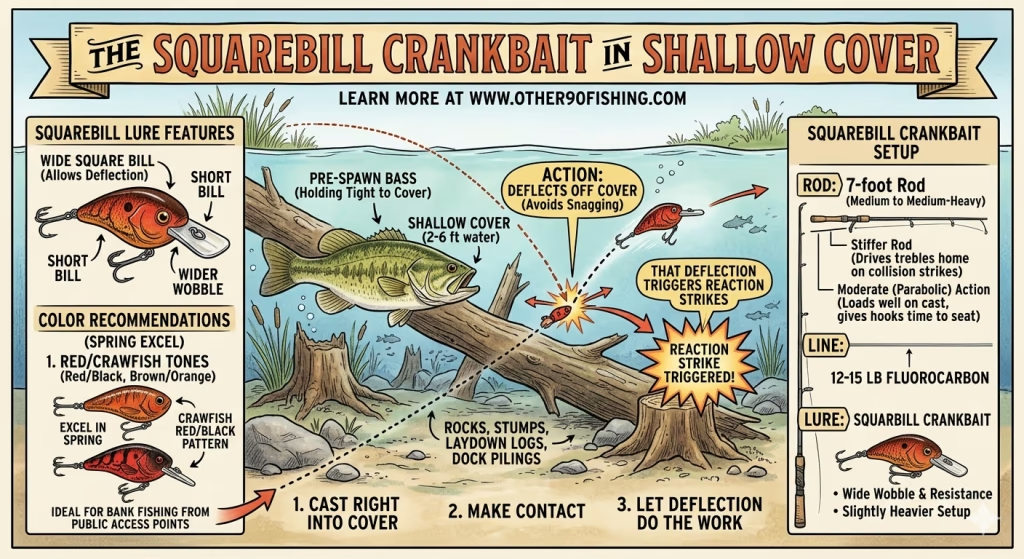
As water temperatures climb into the upper 50s and low 60s, and bass push shallower toward their spawning areas, a squarebill crankbait becomes devastatingly effective. The squarebill’s wide bill allows it to deflect off rocks, stumps, dock pilings, and laydown logs rather than snagging — and that deflection triggers reaction strikes from bass that are holding tight to cover. Cast right into the cover, make contact, and let the deflection do the work. Colors with red or crawfish tones (red/black, brown/orange) tend to excel in spring.
This is an ideal lure for bank fishing from public access points — cast toward any visible cover in 2-6 feet of water and slow-crank it back, making sure to deflect off anything you can reach.
Squarebill Crankbait Setup
Square bills work best on a slightly heavier setup — a 7-foot medium to medium-heavy rod with 12-15 lb fluorocarbon. The shorter bill and wider wobble create considerable resistance, and a stiffer rod helps you drive treble hooks home on the collision strikes these lures produce in shallow cover. A rod with a moderate (parabolic) action loads well on the cast and gives hooks time to seat before pressure is applied.
Swimbaits on Staging Fish
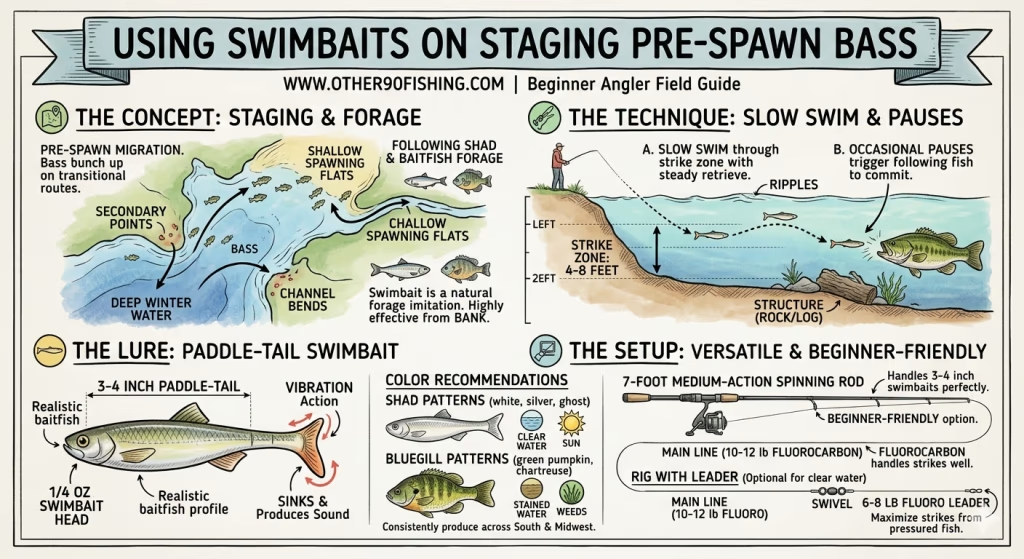
When you’ve located bass staging on secondary points or channel bends, a 3-4 inch paddle-tail swimbait on a 1/4 oz swimbait head is one of the most natural-looking presentations you can offer. Bass in staging areas are following shad and baitfish, and a swimbait does an exceptional job of imitating that forage. Swim it slowly through the strike zone — 4-8 feet — with a steady retrieve. Occasional pauses trigger following fish to commit.
Swimbaits also work beautifully from the bank because they don’t require much casting distance — bass are already moving toward you during the pre-spawn migration.
Swimbait Setup
Swimbaits are the most versatile and beginner-friendly option in the pre-spawn arsenal. A 7-foot medium-action spinning rod with 10-12 lb fluorocarbon handles 3-4 inch swimbaits perfectly. If you add a 6-8 lb fluorocarbon leader on a swivel for clearer conditions, you’ll maximize strikes from pressured fish. Look for paddle-tail swimbaits with realistic baitfish profiles — shad patterns (white, silver, ghost) and bluegill patterns (green pumpkin, chartreuse) are the two color families that consistently produce across the South and Midwest.
A Note for Beginners
The biggest mistake beginners make during pre-spawn isn’t choosing the wrong lure — it’s fishing too fast and giving up on productive areas too soon. Pre-spawn bass are catchable, but they demand a slow, deliberate approach. The angler who slows down and stays patient during the 52-60 degree window consistently catches more fish than the one who burns through spots and retrieves.
One more thing: this is genuinely one of the best times of year to bring new anglers — including kids — to the water. The fish are cooperative, the weather is pleasant, and a first bass caught on a crankbait during the pre-spawn is the kind of experience that creates lifelong anglers. Don’t overthink it. Get out there while the window is open.
You’re Ready for One of the Best Bites of the Year
Pre-spawn bass fishing rewards anglers who understand what’s happening beneath the surface and slow down enough to work with it, not against it. Water temperature drives everything. Secondary points, creek bends, and hard-bottom flats near deeper water are where the fish are. A slow-rolled lipless crankbait, a deflecting squarebill, or a steady swimbait is all you need to get bites — and a medium-action spinning combo with 10-12 lb fluorocarbon handles all three confidently.