
Most fishing content assumes you have a boat. The Beginner’s Guide to Crappie Fishing covers crappie behavior, jigs, and techniques that apply everywhere — but the reality is that a huge number of anglers, especially families and beginners, are fishing from the bank. No boat. No trolling motor. No electronics. Just a rod, a tackle box, and access to a public shoreline, a park dock, or a pond edge. The question isn’t whether you can catch crappie from the bank — you absolutely can, often very well — the question is how to find the right spots and make the most of what’s accessible from shore.
Bank fishing for crappie is not a compromise — it’s a legitimate and often highly productive approach, especially in spring and fall when fish are shallow and accessible. The right spot at the right time of year can produce extraordinary action with nothing more than an ultralight rod and a $5 pack of jigs. Here’s how to find those spots and fish them well.
Why Bank Fishing for Crappie Works — And When It Works Best
Here’s the key insight that makes bank fishing for crappie realistic and productive: crappie are not always deep. During spring and fall — the two best crappie seasons across the United States — fish move into shallow water accessible from the bank. In spring, pre-spawn crappie push from their deep winter holding areas into 3-8 feet of water near visible structure — dock pilings, flooded brush, weed edges, and bridge supports — all of which are regularly accessible from shore. In fall, cooling water draws crappie back toward the shallows as they feed aggressively before winter.
The window when bank fishing is most productive aligns almost perfectly with the windows when crappie fishing is most productive overall. That’s a significant advantage for anglers without boat access. Summer is the hardest bank fishing season because crappie retreat to deep, shaded structure that’s often unreachable from shore — but even then, early morning dock fishing and bridge piers in moderate depths produce consistent results for patient anglers.
The primary limitation of bank fishing isn’t fish availability — it’s casting angle. From a fixed position on the bank, you can only present a lure from one direction. This makes it essential to identify spots where crappie concentrate in a location you can reach — rather than spending energy trying to reach fish in locations that can’t be effectively fished from shore.
|
When Bank Fishing for Crappie Is Most Productive BEST seasons for bank crappie fishing: Spring (pre-spawn and spawn, water 55–68°F) and Fall (cooling water, 60–72°F). Fish are shallow, concentrated, and actively biting near accessible structure. GOOD season: Early morning summer fishing from shaded docks and bridge piers. Evening timing in summer also produces as fish move shallower to feed after sunset. HARDER season: Midday summer when fish push to deep, open water inaccessible from most bank positions. Winter crappie in deep basins — possible from bridge piers and deep rip-rap edges, but challenging. Time of day: Early morning (first 2 hours of daylight) is the most productive bank window in all seasons. Fish are more active and shallower in lower light. Plan to be at the water at dawn whenever possible. |
The Best Bank Spots for Crappie — Where to Position Yourself
Not all bank access is equal. Some shoreline positions offer access to exactly the structure crappie use. Others — featureless gravel beaches and open sandy banks — rarely produce consistently. Here’s how to read any bank access area and identify the most productive positions.
Dock Pilings and Dock Edges — The #1 Bank Crappie Spot Across All U.S. Water Types
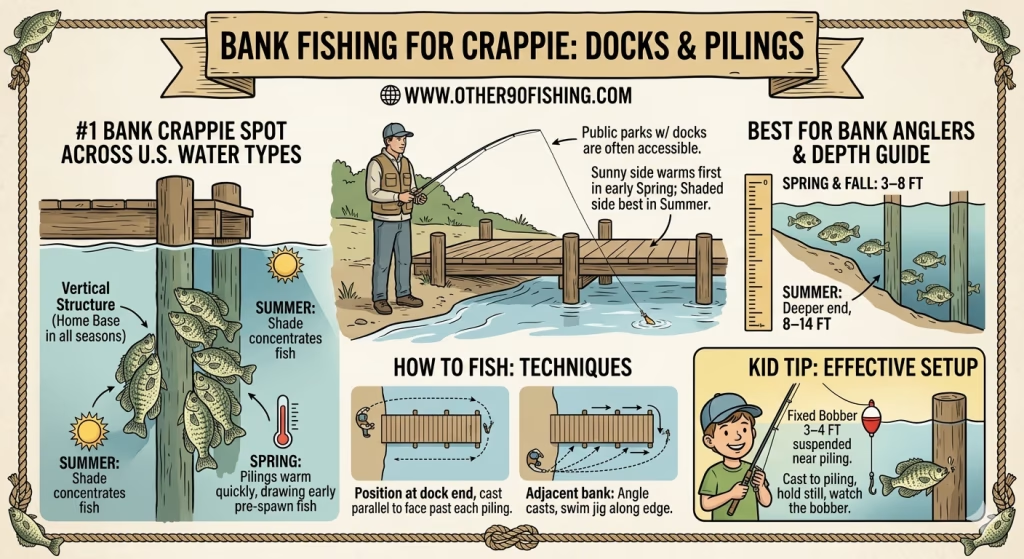
Why they work: Dock pilings create vertical structure that crappie use as home base in every season. Shaded areas under docks concentrate fish in summer. Pilings heat quickly in spring, drawing early pre-spawn fish.
How to fish from the bank: Position yourself at the end of the dock or as close to the pilings as possible. Cast parallel to the dock face so your jig swings past each piling in sequence. If you’re on a bank adjacent to a dock, angle casts to land the jig just outside the pilings and swim it along the dock edge.
Best for bank anglers: Most public parks with docks allow bank access at dock access points. Fish the shaded side of the dock in summer; the sunny side warms first in early spring and attracts fish earlier.
Depth: 3–8 feet in spring and fall; deeper end of the dock in summer (8–14 ft if the dock is long enough to extend over depth).
Kid tip: A fixed bobber at 3–4 feet suspended near a dock piling is the single most effective kid-friendly crappie setup. Cast to the piling, hold still, watch the bobber.
Bridge Crossings and Bridge Piers — The Most Underutilized Bank Crappie Location
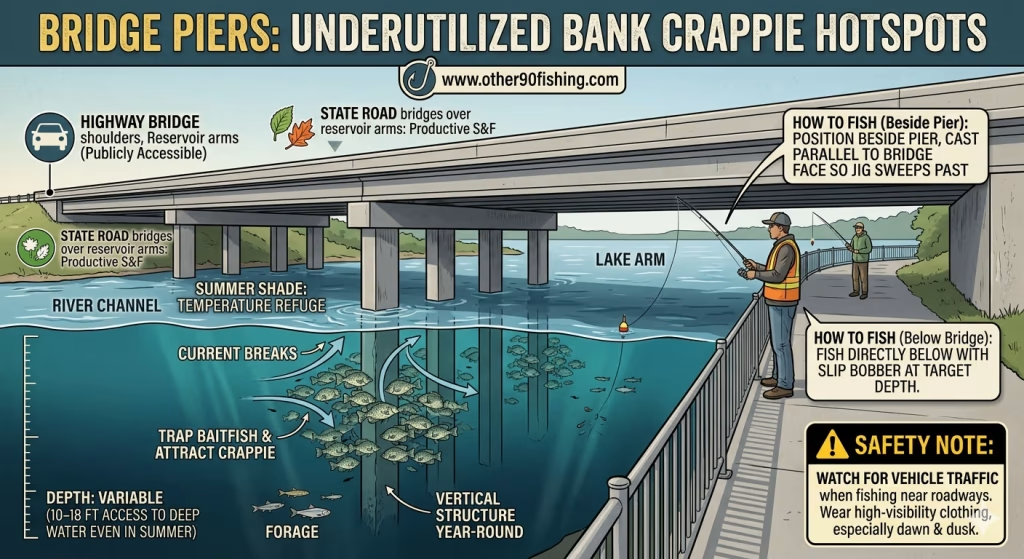
Why they work: Bridge piers create large, vertical structure that concentrates crappie year-round. The shade under a bridge creates a temperature refuge in summer. Current breaks at bridge piers in rivers trap baitfish, which in turn attract crappie. Many bridge crossings span the deepest water in the area, making them productive even in summer when bank spots in shallow coves have gone quiet.
How to fish from the bank: Most bridge crossings over lake arms and river channels have paved shoulders or pedestrian access. Position directly beside a pier and cast parallel to the bridge face so the jig sweeps past the structural face. Or fish directly below the bridge with a slip bobber set to the target depth.
Best for bank anglers: Highway bridge crossings over lake inlets and river systems are often publicly accessible from the road shoulder. State road bridges over reservoir arms are particularly productive in spring and fall.
Depth: Variable — bridge piers often extend into the deepest accessible water from a bank position. A bridge over a creek channel mouth can provide access to 10–18 feet of water that would be unreachable from a typical bank position.
Safety note: Always watch for vehicle traffic when fishing from bridge shoulders. Wear high-visibility clothing when fishing near roadways, especially in dawn and dusk low-light conditions.
Visible Shoreline Brush and Fallen Trees — Natural Structure Crappie Can’t Resist
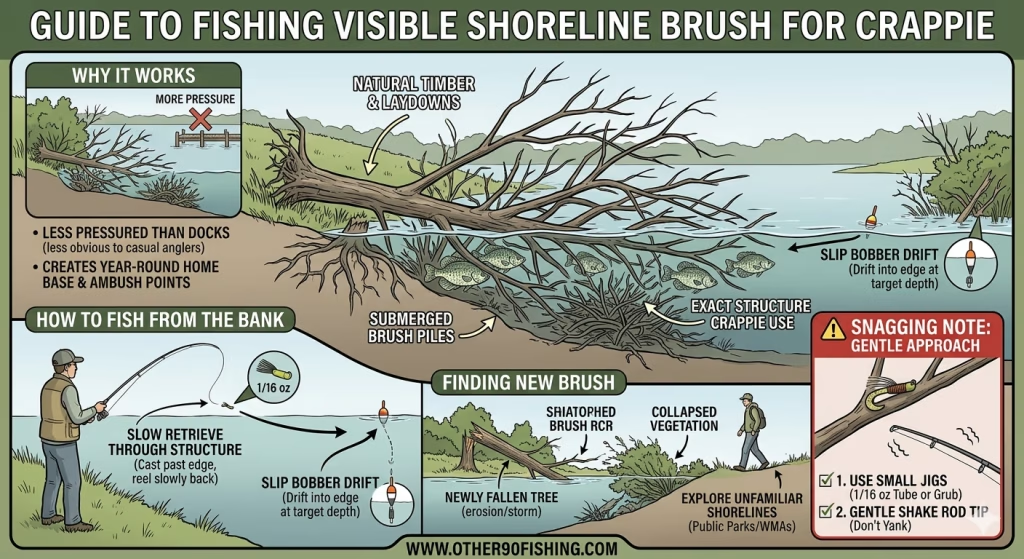
Why they work: Any brush pile, laydown tree, or root system that extends into the water from the bank creates exactly the structure crappie use throughout the year. Natural brush is often less pressured than dock areas on public lakes because it’s less obvious to casual anglers.
How to fish from the bank: You have the advantage of knowing exactly where the structure is — you can see it from the bank. Cast past the outer edge of the brush and slowly retrieve the jig back through the structure. Or set a slip bobber at the target depth and let it drift into the brush edge.
Finding new brush: Walk the shoreline before fishing. Anything recently fallen — a tree leaning into the water from bank erosion, brushy vegetation that has collapsed into the shallows — may represent a new, unfished crappie location. New structure is almost always more productive than heavily fished spots.
Best for bank anglers: Public parks and wildlife management areas along lake shorelines frequently have natural brush and timber along the bank. Early spring exploration along unfamiliar shorelines often reveals highly productive natural structure.
Snagging note: Fishing brush from the bank risks more snagging than fishing it from directly above with a boat. Use a 1/16 oz tube or grub with a small hook, and gently shake the rod tip rather than yanking when you feel a snag.
Rip-Rap Banks and Dam Faces — Hard Bottom and Thermal Mass That Holds Early Fish
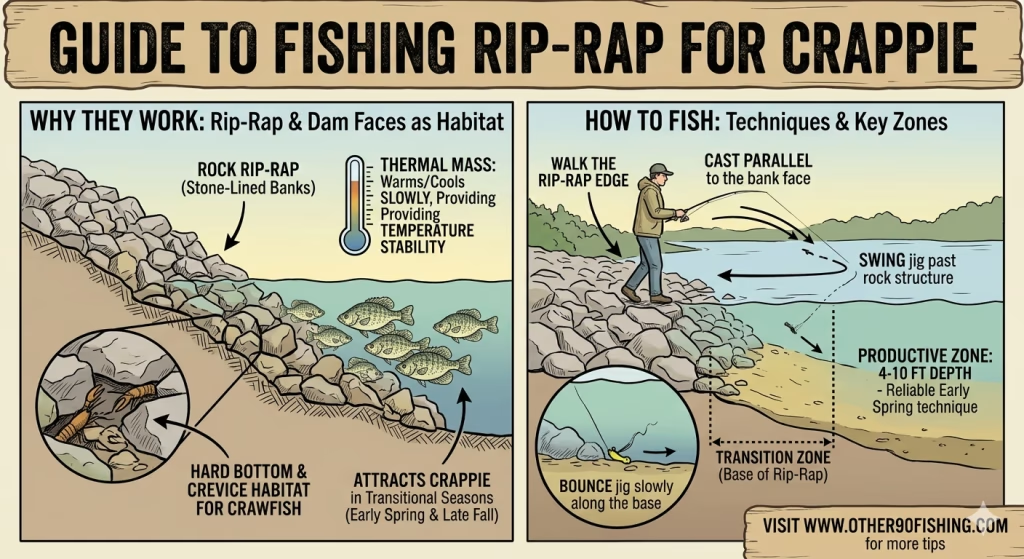
Why they work: Rock rip-rap (stone-lined banks common on dam faces, road causeways, and bridge approaches) creates hard bottom, crevice habitat for crawfish, and thermal mass that warms and cools more slowly than surrounding water. This temperature stability attracts crappie in transitional seasons (early spring and late fall) when fish seek the most comfortable temperature zones.
How to fish from the bank: Walk the rip-rap edge and cast parallel to the bank face. The most productive zone is where the rip-rap transitions from shallow to deeper water — often visible as the edge of the rock extending into the lake. A jig bounced slowly along the base of the rip-rap at this transition is a reliable early spring technique.
Best for bank anglers: Dam faces and causeway rip-rap are often publicly accessible. State park dams, road causeways across reservoir arms, and Corps of Engineers lake shorelines frequently have walkable rip-rap with fishing access.
Depth: The productive zone on rip-rap is the base of the rock at the water–bottom transition, typically 4–10 feet depending on the bank slope
Fishing Piers and Elevated Structures — The Shore Angler’s Boat Equivalent
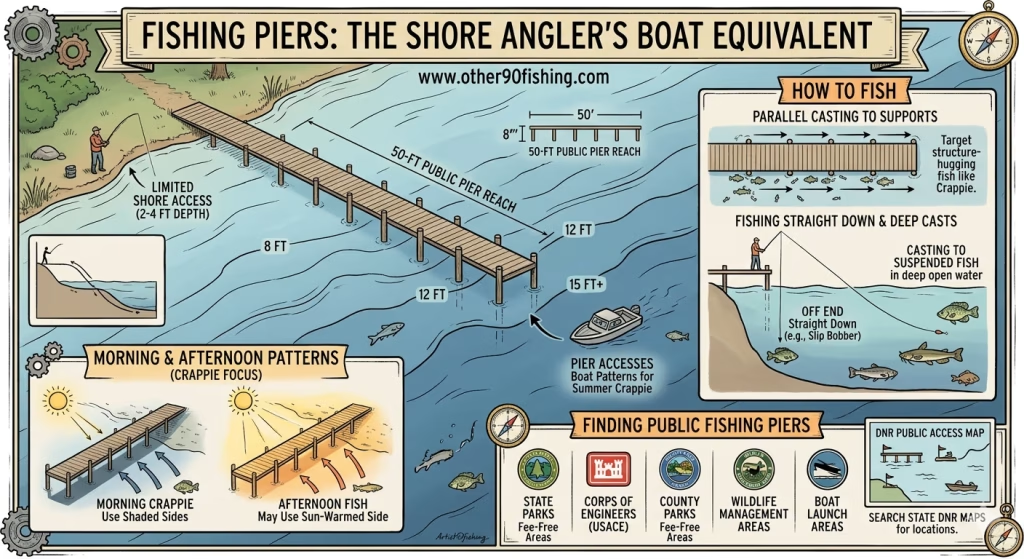
Why they work: Fishing piers extend your casting reach into water that bank-only anglers can’t access. A 50-foot public pier can give you access to 8–15 feet of water from a stable platform, significantly expanding what’s fishable from shore.
How to fish from the bank/pier: Fish parallel to the pier supports (similar to dock piling technique) for fish using the structure itself. Fish off the end of the pier straight down or with a cast into deeper water for suspended fish. Morning crappie use the shaded sides; afternoon fish may use the sun-warmed side.
Finding fishing piers: State parks, Corps of Engineers lakes, county parks, and wildlife management area boat launch areas frequently have fishing piers. Many are accessible without a boat ramp fee. Search your state DNR’s public fishing access map for pier locations.
Depth advantage: Piers typically extend into 8–18 feet of water — a significant depth advantage over typical bank positions that gives access to summer crappie patterns normally requiring a boat.
Rigs and Techniques That Work Best From the Bank
The Slip Bobber: The Most Effective Bank Crappie Rig
For bank crappie fishing, the slip bobber rig is more versatile and more effective than a fixed bobber because it solves the bank angler’s primary challenge: casting distance and depth precision simultaneously. A slip bobber lets you cast to a specific target (a dock piling 30 feet away, a brush pile at the edge of a cove) and have the jig drop to an exact, preset depth without requiring you to be directly above the fish.
How to set up a slip bobber rig for bank fishing: Thread a bobber stop (a small rubber or thread stopper) onto your line first, then a bead, then the slip bobber, then a small barrel swivel. Tie a 12-18 inch fluorocarbon leader to the swivel, then attach your jig. Set the bobber stop at your desired depth. When you cast, the line slides freely through the bobber until the stop hits — then the jig hangs at your preset depth. Adjust the stop up or down to change depth.
Bank advantage: A slip bobber allows you to cast the full distance your rod permits, land the rig precisely near structure, and fish the correct depth — three things a fixed bobber often can’t deliver simultaneously from a bank position.
Kid note: The slip bobber setup is slightly more complex to assemble than a fixed clip-on bobber, but it delivers far better results. For younger children (under 10), a fixed clip-on bobber at 3-4 feet near a dock is simpler and adequate. For kids 10 and older, teaching the slip bobber setup is a valuable fishing skill.
Jig Casting and Retrieval: Covering the Bank From a Fixed Position
When fishing without a bobber — casting a jig and working it back on a straight retrieve — the bank angler’s challenge is covering water effectively from a fixed position. The solution is to work the fan-cast pattern: rather than making the same cast repeatedly in the same direction, methodically change your casting angle by 10-15 degrees between casts, covering a wide arc of water from your position.
For dock pilings from a bank position: make a cast that lands just past the far edge of the dock, then slow-roll or slow-twitch the jig back along the dock face. Change casting angle to cover each piling position successively. This systematic coverage ensures you’ve presented the jig at every likely holding position rather than fishing the same water repeatedly.
The retrieve for bank crappie: Cast, count down to target depth (count one second per foot as a general guide), then use a slow twitch-and-pause retrieve. Every 3-5 slow turns of the reel handle, pause completely for 3-5 seconds. The pause is when most crappie strikes happen. This is especially important from the bank where you can’t change depth as easily as you can with a vertical jig from a boat.
Live Minnow Under a Bobber: The Reliability Option
For bank anglers who want the most consistent option regardless of season or technique skill level, a live minnow (1.5-2 inch) under a slip bobber at the right depth catches crappie across all conditions. The minnow’s natural swimming action draws attention without requiring any retrieve action on your part — particularly useful for children who struggle with the patience required for jig techniques.
Hook the minnow lightly through the back, just behind the dorsal fin, to allow natural swimming. Set the slip bobber at your target depth. Cast near structure and let the minnow do the work. The minnow’s movement and struggle will attract crappie without any rod action on your part.
Minnow vs. jig from the bank: Jigs are more practical for extended bank fishing because you don’t need to replenish live bait. Live minnows produce more strikes in cold water and when crappie are finicky, but require a bait bucket, access to live bait, and more management. For family outings where simplicity matters, jigs are easier. For serious bank fishing, bringing a dozen live minnows as a fallback when jigs aren’t producing is a high-percentage strategy.
The Most Common Bank Fishing Mistakes and How to Fix Them
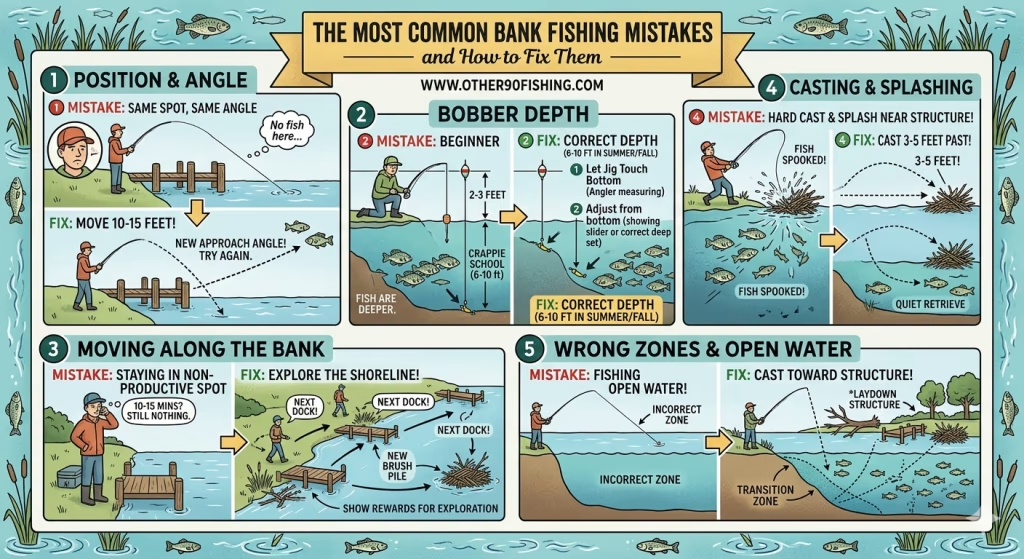
Mistake 1: Fishing the same spot from the same angle. Crappie near a dock or brush pile may only be accessible from a specific casting angle. If you’re not getting bites, move 10-15 feet along the bank and try a different approach angle before concluding there are no fish.
Mistake 2: Setting the bobber too shallow. Most beginners set the bobber at 2-3 feet regardless of season. In summer and fall, crappie are often 6-10 feet deep. A jig hanging at 3 feet is 5 feet above the fish. Always check depth by letting the jig touch bottom and adjusting from there.
Mistake 3: Not moving along the bank. Bank fishing rewards anglers who explore. If a dock or brush pile isn’t producing after 10-15 minutes, move to the next one rather than fishing a non-productive spot out of habit.
Mistake 4: Casting too hard and splashing near the structure. A hard cast that splashes directly onto dock pilings or brush spooks fish. Cast 3-5 feet past the target and let the line drift or retrieve the jig into position quietly.
Mistake 5: Fishing parallel to the bank in the wrong zone. Many beginners cast parallel to the bank in open water. The productive zone is the transition from the bank into deeper water, or the area near any visible structure. Cast toward visible structure, not open water.
The Seasonal Bank Fishing Depth Chart
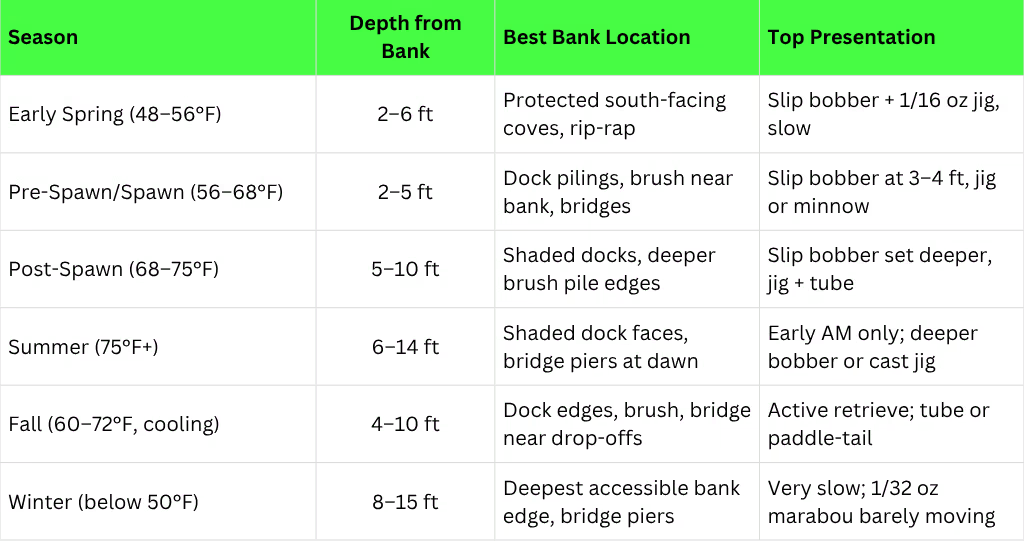
The practical bank fishing game plan is simple: arrive early, survey the accessible structure before making the first cast, and start at the structure closest to the bank before moving progressively further out. Most productive bank spots have a predictable hierarchy — docks and bridge piers first, then visible brush or laydown trees, then rip-rap transitions, then open bank edges near any visible depth change.
A final note on patience that matters specifically for bank fishing: unlike a boat angler who can reposition over a fish they’ve located, a bank angler’s mobility is limited. When you find crappie from a specific bank position, extract the maximum value from that discovery. Fish the spot thoroughly at multiple depths, multiple casting angles, and through multiple bait changes before moving. A dock that holds crappie in spring may have 20-50 fish — don’t leave them prematurely because the first 5 minutes were slow. Give productive spots time.
You Don’t Need a Boat to Catch Crappie — You Need the Right Spot
Bank crappie fishing is one of the most accessible, lowest-cost, and most family-friendly fishing experiences available across the United States. Every public lake, reservoir, and pond with a dock, a bridge crossing, or a brushy bank edge has crappie within casting distance for significant portions of the year. The skill isn’t reaching deeper water — it’s reading the accessible shoreline features well enough to position yourself at the right spot at the right depth in the right season.
Find a dock. Set a slip bobber at 4 feet. Cast to the piling. Wait for the dip. That’s how bank crappie fishing works — and it works very well.